Historical Figures
An authoritative, deeply-linked database of history's most influential people. Browse 319+ figures by occupation, era, and civilization, or use search to find anyone instantly.

Sophocles
81Sophocles was one of the three great tragedians of classical Athens, author of Oedipus Rex and Antigone, whose dramas shaped Western theatre and gave us some of its most enduring stories.

Spartacus
79Spartacus was a Thracian gladiator who led the largest slave uprising in the history of the Roman Republic, defeating several Roman armies before his rebellion was crushed — becoming an enduring symbol of resistance to oppression.

Stephen Hawking
87Stephen Hawking was a British theoretical physicist and cosmologist whose work on black holes and the origins of the universe, carried out despite a paralysing motor-neurone disease, made him the most famous scientist of his age.
Suleiman I
90Suleiman the Magnificent was the longest-reigning sultan of the Ottoman Empire, who led it to the height of its power through military conquest, legal reform and a brilliant flowering of art and architecture.
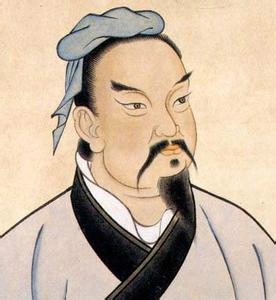
Sun Tzu
90Sun Tzu was an ancient Chinese general and strategist, traditionally the author of The Art of War, the most influential treatise on strategy ever written.
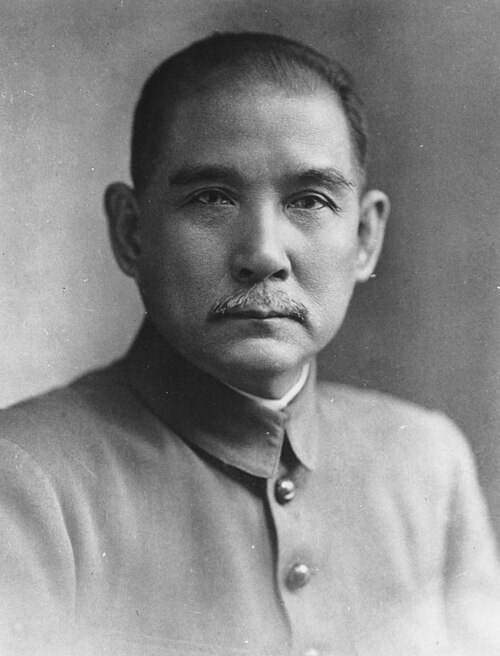
Sun Yat-sen
85Sun Yat-sen was the Chinese revolutionary and statesman who overthrew the Qing dynasty, founded the Republic of China, and became the founding father of both mainland China and Taiwan — revered by both Communists and Nationalists as the father of the Chinese nation.
Sundiata Keita
80Sundiata Keita was the founder of the Mali Empire, a warrior-prince who overcame disability and exile to defeat his rivals and unite the Mandinka peoples, creating the West African empire later made famous by Mansa Musa.

Susan B. Anthony
88Susan B. Anthony was the American civil rights leader who devoted her life to women's suffrage and abolition, co-founded the National Woman Suffrage Association, was arrested for illegally voting in 1872, and became the face of the movement that won women the vote fourteen years after her death.
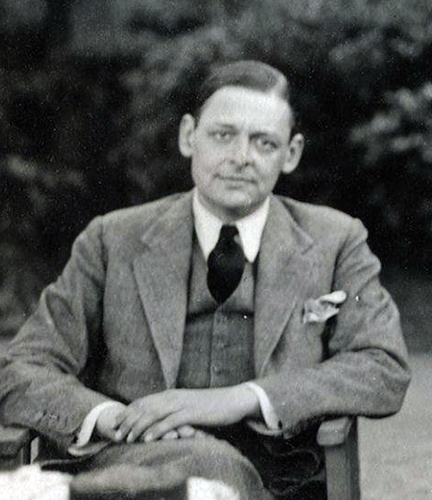
T. S. Eliot
80T. S. Eliot was an American-British poet, critic and playwright, a towering figure of literary modernism whose poem The Waste Land redefined 20th-century poetry and who won the Nobel Prize in Literature.

Tamerlane
81Tamerlane was a Turco-Mongol conqueror who built a vast empire from Central Asia, the last of the great steppe conquerors, whose brilliant and brutal campaigns made him master of much of the Islamic world while his capital Samarkand flourished.

Tecumseh
83Tecumseh was the Shawnee leader who built the largest Native American confederacy in history to resist US expansion, allied with the British in the War of 1812, and was killed at the Battle of the Thames — becoming the greatest pan-Indian leader America ever faced.

Themistocles
79Themistocles was an Athenian statesman and general whose foresight built the navy that saved Greece, and whose brilliant strategy at the Battle of Salamis destroyed the Persian fleet and turned back Xerxes's invasion.

Theodora
84Theodora was the Byzantine empress who co-ruled with Justinian I, saved his throne through her courage at the Nika riots, influenced imperial policy on women's rights and religious affairs, and rose from humble origins to become one of antiquity's most powerful women.

Theodore Roosevelt
85Theodore Roosevelt was the 26th President of the United States, a soldier, conservationist and reformer — and a remarkably prolific author who wrote around forty books on history, nature, politics and exploration alongside his public career.

Thomas Aquinas
91Thomas Aquinas was a medieval Italian theologian and philosopher whose synthesis of Christian theology and Aristotelian philosophy became central to Catholic thought and the high point of scholasticism.

Thomas Becket
82Thomas Becket was the Archbishop of Canterbury who was murdered in his own cathedral on the orders (implied or direct) of King Henry II, becoming an instant martyr and saint whose shrine at Canterbury became medieval Europe's most visited pilgrimage site.

Thomas Edison
88Thomas Edison was an American inventor and businessman whose innovations — including a practical electric light, the phonograph and systems for distributing electricity — helped create the modern industrial world.

Thomas Hobbes
88Thomas Hobbes was an English philosopher whose masterwork Leviathan founded modern political philosophy, arguing that to escape the violent state of nature people must submit to a powerful sovereign through a social contract.

Thomas Jefferson
88Thomas Jefferson was an American statesman, the principal author of the Declaration of Independence and third President of the United States, who was also a prolific writer, architect and scholar whose Notes on the State of Virginia was a landmark of early American letters.
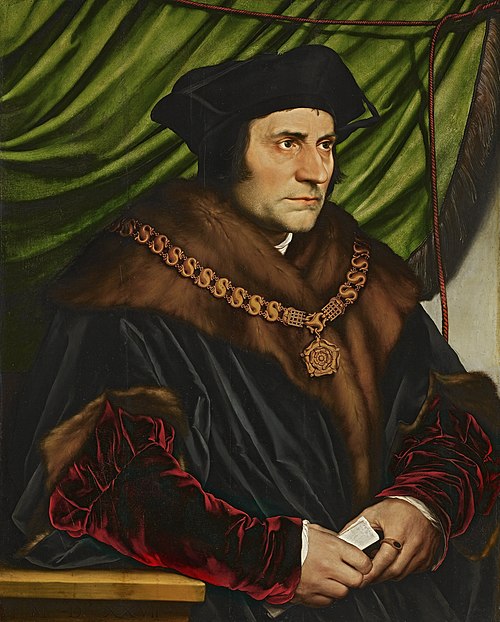
Thomas More
79Thomas More was an English statesman, lawyer and Renaissance humanist who served as Lord Chancellor and coined the word "utopia" in his book of that name — and who was executed for refusing to accept King Henry VIII's break with Rome.

Thucydides
82Thucydides was an Athenian historian and general whose History of the Peloponnesian War set the standard for rigorous, evidence-based history and remains a foundational text of political and military analysis.

Tipu Sultan
80Tipu Sultan was the ruler of the Kingdom of Mysore who became Britain's most formidable adversary in 18th-century India, fighting four Anglo-Mysore Wars and pioneering the use of rockets in warfare before dying in battle defending his capital.

Tokugawa Ieyasu
83Tokugawa Ieyasu was the patient, cunning warlord who won the final struggle to rule Japan, founding the Tokugawa shogunate that brought over 250 years of peace and stability after a century of civil war.

Toni Morrison
81Toni Morrison was an American novelist whose richly poetic explorations of Black American life — above all Beloved — won her the Pulitzer Prize and made her the first African American woman to receive the Nobel Prize in Literature.