Statesman · 1478 – 1535
Thomas More
Key Takeaways
- Thomas More wrote Utopia, imagining an ideal society and coining the word.
- He was a leading Renaissance humanist and friend of Erasmus.
- He rose to become Lord Chancellor of England under Henry VIII.
- He was executed for refusing to recognize the king as head of the Church.
Thomas More was a busy lawyer and statesman who rose to become the second most powerful man in England — yet he is remembered above all for a small book that gave the world a new word: utopia.
A book that named a dream
Published in 1516, Utopia describes an imaginary island with shared property, religious tolerance and reasoned laws — a mirror held up to the injustices of More’s own society. The name, a pun on Greek words for “no place” and “good place,” has ever since meant any vision of an ideal world. As a leading Renaissance humanist, More shared this world of ideas with his close friend Erasmus.
Conscience against the king
More became Lord Chancellor, but when Henry VIII broke with Rome and declared himself head of the Church, More refused to agree — and paid with his life. Where Niccolò Machiavelli counselled rulers to do whatever power required, this statesman and writer chose conscience over survival, and was later made a saint.
Influence
More gave political thought a lasting idea and word — utopia — and his death made him an enduring symbol of conscience standing against state power.
Legacy
Canonized as a saint and dramatized as 'a man for all seasons', More is remembered for both his book and his martyrdom.
Major Works
- Utopia
Controversies
- He authorized the persecution of Protestants as heresy during his time in power.
- His refusal to endorse Henry VIII's divorce and supremacy led to his execution.
Connections
Frequently Asked Questions
Who was Thomas More?
Thomas More (1478–1535) was an English statesman, humanist and writer, author of Utopia and Lord Chancellor, executed for opposing Henry VIII's break with Rome.
What is Utopia about?
Utopia describes an imaginary island society with communal property and religious tolerance, used by More to critique the politics and inequality of his own age.
Citations & Sources
People Like Thomas

Erasmus
80Erasmus was a Dutch humanist, scholar and writer, the leading intellectual of the Northern Renaissance, whose satire In Praise of Folly and pioneering edition of the Greek New Testament shaped both literature and the coming Reformation.
Why A close friend and fellow humanist to whom More's circle was central.
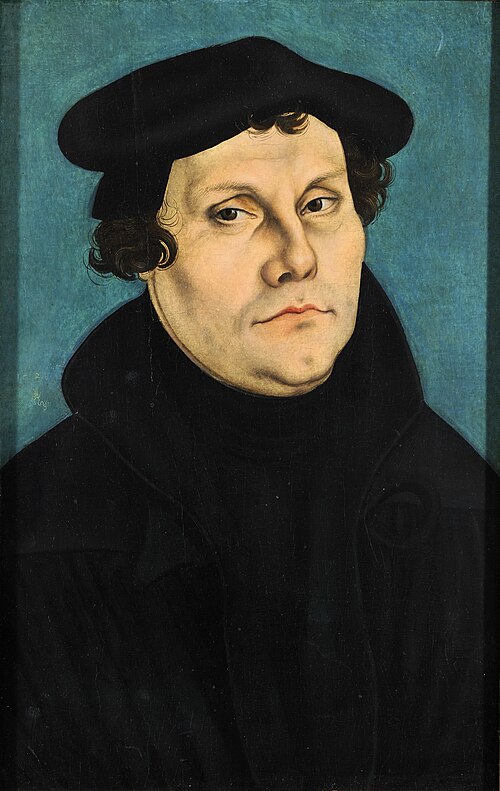
Martin Luther
91Martin Luther was a German theologian and reformer whose challenge to the Catholic Church sparked the Protestant Reformation and reshaped the religious, political and cultural landscape of Europe.
Why The reformer whose movement More fiercely opposed as a defender of the Catholic Church.

Niccolò Machiavelli
88Niccolò Machiavelli was a Renaissance Italian diplomat, political philosopher and writer whose treatise The Prince founded modern political science and gave his name to ruthless statecraft.
Why A contemporary who, very differently, also wrote a famous book on how states should be governed.

Francis Bacon
82Francis Bacon was an English philosopher, statesman and writer who served as Lord Chancellor and, in works such as the Novum Organum and his Essays, founded the modern scientific method of reasoning from evidence and experiment.
Why Also a statesman & writer · From the same civilization

Cicero
88Cicero was a Roman statesman, orator and philosopher whose speeches and writings defined Latin prose, transmitted Greek philosophy to Rome, and championed the values of the Roman Republic.
Why Also a statesman & writer · Comparable historical impact

Theodore Roosevelt
85Theodore Roosevelt was the 26th President of the United States, a soldier, conservationist and reformer — and a remarkably prolific author who wrote around forty books on history, nature, politics and exploration alongside his public career.
Why Also a statesman & writer · Comparable historical impact