Historical Period · c. 1418–1650
Age of Exploration
The Age of Exploration was the era when European powers undertook global sea voyages, discovering ocean routes, encountering new lands, and reshaping the world through trade, conquest and colonization.
Key Takeaways
- European powers pioneered global sea voyages from the 15th century onward.
- Columbus's 1492 voyage opened the Americas to European contact and colonization.
- New trade routes linked Europe, Africa, Asia and the Americas.
- The era also brought conquest, slavery and devastation to indigenous peoples.
- Span
- c. 1418–1650
- Pioneers
- Portugal & Spain
- Turning point
- Columbus's voyage (1492)
From the 15th to the 17th centuries, explorers sailing for Portugal, Spain, England and others crossed the oceans, linking the continents, opening the Americas to Europe, and inaugurating an age of global trade — and colonial exploitation.
The Age of Exploration remade the map of the world. Driven by the search for trade, wealth and new routes to Asia, European sailors ventured across uncharted oceans, linking continents that had developed in isolation for millennia.
The turning point came in 1492, when Christopher Columbus, sailing for Spain, reached the Americas. The voyages that followed brought immense wealth and global trade — and, for the indigenous peoples of the Americas and Africa, conquest, slavery and catastrophe.
For maritime powers like the England of Elizabeth I, the age opened the path to empire, setting the stage for the modern, interconnected world.
Key Events
- Portuguese exploration of the African coast
- Columbus reaches the Americas (1492)
- Magellan's expedition circumnavigates the globe
Major Ideas
- Global trade and navigation
- European colonial expansion
Important Figures of Age of Exploration

Christopher Columbus
85Christopher Columbus was an Italian explorer who, sailing for Spain in 1492, opened sustained European contact with the Americas — a voyage of immense and deeply controversial consequence.

Elizabeth I
89Elizabeth I was Queen of England from 1558 to 1603, whose long and stable reign — the Elizabethan era — saw a golden age of culture, the defeat of the Spanish Armada, and England's rise as a sea power.
Christopher Columbus
85Christopher Columbus was an Italian explorer who, sailing for Spain in 1492, opened sustained European contact with the Americas — a voyage of immense and deeply controversial consequence.
Elizabeth I
89Elizabeth I was Queen of England from 1558 to 1603, whose long and stable reign — the Elizabethan era — saw a golden age of culture, the defeat of the Spanish Armada, and England's rise as a sea power.

Ferdinand Magellan
86Ferdinand Magellan was a Portuguese explorer who, in the service of Spain, led the first expedition to circumnavigate the globe, proving the world could be sailed around even though he died midway through the voyage.

Hernán Cortés
80Hernán Cortés was a Spanish conquistador who led the expedition that overthrew the Aztec Empire, bringing much of Mexico under Spanish rule and inaugurating centuries of colonial domination.
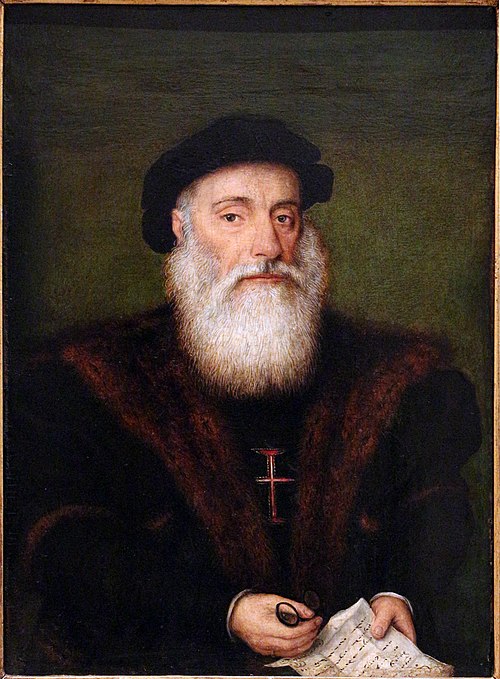
Vasco da Gama
82Vasco da Gama was a Portuguese explorer and navigator who opened the first sea route from Europe to India around the southern tip of Africa, transforming global trade.

Zheng He
83Zheng He was a Chinese admiral and explorer of the Ming dynasty who commanded vast treasure fleets on seven voyages across the Indian Ocean, reaching as far as Arabia and East Africa.
Frequently Asked Questions
What was the Age of Exploration?
It was the era (c. 1418–1650) when European powers undertook global sea voyages, opening ocean trade routes and the Americas to Europe and reshaping the world through trade, conquest and colonization.