Revolutionary · 1866 – 1925
Sun Yat-sen
Key Takeaways
- Sun Yat-sen led the revolution that overthrew the Qing dynasty in 1911.
- He founded the Republic of China in 1912 and co-founded the Kuomintang party.
- His Three Principles of the People shaped Chinese political thought.
- He is uniquely revered by both the People's Republic of China and the Republic of China (Taiwan).
Sun Yat-sen toppled an empire and gave China a republic — though he did not live to see what his successors would make of it. The Father of the Nation, he is uniquely claimed by both Communist Beijing and Nationalist Taipei as their founding father.
Overthrowing the empire
Sun spent decades plotting revolution, launching multiple failed attempts before the Xinhai Revolution of 1911 finally succeeded, ending more than 2,000 years of imperial rule in China. He became the first provisional president of the Republic of China but quickly ceded power to military strongman Yuan Shikai in the interest of unity — a decision that led to years of warlordism. He spent the rest of his short life reorganizing the Nationalist movement with Soviet help and developing his Three Principles: nationalism, democracy, and people’s livelihood.
A legacy fought over
Sun died in 1925, too soon to see the civil war that would divide his movement. Chiang Kai-shek inherited his Nationalist Party; Mao Zedong claimed his revolutionary mantle. Both built very different Chinas — but both hung his portrait as their founding father. The man who ended imperial China belongs, uniquely, to all of it.
Influence
Sun Yat-sen destroyed imperial China and created the framework for the republic that his successors — both Nationalist and Communist — fought over and built upon.
Legacy
Uniquely honored by both sides of the Taiwan Strait, his portrait hangs in Beijing's Tiananmen Square and Taipei's National Assembly — the only figure both Chinese states claim as their founding father.
Connections
Frequently Asked Questions
Who was Sun Yat-sen?
Sun Yat-sen (1866–1925) was the Chinese revolutionary who overthrew the Qing dynasty, founded the Republic of China in 1912, and became the founding father of modern China, revered by both Nationalists and Communists.
Citations & Sources
People Like Sun

Chiang Kai-shek
82Chiang Kai-shek was the Chinese Nationalist leader who unified China in the late 1920s, led the country through the Japanese invasion in World War II, but lost the Chinese Civil War to Mao Zedong and retreated to Taiwan, which he ruled until his death.
Why His successor as Nationalist leader, who inherited his movement and took it to civil war and Taiwan.

Mao Zedong
90Mao Zedong was the founder of the People's Republic of China, who led the Chinese Communist Party to victory in the civil war, proclaimed the PRC in 1949, and then imposed radical revolutionary policies that caused tens of millions of deaths.
Why The Communist revolutionary who claimed Sun's legacy while building a very different China.
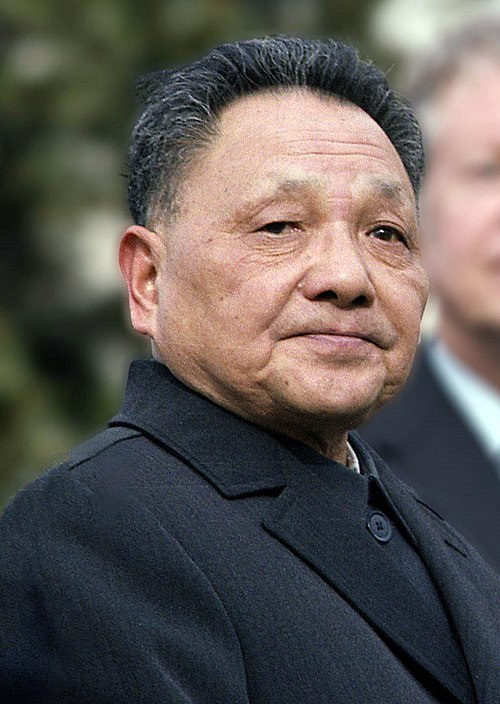
Deng Xiaoping
89Deng Xiaoping was the Chinese leader who reversed Mao Zedong's catastrophic policies after 1978, opening China to market reforms that transformed it from a poor agrarian country into the world's second-largest economy.
Why Also a statesman & revolutionary · Active in the same era

Che Guevara
83Che Guevara was the Argentine Marxist revolutionary who helped Fidel Castro seize power in Cuba, theorized guerrilla warfare as the path to revolution in the developing world, and became an iconic symbol of rebellion after his execution in Bolivia in 1967.
Why Also a revolutionary & physician · Active in the same era
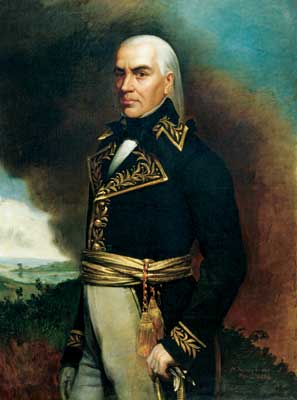
Francisco de Miranda
78Francisco de Miranda was the Venezuelan revolutionary who became the forerunner of Spanish American independence, fighting across three continents before returning home to lead Venezuela's first republic — a visionary who preceded Bolívar and inspired the liberation of Latin America.
Why Also a revolutionary & statesman · Active in the same era

Vladimir Lenin
92Vladimir Lenin was the Marxist revolutionary who led the Bolshevik seizure of power in Russia in 1917, founded the Soviet Union, and created the first communist state — reshaping the course of the 20th century.
Why Also a revolutionary & statesman · Active in the same era