Revolutionary · 1870 – 1924
Vladimir Lenin
Key Takeaways
- Lenin led the Bolshevik Revolution in October 1917, overthrowing the Russian provisional government.
- He founded the Soviet Union and the world's first communist state.
- He won the Russian Civil War against the White Army and foreign intervention.
- His theory of the revolutionary vanguard party became the model for communist revolutions worldwide.
Vladimir Lenin did what Karl Marx only theorized: he made a communist revolution happen. In October 1917, his Bolshevik Party seized power in Russia, and the world was never the same.
The revolution
Lenin had spent decades in exile studying and planning, building the Bolsheviks into a disciplined revolutionary party. When World War I shattered the Russian Empire and the tsar fell, he returned in a sealed German train and drove his party toward power. The October Revolution was swift — a coup rather than a mass uprising — but the Civil War that followed was brutal, lasting until 1922. Lenin’s Red Army and Red Terror prevailed over the White armies and foreign interventionists, and the Soviet Union was proclaimed.
Builder and destroyer
Lenin created the first communist state and established institutions — the party, the Cheka, the Comintern — that would outlast him. He also pioneered the Red Terror, systematically eliminating political opponents. His death in 1924 opened the succession struggle that Stalin won, transforming Lenin’s revolutionary state into something its founder might not have recognized. Lenin’s embalmed body lies in Red Square to this day — a communist relic in a Russia that has abandoned communism.
Influence
Lenin's October Revolution created the world's first communist state and inspired communist movements globally, shaping the 20th century's ideological conflicts.
Legacy
His embalmed body in Red Square became a communist icon; his political model inspired revolutions from China to Cuba, while his state became the template for communist governance everywhere.
Controversies
- His Red Terror suppressed political opponents through mass executions and the Cheka.
- Forced collectivization policies contributed to the 1921–22 Russian famine.
Connections
Frequently Asked Questions
Who was Vladimir Lenin?
Vladimir Lenin (1870–1924) was the Marxist revolutionary who led the Bolshevik seizure of power in Russia in 1917 and founded the Soviet Union, the world's first communist state.
What was the October Revolution?
The October Revolution of 1917 was the Bolshevik coup that overthrew Russia's provisional government, putting Lenin and the communists in power and transforming Russia into a Soviet state.
Citations & Sources
People Like Vladimir

Joseph Stalin
91Joseph Stalin was the Soviet dictator who industrialized the USSR, led it to victory in World War II, and built a vast empire in Eastern Europe — but also presided over a totalitarian state that killed millions through purges, gulags, and engineered famine.
Why His successor, who transformed Lenin's revolutionary state into a totalitarian empire.

Karl Marx
95Karl Marx was a German philosopher, economist, and revolutionary whose theories of historical materialism and class struggle, set out in The Communist Manifesto and Das Kapital, became among the most influential and contested ideas in modern history.
Why The philosopher whose ideas Lenin built upon and applied to the Russian Revolution.

Napoleon Bonaparte
94Napoleon Bonaparte was a French military and political leader who rose during the French Revolution, crowned himself Emperor, and dominated European affairs for over a decade.
Why The revolutionary-turned-ruler whose career Lenin both studied and consciously sought to avoid repeating.

Leon Trotsky
85Leon Trotsky was the Russian revolutionary who helped lead the October Revolution alongside Lenin, organized and commanded the Red Army through the Russian Civil War, and was later expelled by Stalin, becoming the most famous critic of Stalinist communism before his assassination in Mexico.
Why Also a revolutionary · Active in the same era
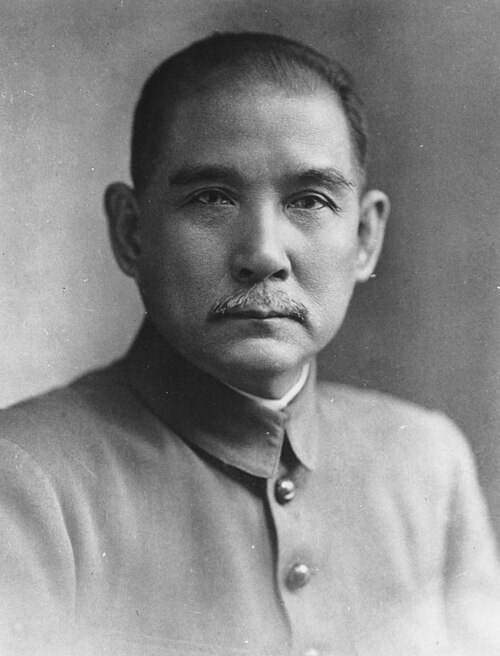
Sun Yat-sen
85Sun Yat-sen was the Chinese revolutionary and statesman who overthrew the Qing dynasty, founded the Republic of China, and became the founding father of both mainland China and Taiwan — revered by both Communists and Nationalists as the father of the Chinese nation.
Why Also a revolutionary & statesman · Active in the same era
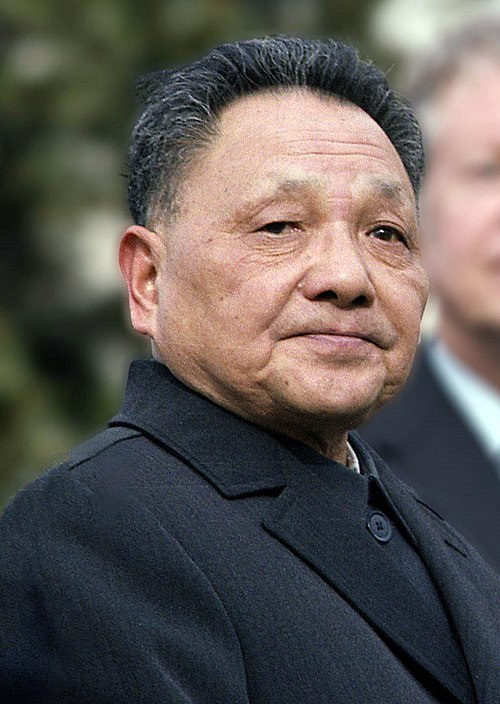
Deng Xiaoping
89Deng Xiaoping was the Chinese leader who reversed Mao Zedong's catastrophic policies after 1978, opening China to market reforms that transformed it from a poor agrarian country into the world's second-largest economy.
Why Also a statesman & revolutionary · Active in the same era