Philosopher · 1818 – 1883
Karl Marx
Key Takeaways
- Marx argued that history is driven by struggles between economic classes.
- The Communist Manifesto called for the overthrow of capitalism by the working class.
- Das Kapital offered a deep critique of how capitalist economies generate profit.
- Marxism became a foundation for socialist and communist movements worldwide.
Karl Marx was a philosopher, economist, and revolutionary whose ideas reshaped the modern world. Writing amid the upheavals of the Industrial Revolution, he sought not only to understand society but to transform it.
Historical materialism
Marx argued that the engine of history is not ideas alone but the material conditions of production — and the struggles between the classes those conditions create. He drew the dialectical method from Hegel but turned it on its head, grounding it in economics rather than spirit. History, he held, advances through conflict between those who own the means of production and those who labor.
The critique of capitalism
In The Communist Manifesto (1848), written with Friedrich Engels, Marx called on workers to overthrow the capitalist order. His masterwork Das Kapital dissected how profit arises from labor, building on and challenging the classical economics of Adam Smith. He predicted that capitalism’s contradictions would lead to its eventual collapse.
Legacy
Marxism became one of the most powerful intellectual and political forces of the modern age, inspiring labor movements, revolutions, and entire states. Though his political legacy remains fiercely contested, Marx’s analysis of capitalism and inequality continues to shape economics, sociology, and history to this day.
Influence
Marx's ideas reshaped economics, sociology, history, and political philosophy, and inspired labor movements, revolutions, and governments across the twentieth century.
Legacy
Marx ranks among the most influential thinkers in history; his analysis of capitalism remains widely studied even as his political legacy is fiercely debated.
Major Works
- The Communist Manifesto
- Das Kapital
- Economic and Philosophic Manuscripts of 1844
- The German Ideology
Controversies
- Regimes claiming his name committed grave repression, raising lasting debate over Marx's responsibility for them.
- His predictions of capitalism's collapse and proletarian revolution remain heavily disputed.
Notable Quotes
“The philosophers have only interpreted the world, in various ways; the point, however, is to change it.”
“Workers of the world, unite!”
Connections
Frequently Asked Questions
Who was Karl Marx?
Karl Marx (1818–1883) was a German philosopher and economist whose theories of class struggle and historical materialism founded Marxism.
What is historical materialism?
It is Marx's theory that the material economic conditions of a society — how it produces goods and who controls production — drive its social structures and historical change.
Citations & Sources
People Like Karl

Georg Wilhelm Friedrich Hegel
88Georg Wilhelm Friedrich Hegel was a German philosopher and the leading figure of German idealism, whose dialectical method and grand vision of history as the self-development of Spirit profoundly shaped modern philosophy.
Why Marx transformed Hegel's dialectics into a materialist theory of history.

Adam Smith
90Adam Smith was a Scottish Enlightenment philosopher and economist, the father of modern economics, whose work The Wealth of Nations laid the foundations of free-market thought.
Why Marx built his critique of capitalism on classical economics, including Smith's labor theory of value.

Jean-Jacques Rousseau
90Jean-Jacques Rousseau was a Genevan-French philosopher, writer, and composer whose ideas on the social contract, the general will, and natural human goodness shaped modern political thought, education, and the Romantic movement.
Why An earlier critic of inequality and property whose ideas fed radical political thought.

Friedrich Nietzsche
92Friedrich Nietzsche was a German philosopher whose radical critiques of morality, religion, and truth—including the proclamation that "God is dead" and the ideal of the Übermensch—made him one of the most influential and provocative thinkers of the modern era.
Why A contemporary German thinker who, like Marx, profoundly challenged inherited values and certainties.
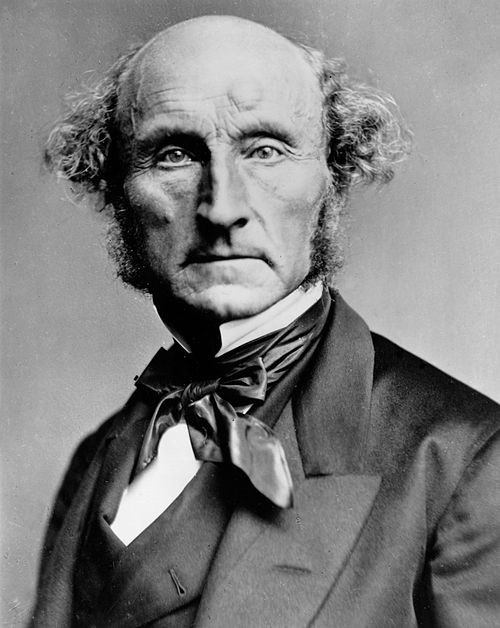
John Stuart Mill
87John Stuart Mill was an English philosopher and economist, the leading liberal thinker of the nineteenth century, whose works on utilitarianism, liberty, and the rights of women shaped modern political and ethical thought.
Why Also a philosopher & economist · Active in the same era

Augustine of Hippo
92Augustine of Hippo was a Roman North African theologian and philosopher whose works, including Confessions and City of God, shaped Western Christianity and laid intellectual foundations for medieval and modern thought.
Why Also a philosopher & writer · Comparable historical impact