Theologian · 354 – 430
Augustine of Hippo
Key Takeaways
- Augustine blended Christian faith with Neoplatonic philosophy.
- His Confessions is a landmark spiritual autobiography.
- City of God defended Christianity after the sack of Rome.
- His ideas on sin and grace shaped Western Christian theology for centuries.
Augustine of Hippo stands among the towering figures of Late Antiquity, a thinker who bridged the classical and Christian worlds and gave shape to centuries of Western theology and philosophy.
From restless youth to bishop
Born in Roman North Africa, Augustine pursued rhetoric, ambition, and a series of philosophies before his dramatic conversion to Christianity. He recounted this inner journey in his Confessions, a work of unprecedented psychological depth that became a model for spiritual autobiography. His thought was profoundly shaped by Neoplatonism, the tradition descending from Plato.
City of God
When Rome was sacked in 410, many blamed the abandonment of the old gods. Augustine answered in City of God, contrasting the fleeting earthly city with the eternal City of God and reframing history as a divine drama. His doctrines of original sin and grace, hammered out in part through his dispute with Pelagius, became central to Western Christianity.
Legacy
Revered as a saint and Doctor of the Church, Augustine influenced the medieval world and beyond. The great synthesis of Thomas Aquinas leaned on his authority, and his exploration of the inner self anticipated much of later philosophy. Few thinkers have so durably shaped the religious imagination of the West.
Influence
Augustine's fusion of Christian doctrine and Neoplatonic philosophy became a cornerstone of Western theology, influencing the medieval church, the Reformation, and modern philosophy.
Legacy
Recognized as a Doctor of the Church and a saint, Augustine remains among the most influential figures in the history of Christian thought.
Major Works
- Confessions
- City of God
- On Christian Doctrine
- On the Trinity
Controversies
- His doctrines of original sin and predestination sparked lasting theological debate, including his conflict with Pelagius.
- Some of his arguments on coercion against heretics were later cited to justify religious persecution.
Notable Quotes
“You have made us for yourself, O Lord, and our heart is restless until it rests in you.”
Connections
Frequently Asked Questions
Who was Augustine of Hippo?
Augustine (354–430) was a Roman North African bishop, theologian, and philosopher whose works shaped Western Christianity.
What is City of God about?
Written after the sack of Rome in 410, it contrasts the earthly city with the eternal City of God and defends Christianity against claims that it caused Rome's decline.
Citations & Sources
People Like Augustine

Plato
96Plato was a Greek philosopher who founded the Academy in Athens, wrote the foundational dialogues of Western philosophy, and developed the influential theory of Forms.
Why Augustine drew heavily on Platonic and Neoplatonic ideas of the soul, truth, and the eternal.

Thomas Aquinas
91Thomas Aquinas was a medieval Italian theologian and philosopher whose synthesis of Christian theology and Aristotelian philosophy became central to Catholic thought and the high point of scholasticism.
Why Aquinas treated Augustine as a foundational authority for medieval Christian theology.

Marcus Aurelius
90Marcus Aurelius was a Roman emperor and Stoic philosopher, the last of the "Five Good Emperors", whose private journal, the Meditations, is the most cherished work of Stoic thought.
Why An earlier Roman thinker whose philosophical introspection contrasts with Augustine's Christian confession.
Hypatia
84Hypatia was a mathematician, astronomer and Neoplatonist philosopher of late-antique Alexandria, the most prominent woman scholar of the ancient world, whose brutal murder came to symbolize the end of classical learning.
Why A contemporary in the late antique world, representing the pagan philosophical learning Augustine engaged.
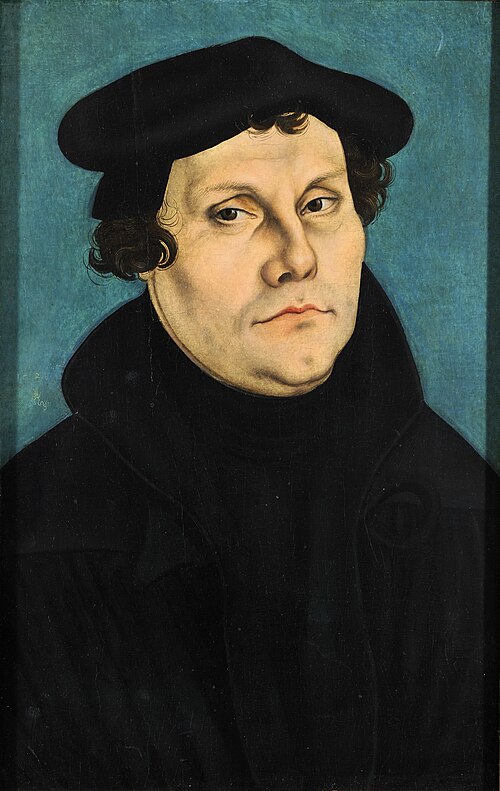
Martin Luther
91Martin Luther was a German theologian and reformer whose challenge to the Catholic Church sparked the Protestant Reformation and reshaped the religious, political and cultural landscape of Europe.
Why Also a theologian & writer · Comparable historical impact

Cicero
88Cicero was a Roman statesman, orator and philosopher whose speeches and writings defined Latin prose, transmitted Greek philosophy to Rome, and championed the values of the Roman Republic.
Why Also a philosopher & writer · Comparable historical impact