Theologian · 354 – 430
Augustine of Hippo
If you're interested in Augustine of Hippo, these historical figures share a similar impact, discipline, philosophy, or era. Each recommendation explains why the connection exists.
Similar Impact & Significance

Plato
96Plato was a Greek philosopher who founded the Academy in Athens, wrote the foundational dialogues of Western philosophy, and developed the influential theory of Forms.
Why Augustine drew heavily on Platonic and Neoplatonic ideas of the soul, truth, and the eternal.

Thomas Aquinas
91Thomas Aquinas was a medieval Italian theologian and philosopher whose synthesis of Christian theology and Aristotelian philosophy became central to Catholic thought and the high point of scholasticism.
Why Aquinas treated Augustine as a foundational authority for medieval Christian theology.

Marcus Aurelius
90Marcus Aurelius was a Roman emperor and Stoic philosopher, the last of the "Five Good Emperors", whose private journal, the Meditations, is the most cherished work of Stoic thought.
Why An earlier Roman thinker whose philosophical introspection contrasts with Augustine's Christian confession.
Hypatia
84Hypatia was a mathematician, astronomer and Neoplatonist philosopher of late-antique Alexandria, the most prominent woman scholar of the ancient world, whose brutal murder came to symbolize the end of classical learning.
Why A contemporary in the late antique world, representing the pagan philosophical learning Augustine engaged.
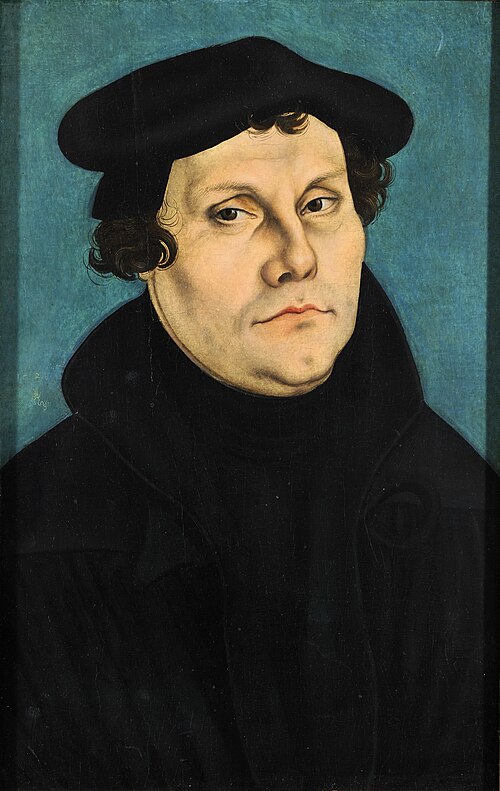
Martin Luther
91Martin Luther was a German theologian and reformer whose challenge to the Catholic Church sparked the Protestant Reformation and reshaped the religious, political and cultural landscape of Europe.
Why Also a theologian & writer · Comparable historical impact

Cicero
88Cicero was a Roman statesman, orator and philosopher whose speeches and writings defined Latin prose, transmitted Greek philosophy to Rome, and championed the values of the Roman Republic.
Why Also a philosopher & writer · Comparable historical impact

Francis Bacon
82Francis Bacon was an English philosopher, statesman and writer who served as Lord Chancellor and, in works such as the Novum Organum and his Essays, founded the modern scientific method of reasoning from evidence and experiment.
Why Also a philosopher & writer · Comparable historical impact

Friedrich Nietzsche
92Friedrich Nietzsche was a German philosopher whose radical critiques of morality, religion, and truth—including the proclamation that "God is dead" and the ideal of the Übermensch—made him one of the most influential and provocative thinkers of the modern era.
Why Also a philosopher & writer · Comparable historical impact

Georg Wilhelm Friedrich Hegel
88Georg Wilhelm Friedrich Hegel was a German philosopher and the leading figure of German idealism, whose dialectical method and grand vision of history as the self-development of Spirit profoundly shaped modern philosophy.
Why Also a philosopher & writer · Comparable historical impact

Hildegard of Bingen
84Hildegard of Bingen was a German Benedictine abbess and one of the most remarkable polymaths of the Middle Ages — a visionary, composer, writer, healer and natural philosopher.
Why Also a theologian & writer · Comparable historical impact

Jean-Jacques Rousseau
90Jean-Jacques Rousseau was a Genevan-French philosopher, writer, and composer whose ideas on the social contract, the general will, and natural human goodness shaped modern political thought, education, and the Romantic movement.
Why Also a philosopher & writer · Comparable historical impact
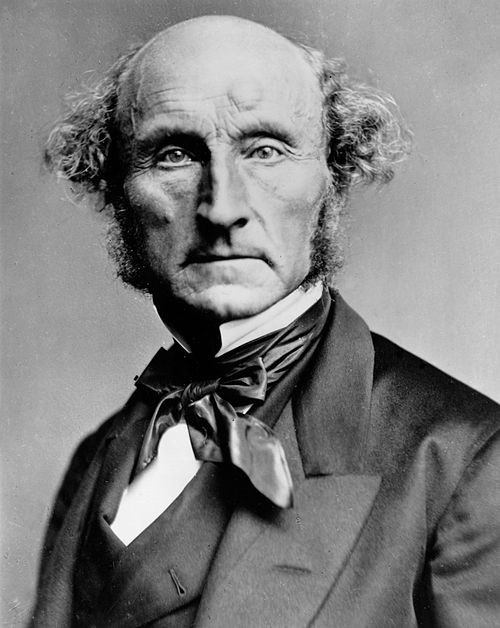
John Stuart Mill
87John Stuart Mill was an English philosopher and economist, the leading liberal thinker of the nineteenth century, whose works on utilitarianism, liberty, and the rights of women shaped modern political and ethical thought.
Why Also a philosopher & writer · Comparable historical impact

Karl Marx
95Karl Marx was a German philosopher, economist, and revolutionary whose theories of historical materialism and class struggle, set out in The Communist Manifesto and Das Kapital, became among the most influential and contested ideas in modern history.
Why Also a philosopher & writer · Comparable historical impact

Mary Wollstonecraft
85Mary Wollstonecraft was an English Enlightenment writer and philosopher, a pioneer of feminist thought whose A Vindication of the Rights of Woman argued for the education and equality of women.
Why Also a writer & philosopher · Comparable historical impact

Niccolò Machiavelli
88Niccolò Machiavelli was a Renaissance Italian diplomat, political philosopher and writer whose treatise The Prince founded modern political science and gave his name to ruthless statecraft.
Why Also a philosopher & writer · Comparable historical impact

Voltaire
90Voltaire was a French Enlightenment writer, philosopher and wit, a tireless champion of reason, free speech and religious tolerance and one of the most influential figures of his age.
Why Also a writer & philosopher · Comparable historical impact

Adam Smith
90Adam Smith was a Scottish Enlightenment philosopher and economist, the father of modern economics, whose work The Wealth of Nations laid the foundations of free-market thought.
Why Also a philosopher · Comparable historical impact

Averroes
87Averroes was a philosopher and polymath of Al-Andalus whose commentaries on Aristotle profoundly shaped medieval European philosophy and the relationship between reason and faith.
Why Also a philosopher · Comparable historical impact

Avicenna
90Avicenna was a Persian polymath of the Islamic Golden Age, one of the greatest physicians and philosophers of the medieval world, whose Canon of Medicine was a standard text for six centuries.
Why Also a philosopher · Comparable historical impact
Same Field or Discipline

Socrates
95Socrates was a classical Greek philosopher credited as a founder of Western philosophy, famous for the Socratic method of questioning and for his trial and execution in Athens.
Why Also a philosopher · Shared school of thought

Aldous Huxley
80Aldous Huxley was an English writer and philosopher whose dystopian novel Brave New World became one of the most influential warnings of the 20th century, imagining a future enslaved not by terror but by pleasure and conditioning.
Why Also a writer & philosopher

Henry David Thoreau
80Henry David Thoreau was an American writer, naturalist and philosopher whose book Walden and essay "Civil Disobedience" became foundational texts of environmental thought and nonviolent resistance, influencing reformers around the world.
Why Also a writer & philosopher

Michel de Montaigne
80Michel de Montaigne was a French Renaissance thinker and nobleman who invented the essay as a literary form, using candid self-examination to explore the human condition with unmatched honesty and wit.
Why Also a philosopher & writer

Erasmus
80Erasmus was a Dutch humanist, scholar and writer, the leading intellectual of the Northern Renaissance, whose satire In Praise of Folly and pioneering edition of the Greek New Testament shaped both literature and the coming Reformation.
Why Also a writer & theologian