Philosopher · 1844 – 1900
Friedrich Nietzsche
Key Takeaways
- Nietzsche proclaimed that "God is dead," meaning traditional religious foundations for values had collapsed.
- He introduced the ideal of the Übermensch, who creates his own values.
- He distinguished "master" and "slave" moralities to critique conventional ethics.
- His concept of the will to power sought to explain human striving and life itself.
Friedrich Nietzsche was among the most explosive and influential thinkers of the modern era, a philosopher-poet who challenged the deepest assumptions of Western morality, religion, and truth.
Critique of morality
Nietzsche argued that conventional values were not eternal truths but human creations with histories. In On the Genealogy of Morality he distinguished “master morality,” rooted in strength and nobility, from “slave morality,” born of resentment among the weak. His declaration that “God is dead” diagnosed the collapse of religious foundations for value in modern life — a crisis he believed demanded the creation of new values.
The Übermensch and the will to power
In Thus Spoke Zarathustra, Nietzsche presented the Übermensch, who overcomes inherited morality to affirm life and create meaning. He saw the will to power as the fundamental drive of living things. Reacting against the rationalism of Socrates and the moral philosophy of Immanuel Kant, he sought a philosophy that embraced life in all its difficulty.
Legacy
Nietzsche’s mental collapse in 1889 ended his productive life, but his influence only grew. He shaped existentialism, psychology, and postmodern thought, and stands alongside contemporaries like Karl Marx as a thinker who fundamentally questioned the values of the modern world.
Influence
Nietzsche profoundly shaped existentialism, postmodernism, psychology, and literature, influencing thinkers from Heidegger and Sartre to Foucault.
Legacy
Nietzsche is regarded as one of the most original and challenging philosophers in history, whose questions about value, meaning, and human flourishing remain central to modern thought.
Major Works
- Thus Spoke Zarathustra
- Beyond Good and Evil
- On the Genealogy of Morality
- The Birth of Tragedy
Controversies
- His writings were later distorted by his sister and appropriated by Nazi ideology, despite Nietzsche's own opposition to nationalism and antisemitism.
Notable Quotes
“God is dead. God remains dead. And we have killed him.”
“That which does not kill us makes us stronger.”
Connections
Frequently Asked Questions
What did Nietzsche mean by "God is dead"?
He meant that belief in the Christian God could no longer serve as the foundation for moral values in modern society, creating both crisis and opportunity for new values.
What is the Übermensch?
The Übermensch, or 'overman', is Nietzsche's ideal of a person who overcomes conventional morality to create his own values and affirm life.
Citations & Sources
People Like Friedrich

Socrates
95Socrates was a classical Greek philosopher credited as a founder of Western philosophy, famous for the Socratic method of questioning and for his trial and execution in Athens.
Why Nietzsche engaged critically with Socratic rationalism throughout his work.

Immanuel Kant
94Immanuel Kant was a German philosopher of the Enlightenment, one of the most influential thinkers in history, who reconciled rationalism and empiricism and transformed ethics, metaphysics and epistemology.
Why A German philosopher whose moral system Nietzsche sought to overturn.

Karl Marx
95Karl Marx was a German philosopher, economist, and revolutionary whose theories of historical materialism and class struggle, set out in The Communist Manifesto and Das Kapital, became among the most influential and contested ideas in modern history.
Why A contemporary German thinker who, like Nietzsche, radically critiqued inherited values and institutions.

Georg Wilhelm Friedrich Hegel
88Georg Wilhelm Friedrich Hegel was a German philosopher and the leading figure of German idealism, whose dialectical method and grand vision of history as the self-development of Spirit profoundly shaped modern philosophy.
Why A predecessor in German philosophy whose grand systems Nietzsche reacted against.
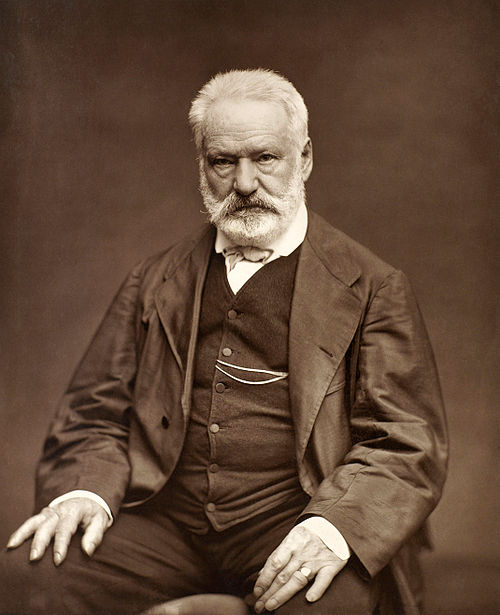
Victor Marie Hugo
89Victor Hugo was a French novelist, poet, and dramatist, the towering figure of French Romanticism, whose novels Les Misérables and The Hunchback of Notre-Dame are monuments of world literature.
Why Also a poet & writer · Active in the same era

Augustine of Hippo
92Augustine of Hippo was a Roman North African theologian and philosopher whose works, including Confessions and City of God, shaped Western Christianity and laid intellectual foundations for medieval and modern thought.
Why Also a philosopher & writer · Comparable historical impact