Composer · 1098 – 1179
Hildegard of Bingen
Key Takeaways
- Hildegard of Bingen was a rare female intellectual authority of the Middle Ages.
- She was an abbess, mystic, composer, writer and healer all at once.
- Her sacred music is strikingly original and still performed today.
- She wrote influential works on theology, medicine and the natural world.
Hildegard of Bingen was one of the most extraordinary individuals of the Middle Ages — and one of the very few medieval women to command intellectual and spiritual authority across Europe. Abbess, mystic, composer, writer and healer, she defied every expectation of her time.
Visionary and abbess
From childhood Hildegard experienced vivid visions, which she eventually recorded — with the Church’s approval — in major theological works such as Scivias. Within the Holy Roman Empire she founded monasteries, advised popes and emperors, and even undertook preaching tours, an astonishing role for a woman of her era.
Composer and natural philosopher
Hildegard composed a large body of sacred music of striking originality, including the early musical drama Ordo Virtutum. She also wrote on medicine and the natural world, cataloguing plants, remedies and the workings of the body with a practical, observant eye.
Legacy
Long admired and, in 2012, named a saint and Doctor of the Church, Hildegard has enjoyed a remarkable modern revival — her music newly recorded, her writings newly studied. Like the ancient scholar Hypatia before her, she stands as a beacon of female genius in a world that gave women few such chances.
Influence
Hildegard was one of the few women of the Middle Ages to wield intellectual and spiritual authority, advising popes and emperors, and her music and writings have enjoyed a remarkable modern revival.
Legacy
Named a saint and a Doctor of the Church in 2012, Hildegard is celebrated as a visionary genius and a pioneering woman in music, science and theology.
Major Works
- Scivias (Know the Ways)
- Ordo Virtutum (a musical morality play)
- Physica and Causae et Curae (on medicine and nature)
Controversies
- Her claim to divine visions and her public preaching were extraordinary — and at times contested — for a woman of her era.
Notable Quotes
“Glance at the sun. See the moon and the stars. Gaze at the beauty of the earth's greenings.”
Connections
Frequently Asked Questions
Who was Hildegard of Bingen?
Hildegard of Bingen (1098–1179) was a German Benedictine abbess and polymath — a visionary, composer, writer and healer — and one of the most remarkable women of the Middle Ages.
Why is Hildegard of Bingen important?
She was a rare female authority in the medieval Church who left major works of theology, original sacred music, and writings on medicine and nature; she was named a Doctor of the Church in 2012.
Citations & Sources
People Like Hildegard

Thomas Aquinas
91Thomas Aquinas was a medieval Italian theologian and philosopher whose synthesis of Christian theology and Aristotelian philosophy became central to Catholic thought and the high point of scholasticism.
Why A fellow towering figure of medieval Christian intellectual life, in a different generation and mode.
Hypatia
84Hypatia was a mathematician, astronomer and Neoplatonist philosopher of late-antique Alexandria, the most prominent woman scholar of the ancient world, whose brutal murder came to symbolize the end of classical learning.
Why An earlier woman scholar who, like Hildegard, achieved rare intellectual prominence in a male-dominated world.

Averroes
87Averroes was a philosopher and polymath of Al-Andalus whose commentaries on Aristotle profoundly shaped medieval European philosophy and the relationship between reason and faith.
Why Also a polymath · Worked in medicine

Augustine of Hippo
92Augustine of Hippo was a Roman North African theologian and philosopher whose works, including Confessions and City of God, shaped Western Christianity and laid intellectual foundations for medieval and modern thought.
Why Also a theologian & writer · Comparable historical impact
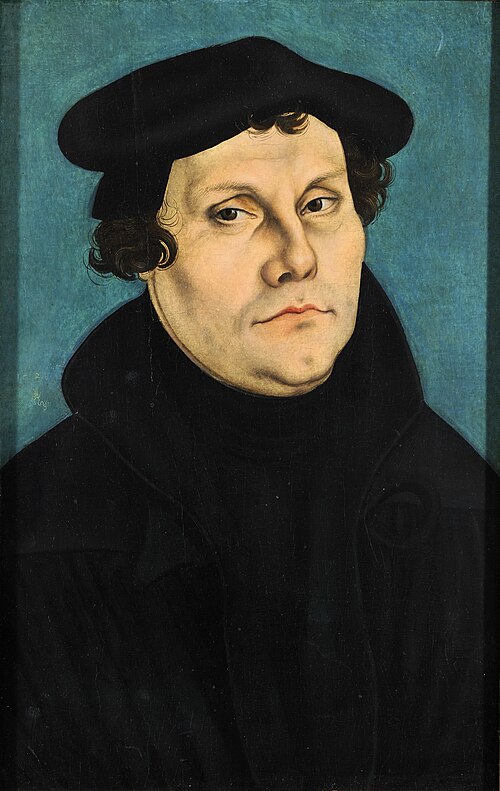
Martin Luther
91Martin Luther was a German theologian and reformer whose challenge to the Catholic Church sparked the Protestant Reformation and reshaped the religious, political and cultural landscape of Europe.
Why Also a theologian & writer · Comparable historical impact

Avicenna
90Avicenna was a Persian polymath of the Islamic Golden Age, one of the greatest physicians and philosophers of the medieval world, whose Canon of Medicine was a standard text for six centuries.
Why Also a polymath · Worked in medicine