Statesman · 1904 – 1997
Deng Xiaoping
Key Takeaways
- Deng reversed Mao's policies after 1978 and opened China to market reforms.
- His reforms lifted hundreds of millions out of poverty.
- He is widely credited as the architect of China's rise to economic superpower.
- He approved the violent crackdown on Tiananmen Square protesters in 1989.
Deng Xiaoping took a country that Mao had driven to the edge of catastrophe and turned it into a superpower. His pragmatic reforms after 1978 did more to lift people out of poverty than any policy in human history — and he also ordered tanks to crush pro-democracy protesters in Tiananmen Square.
The reform
Purged three times under Mao, Deng emerged after Mao’s death in 1976 as China’s paramount leader. He abandoned ideological rigidity with his famous formulation: “It doesn’t matter whether a cat is black or white, so long as it catches mice.” He opened special economic zones to foreign investment, allowed private enterprise, and gradually integrated China into the global economy. The results were staggering: sustained growth rates of nearly 10% per year, hundreds of millions lifted from poverty, and China’s transformation from agrarian backwater to industrial superpower.
The shadow of Tiananmen
In 1989, when students occupied Tiananmen Square demanding political reform, Deng made his most consequential decision: he approved the military crackdown that killed hundreds. His formula was explicit — economic opening yes, political freedom no. His successors have followed the same path, building the prosperous, authoritarian China he designed.
Influence
Deng's economic reforms transformed China from one of the world's poorest countries into its second-largest economy, lifting more people out of poverty than any other policy in history.
Legacy
Credited with engineering China's extraordinary rise, he is also the man who ordered tanks into Tiananmen Square — his legacy cannot be separated from either achievement.
Controversies
- Approved the violent military crackdown on Tiananmen Square protesters in June 1989.
- His 'black cat, white cat' pragmatism left China prosperous but politically authoritarian.
Connections
Frequently Asked Questions
Who was Deng Xiaoping?
Deng Xiaoping (1904–1997) was the Chinese leader who reversed Mao's catastrophic policies and launched the market reforms after 1978 that transformed China into the world's second-largest economy.
Citations & Sources
People Like Deng

Mao Zedong
90Mao Zedong was the founder of the People's Republic of China, who led the Chinese Communist Party to victory in the civil war, proclaimed the PRC in 1949, and then imposed radical revolutionary policies that caused tens of millions of deaths.
Why His predecessor whose disastrous policies Deng reversed, transforming China from catastrophe to economic power.
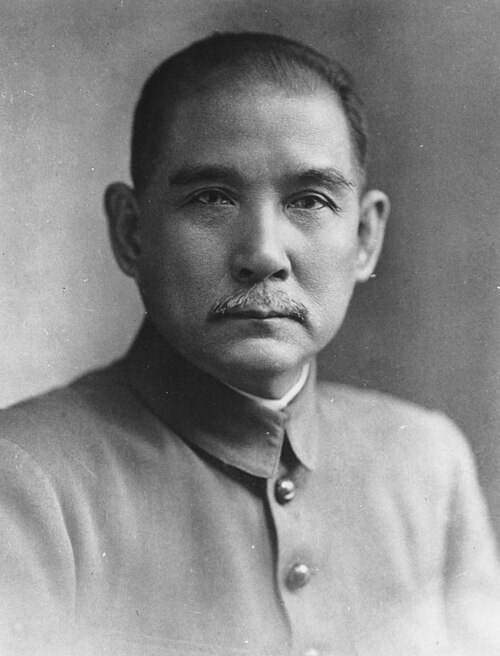
Sun Yat-sen
85Sun Yat-sen was the Chinese revolutionary and statesman who overthrew the Qing dynasty, founded the Republic of China, and became the founding father of both mainland China and Taiwan — revered by both Communists and Nationalists as the father of the Chinese nation.
Why The founding father of Chinese nationalism whose vision of a prosperous China Deng arguably did more to realize than Mao.

Chiang Kai-shek
82Chiang Kai-shek was the Chinese Nationalist leader who unified China in the late 1920s, led the country through the Japanese invasion in World War II, but lost the Chinese Civil War to Mao Zedong and retreated to Taiwan, which he ruled until his death.
Why Also a statesman & ruler · Active in the same era
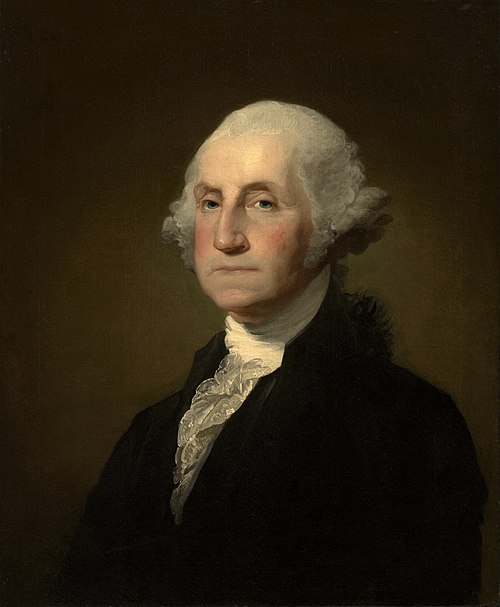
George Washington
91George Washington was the commander of the Continental Army in the American Revolution and the first President of the United States, whose leadership and restraint shaped the new republic.
Why Also a statesman & ruler · Active in the same era

Haile Selassie I
85Haile Selassie was the Emperor of Ethiopia who modernized his country, became the symbol of African resistance to European colonialism after surviving Mussolini's invasion, championed African unity at the UN and as founder of the African Union, and is venerated as a messiah by the Rastafari movement.
Why Also a ruler & statesman · Active in the same era

Simón Bolívar
88Simón Bolívar was the South American general and statesman who liberated six nations from Spanish colonial rule, earning the title El Libertador and shaping the independence of Venezuela, Colombia, Ecuador, Peru, Panama, and Bolivia.
Why Also a statesman & ruler · Active in the same era