Emperor · 1892 – 1975
Haile Selassie I
Key Takeaways
- His 1936 League of Nations speech warning that collective security must be upheld became one of history's most famous.
- He was restored after British forces expelled the Italian occupation of Ethiopia (1935–41).
- He founded the Organisation of African Unity (now the African Union) in 1963.
- He is venerated as a divine figure — the returned Messiah — by the Rastafari movement.
When Haile Selassie walked to the podium at the League of Nations in June 1936, he had just been driven from his country by Mussolini’s poison gas. He spoke in the voice of Africa facing European colonialism: “It is us today. It will be you tomorrow.” The League did nothing. But his warning proved prophetic.
The Italian invasion
In October 1935, Mussolini’s Italy invaded Ethiopia — one of the only two African countries to have remained independent through the Scramble for Africa. The Ethiopian army fought with extraordinary courage but was overwhelmed by airpower and chemical weapons. Selassie went into exile in Britain. The League of Nations imposed sanctions on Italy that were deliberately too weak to matter. Selassie’s speech to the League became one of the most famous in international history: a small African nation pleading for the collective security that the great powers had promised and were already abandoning. In 1941, British and Allied forces, with Ethiopian resistance fighters, expelled the Italians and restored him.
Pan-Africa and legacy
Selassie used his restored position and his international prestige to become the leading voice for African decolonization and continental unity. In 1963, he founded the Organisation of African Unity in Addis Ababa — the body that became today’s African Union. He hosted its headquarters and served as its moral compass. In Addis Ababa’s streets, his portraits are still everywhere. To Nelson Mandela and a generation of African independence leaders, he was the proof that African sovereignty was possible and worth fighting for. To millions of Rastafarians around the world, he was something more — the returned Lion of Judah. In 1974, the Derg military junta deposed him. He died under house arrest in 1975, the circumstances still disputed.
Modernized Ethiopia, was overthrown and restored after Italian occupation (1935–41), delivered one of the UN's most celebrated speeches warning against aggression, founded the Organisation of African Unity, and became one of the most significant African leaders of the 20th century.
Political Achievements
- Modernized Ethiopian law and administration, abolishing slavery in 1942.
- Founded the Organisation of African Unity (1963) — the predecessor to the African Union.
- Delivered the 1936 League of Nations address that became a defining statement of collective security.
- Maintained Ethiopian independence through diplomacy and later restored it through alliance with Britain.
Historical influence score: 85/100
Influence
Selassie's League of Nations speech and his founding of the African Union made him the defining voice of African sovereignty in the 20th century — his words "It is us today, it will be you tomorrow" became a warning that collective security cannot be selective.
Legacy
An extraordinarily complex figure: modernizer, Pan-Africanist, and symbol of anti-colonial resistance on one hand; autocrat who failed his people during famine on the other — and, to millions of Rastafarians, a living god whose significance transcends politics.
Controversies
- His handling of the 1973 Famine was catastrophically slow — while Ethiopians starved, the imperial court continued in luxury.
- He maintained an autocratic system and suppressed political opposition and ethnic minorities.
- His deposition and death under house arrest by the Derg military junta remain murky.
Little-Known Facts
- Bob Marley, Peter Tosh, and the Rastafari movement regard him as the returned Messiah of biblical prophecy — his coronation as 'King of Kings, Lord of Lords, Conquering Lion of the Tribe of Judah' in 1930 fulfilled, to his followers, biblical prophecy.
- He spoke French, not English, in his League of Nations speech — which had to be translated — and the Italian delegation reportedly booed and hissed throughout.
Myths & Misconceptions
Did Haile Selassie embrace the Rastafari movement?
He never did — he was a devout Ethiopian Orthodox Christian who reportedly found the Rastafari veneration of him as divine perplexing and was said to have wept when meeting Rastafarians who believed he was God. The movement's identification of him as messiah was entirely its own construction.
Connections
Frequently Asked Questions
Who was Haile Selassie?
Haile Selassie (1892–1975) was the Emperor of Ethiopia who resisted Mussolini's invasion, delivered a landmark League of Nations speech on collective security, founded the Organisation of African Unity, and is venerated as a divine figure by the Rastafari movement — one of the most significant African leaders of the 20th century.
Citations & Sources
People Like Haile

Benito Mussolini
85Benito Mussolini was the Italian fascist dictator who founded fascism as a political movement, ruled Italy from 1922 to 1943, allied with Adolf Hitler in the Axis, and was killed by partisans in 1945 — the inventor of a totalitarian ideology that inspired and shaped the 20th century's darkest political movements.
Why His nemesis — Mussolini's invasion of Ethiopia (1935) made Selassie an international symbol of resistance to fascism and a spokesman for collective security.

Nelson Mandela
92Nelson Mandela was a South African anti-apartheid revolutionary and statesman who, after 27 years in prison, became the country's first democratically elected president and a global symbol of reconciliation.
Why A later African leader who shared Selassie's vision of Pan-African unity and resistance to oppressive power — Selassie's founding of the OAU was the institutional expression of that vision.

Mansa Musa
82Mansa Musa was the ruler of the Mali Empire at its height in the 14th century, remembered as one of the wealthiest individuals in history and famed for a lavish pilgrimage to Mecca that announced West Africa's riches to the world.
Why The greatest medieval African ruler whose wealth and prestige symbolized Africa's pre-colonial greatness — Selassie represented the continuity of African sovereignty in the colonial age.

Augustus
94Augustus was the first Roman emperor, the heir of Julius Caesar who ended a century of civil war, established the Roman Empire, and inaugurated the Pax Romana.
Why Also a emperor & ruler · Comparable historical impact
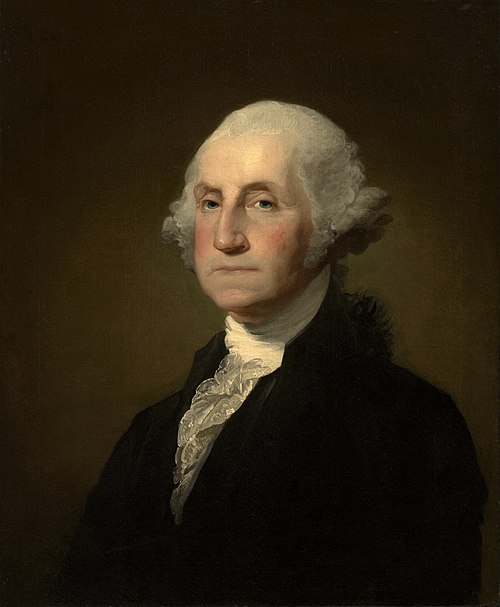
George Washington
91George Washington was the commander of the Continental Army in the American Revolution and the first President of the United States, whose leadership and restraint shaped the new republic.
Why Also a statesman & ruler · Active in the same era

Nicholas II
80Nicholas II was the last Tsar of Russia whose failures of leadership — autocratic rigidity, military catastrophe in World War I, and refusal to reform — led to his abdication in 1917, the Bolshevik seizure of power, and his execution with his family by the Soviets in 1918.
Why Also a emperor & ruler · Active in the same era