General · 1887 – 1975
Chiang Kai-shek
Key Takeaways
- Chiang Kai-shek unified most of China under Nationalist rule in 1928.
- He led China's resistance to Japan in World War II for eight years.
- He lost the Chinese Civil War to Mao Zedong and retreated to Taiwan in 1949.
- He ruled the Republic of China on Taiwan until his death in 1975.
Chiang Kai-shek led China through the worst decades of its modern history — Japanese invasion, warlordism, and civil war — and ended up on an island. But that island, Taiwan, became an unexpected vindication of what he had tried to build.
From unification to invasion
After the death of Sun Yat-sen, Chiang emerged as the leader of the Nationalist movement, leading the Northern Expedition to unify most of China under Nationalist rule by 1928. Then Japan invaded: eight years of brutal war (1937–45), in which China bore staggering casualties, were followed by the immediate resumption of the Civil War against the Communists. Chiang’s government, weakened by corruption and inflation, could not hold the country.
Taiwan and the longer legacy
In 1949, Mao Zedong proclaimed the People’s Republic from Beijing and Chiang retreated to Taiwan with the remnants of the Nationalist army and government. He ruled the Republic of China on Taiwan as a stern authoritarian until his death in 1975. His successors democratized the island and built one of the world’s most dynamic economies — a legacy more durable than the mainland government that defeated him ever expected.
Led the Nationalist government of China, resisted Japanese invasion for eight years, and founded the Republic of China on Taiwan after losing the mainland to the Communists in 1949.
Military Feats
- Led the Northern Expedition (1926–28) to unify China under Nationalist rule.
- Commanded Chinese forces in the Second Sino-Japanese War (1937–45).
- Held Taiwan against Communist pressure after 1949.
Political Achievements
- Established the Nationalist government of China (1928–49).
- Founded and led the Republic of China on Taiwan.
Historical influence score: 82/100
Influence
Chiang Kai-shek led China through its greatest modern crisis — Japanese invasion and civil war — and his Taiwan legacy established one of Asia's most successful economies.
Legacy
On the mainland he is a secondary villain in Communist history; in Taiwan he is a complex founding father whose authoritarian rule gave way to democracy after his death.
Controversies
- His government was marked by corruption and economic mismanagement, contributing to his defeat.
- The Shanghai massacre of 1927 killed thousands of Communists and labor activists.
Little-Known Facts
- He was baptized as a Methodist Christian after marrying Soong Mei-ling, whose family connections were crucial to his political career.
- Taiwan under his successors became one of the 'Four Asian Tigers' — an economic miracle that vindicated his legacy in a way he never expected.
Myths & Misconceptions
Was Chiang Kai-shek simply defeated by Communism?
His defeat was also due to his own government's corruption, economic collapse, and failure to address land reform — Mao won in part because the Nationalists lost popular support as much as because Communist armies were superior.
Connections
Frequently Asked Questions
Who was Chiang Kai-shek?
Chiang Kai-shek (1887–1975) was the Chinese Nationalist leader who led China through Japanese invasion and civil war, losing the mainland to Mao Zedong in 1949 and ruling Taiwan until his death.
Citations & Sources
People Like Chiang

Mao Zedong
90Mao Zedong was the founder of the People's Republic of China, who led the Chinese Communist Party to victory in the civil war, proclaimed the PRC in 1949, and then imposed radical revolutionary policies that caused tens of millions of deaths.
Why His great rival in the Chinese Civil War, who defeated him and founded the People's Republic of China.
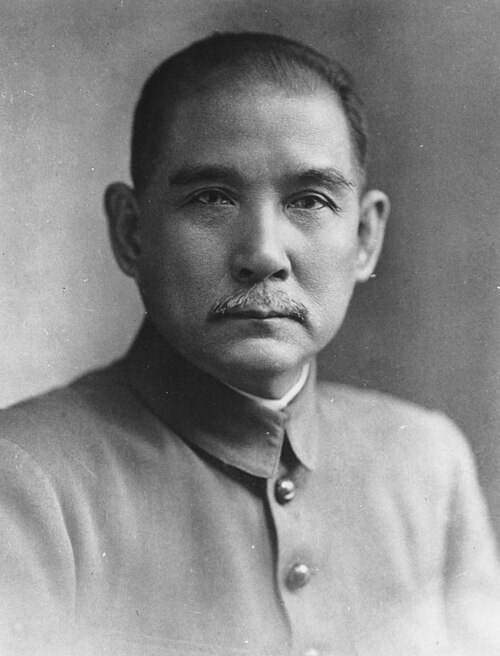
Sun Yat-sen
85Sun Yat-sen was the Chinese revolutionary and statesman who overthrew the Qing dynasty, founded the Republic of China, and became the founding father of both mainland China and Taiwan — revered by both Communists and Nationalists as the father of the Chinese nation.
Why The founder of the Chinese Republic and Nationalist movement whose successor Chiang became.

Simón Bolívar
88Simón Bolívar was the South American general and statesman who liberated six nations from Spanish colonial rule, earning the title El Libertador and shaping the independence of Venezuela, Colombia, Ecuador, Peru, Panama, and Bolivia.
Why Also a general & statesman · Active in the same era
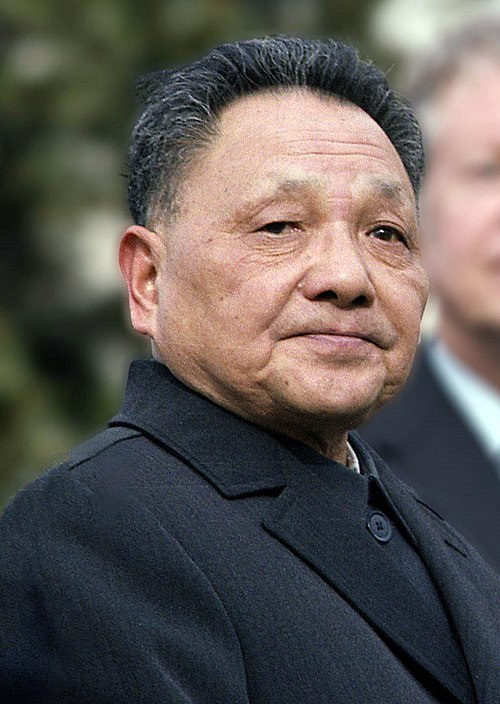
Deng Xiaoping
89Deng Xiaoping was the Chinese leader who reversed Mao Zedong's catastrophic policies after 1978, opening China to market reforms that transformed it from a poor agrarian country into the world's second-largest economy.
Why Also a statesman & ruler · Active in the same era

Charles de Gaulle
89Charles de Gaulle was the French military and political leader who refused to accept France's defeat in 1940, led the Free French resistance from London, liberated Paris, and later founded the Fifth Republic as president, restoring French national pride and global standing.
Why Also a general & statesman · Active in the same era

Duke of Wellington
87The Duke of Wellington was the British general who defeated Napoleon Bonaparte at the Battle of Waterloo in 1815, ending the Napoleonic Wars, and who subsequently served as Prime Minister of Britain — the only man to hold both the highest military and civilian offices in British history.
Why Also a general & statesman · Active in the same era