Mathematicians
The thinkers who uncovered the structures of number, space and logic that underpin science and technology.
From the geometry of ancient Greece to the algebra of the Islamic world and the calculus of the modern age, mathematicians built the language in which the universe is described. This page ranks history's most influential mathematicians.
Key Takeaways
- Mathematics is the foundational language of science and engineering.
- Euclid systematized geometry; Al-Khwarizmi gave us algebra.
- Mathematical breakthroughs underpin physics, computing and economics.

Isaac Newton
99Isaac Newton was an English physicist and mathematician whose laws of motion and universal gravitation laid the foundation of classical mechanics and the Scientific Revolution.
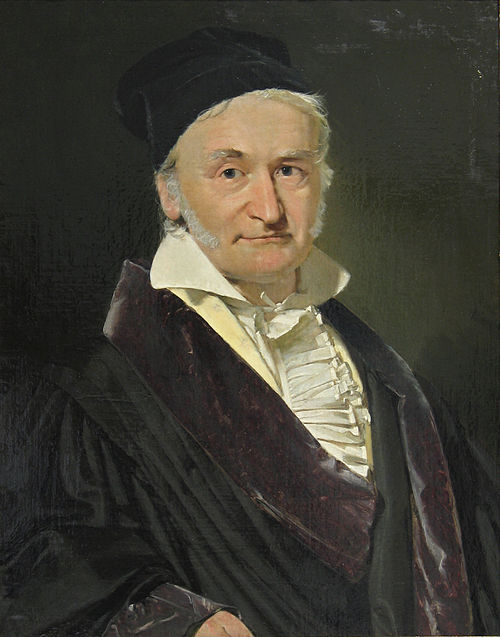
Carl Friedrich Gauss
95Carl Friedrich Gauss was a German mathematician and physicist whose profound contributions to number theory, statistics, geometry, astronomy and magnetism earned him the title "Prince of Mathematicians."

Galileo Galilei
95Galileo Galilei was an Italian astronomer, physicist and engineer, the "father of modern science", whose telescopic discoveries and championing of heliocentrism transformed our understanding of the cosmos.

Archimedes
94Archimedes was an ancient Greek mathematician, physicist and inventor, widely regarded as the greatest mathematician of antiquity and a founder of mathematical physics and engineering.

Leonhard Euler
93Leonhard Euler was a Swiss mathematician and physicist, the most prolific mathematician in history, whose work shaped modern analysis, number theory, graph theory and mathematical notation.

Nicolaus Copernicus
93Nicolaus Copernicus was a Renaissance astronomer who formulated the heliocentric model placing the Sun, not the Earth, at the center of the universe — a revolution in human thought.

James Clerk Maxwell
92James Clerk Maxwell was a Scottish physicist whose equations unified electricity, magnetism and light into a single electromagnetic theory, one of the greatest achievements in the history of physics.

René Descartes
92René Descartes was a French philosopher, mathematician and scientist, the "father of modern philosophy", famous for "I think, therefore I am" and for founding analytic geometry.

Alan Turing
91Alan Turing was an English mathematician and computer scientist who founded theoretical computer science, helped break the German Enigma cipher in World War II, and pioneered the study of artificial intelligence.

Euclid
91Euclid was an ancient Greek mathematician, the "father of geometry", whose treatise the Elements is the most influential mathematics textbook ever written.

Pythagoras
90Pythagoras was an ancient Greek mathematician and philosopher who founded the Pythagorean school and is remembered for the Pythagorean theorem and the idea that number underlies the cosmos.

Al-Khwarizmi
89Al-Khwarizmi was a Persian mathematician and scholar of the Islamic Golden Age, the "father of algebra", whose name gave us the word "algorithm".

Ada Lovelace
84Ada Lovelace was an English mathematician widely regarded as the first computer programmer, who saw that Charles Babbage's Analytical Engine could go beyond calculation to manipulate symbols of any kind.
Hypatia
84Hypatia was a mathematician, astronomer and Neoplatonist philosopher of late-antique Alexandria, the most prominent woman scholar of the ancient world, whose brutal murder came to symbolize the end of classical learning.
Frequently Asked Questions
Who is the greatest mathematician of all time?
Figures such as Archimedes, Isaac Newton, Carl Friedrich Gauss and Euclid are among those most often named the greatest mathematicians in history.