Astronomer · 1564 – 1642
Galileo Galilei
Key Takeaways
- Galileo pioneered the telescope for astronomy, discovering Jupiter's moons.
- His observations supported the Copernican, Sun-centered model of the cosmos.
- He laid foundations for the modern science of motion.
- He was condemned by the Inquisition for defending heliocentrism.
Galileo Galilei is often called the father of modern science. By insisting that nature be read through observation, experiment and mathematics, he helped overturn two thousand years of received wisdom and usher in the Scientific Revolution.
The starry messenger
In 1609 Galileo turned a much-improved telescope to the night sky and saw what no one had seen before: mountains on the Moon, the phases of Venus, and four moons circling Jupiter. These discoveries shattered the perfect, unchanging heavens of Aristotle and supported the Sun-centered cosmos of Copernicus.
Conflict with the Church
Galileo’s outspoken defense of heliocentrism brought him into collision with the Roman Inquisition. In 1633 he was tried, forced to recant, and condemned to house arrest for the rest of his life. Yet his work on motion and falling bodies endured, laying foundations that Isaac Newton would complete.
Legacy
Galileo became a lasting symbol of reason’s struggle against dogma. The Church formally acknowledged its error only in 1992 — but long before then, the science he founded had remade the world.
Influence
Galileo's insistence on observation, experiment and mathematics helped found modern science, and his telescopic discoveries shattered the ancient Earth-centered cosmos.
Legacy
Honored as the 'father of modern science', Galileo became a symbol of reason's struggle against dogma; the Church formally acknowledged its error against him only in 1992.
Major Works
- Sidereus Nuncius (The Starry Messenger)
- Dialogue Concerning the Two Chief World Systems
Controversies
- He was tried by the Roman Inquisition in 1633 and forced to recant, spending his last years under house arrest.
Notable Quotes
“And yet it moves.”
“Mathematics is the language in which God has written the universe.”
Connections
Frequently Asked Questions
Who was Galileo Galilei?
Galileo (1564–1642) was an Italian astronomer and physicist, the father of modern science, whose telescopic discoveries and defense of heliocentrism transformed our view of the cosmos.
Why was Galileo condemned?
He was tried by the Roman Inquisition for defending the Copernican view that the Earth orbits the Sun, and was forced to recant and live under house arrest.
Citations & Sources
People Like Galileo

Nicolaus Copernicus
93Nicolaus Copernicus was a Renaissance astronomer who formulated the heliocentric model placing the Sun, not the Earth, at the center of the universe — a revolution in human thought.
Why Galileo's telescopic evidence supported the Sun-centered model Copernicus proposed.

Archimedes
94Archimedes was an ancient Greek mathematician, physicist and inventor, widely regarded as the greatest mathematician of antiquity and a founder of mathematical physics and engineering.
Why Galileo revered Archimedes and built on his mathematical approach to physics.

Isaac Newton
99Isaac Newton was an English physicist and mathematician whose laws of motion and universal gravitation laid the foundation of classical mechanics and the Scientific Revolution.
Why Galileo's work on motion laid foundations that Newton built into classical mechanics.

Aristotle
98Aristotle was a Greek philosopher and polymath whose writings on logic, ethics, biology, politics and metaphysics shaped Western thought for over two millennia.
Why Whose long-dominant physics and cosmology Galileo helped overturn.
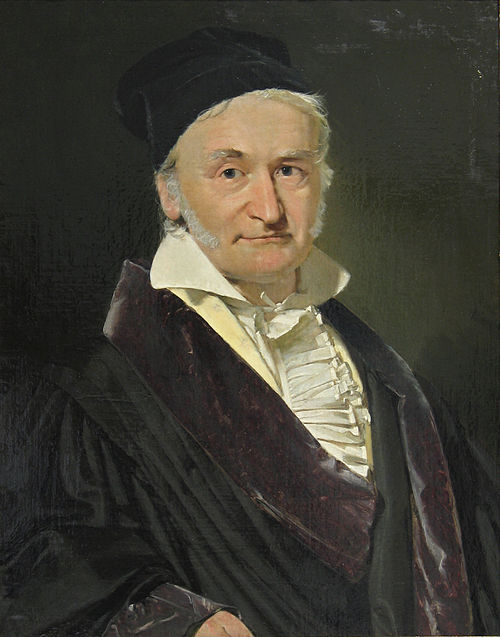
Carl Friedrich Gauss
95Carl Friedrich Gauss was a German mathematician and physicist whose profound contributions to number theory, statistics, geometry, astronomy and magnetism earned him the title "Prince of Mathematicians."
Why Also a mathematician & physicist · Worked in mathematics & physics

James Clerk Maxwell
92James Clerk Maxwell was a Scottish physicist whose equations unified electricity, magnetism and light into a single electromagnetic theory, one of the greatest achievements in the history of physics.
Why Also a physicist & mathematician · Worked in physics & mathematics