Astronomers
The observers and theorists who mapped the heavens and revealed humanity's place in the cosmos.
From ancient stargazers to the revolutionaries who dethroned the Earth from the center of the universe, astronomers transformed our understanding of the cosmos. This page ranks history's most influential astronomers.
Key Takeaways
- Astronomers mapped the skies and redefined humanity's place in the universe.
- Copernicus and Galileo overturned the Earth-centered cosmos.
- Astronomy drove advances in mathematics, optics and physics.

Isaac Newton
99Isaac Newton was an English physicist and mathematician whose laws of motion and universal gravitation laid the foundation of classical mechanics and the Scientific Revolution.
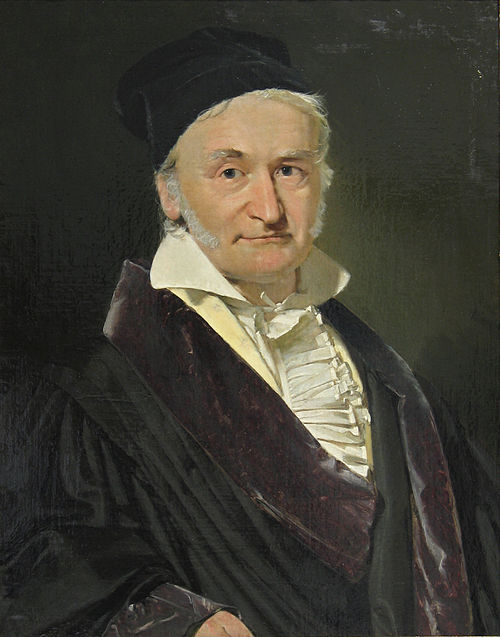
Carl Friedrich Gauss
95Carl Friedrich Gauss was a German mathematician and physicist whose profound contributions to number theory, statistics, geometry, astronomy and magnetism earned him the title "Prince of Mathematicians."

Galileo Galilei
95Galileo Galilei was an Italian astronomer, physicist and engineer, the "father of modern science", whose telescopic discoveries and championing of heliocentrism transformed our understanding of the cosmos.

Nicolaus Copernicus
93Nicolaus Copernicus was a Renaissance astronomer who formulated the heliocentric model placing the Sun, not the Earth, at the center of the universe — a revolution in human thought.

Al-Khwarizmi
89Al-Khwarizmi was a Persian mathematician and scholar of the Islamic Golden Age, the "father of algebra", whose name gave us the word "algorithm".
Hypatia
84Hypatia was a mathematician, astronomer and Neoplatonist philosopher of late-antique Alexandria, the most prominent woman scholar of the ancient world, whose brutal murder came to symbolize the end of classical learning.
Frequently Asked Questions
Who are the most famous astronomers in history?
Nicolaus Copernicus, Galileo Galilei and Johannes Kepler are among the most influential astronomers, having established the heliocentric model of the solar system.