Mathematician · 1777 – 1855
Carl Friedrich Gauss
Key Takeaways
- Gauss is regarded as one of the greatest mathematicians in history.
- His Disquisitiones Arithmeticae reorganized and advanced number theory.
- The normal (Gaussian) distribution is central to modern statistics.
- He made major contributions to astronomy, geodesy and electromagnetism.
Carl Friedrich Gauss was a German mathematician of extraordinary range whose insights reshaped pure and applied mathematics alike. Honored as the Prince of Mathematicians, he worked at the height of the Industrial Revolution and left a mark on number theory, statistics, astronomy and physics.
The young prodigy
Born to a poor family in Brunswick, Gauss showed astonishing ability from childhood. By his early twenties he had proved the fundamental theorem of algebra and published Disquisitiones Arithmeticae (1801), a work that organized and transformed the theory of numbers and is still studied today.
Astronomy, statistics and magnetism
When the asteroid Ceres was lost from view, Gauss predicted its position using his method of least squares, a technique that, together with the normal distribution, became a cornerstone of modern statistics. He later turned to geodesy, surveying, and the study of terrestrial magnetism, collaborating with Wilhelm Weber on early electromagnetic experiments.
Legacy
Gauss extended the analytic tradition of Leonhard Euler and the mathematical physics of Isaac Newton. His differential geometry of curved surfaces would later prove essential to the relativity of Albert Einstein, securing his place among the supreme intellects of science.
Influence
Gauss shaped nearly every branch of mathematics he touched and laid groundwork essential to statistics, geodesy, astronomy and the later physics of electromagnetism and relativity.
Legacy
His name is attached to fundamental concepts across mathematics and science, and he is consistently ranked among the most influential mathematicians of all time.
Major Works
- Disquisitiones Arithmeticae
- Theoria Motus Corporum Coelestium
- Disquisitiones generales circa superficies curvas
Notable Quotes
“Mathematics is the queen of the sciences and number theory is the queen of mathematics.”
Connections
Frequently Asked Questions
Who was Carl Friedrich Gauss?
Carl Friedrich Gauss (1777–1855) was a German mathematician and physicist whose work transformed number theory, statistics, geometry and physics, earning him the title 'Prince of Mathematicians.'
What is the Gaussian distribution?
It is the bell-shaped normal distribution, central to statistics and probability, which Gauss developed in connection with his method of least squares.
Citations & Sources
People Like Carl

Leonhard Euler
93Leonhard Euler was a Swiss mathematician and physicist, the most prolific mathematician in history, whose work shaped modern analysis, number theory, graph theory and mathematical notation.
Why An earlier giant of mathematics whose work in analysis and number theory Gauss extended and refined.

Isaac Newton
99Isaac Newton was an English physicist and mathematician whose laws of motion and universal gravitation laid the foundation of classical mechanics and the Scientific Revolution.
Why A predecessor whose mathematical physics Gauss admired and built upon in astronomy and mechanics.
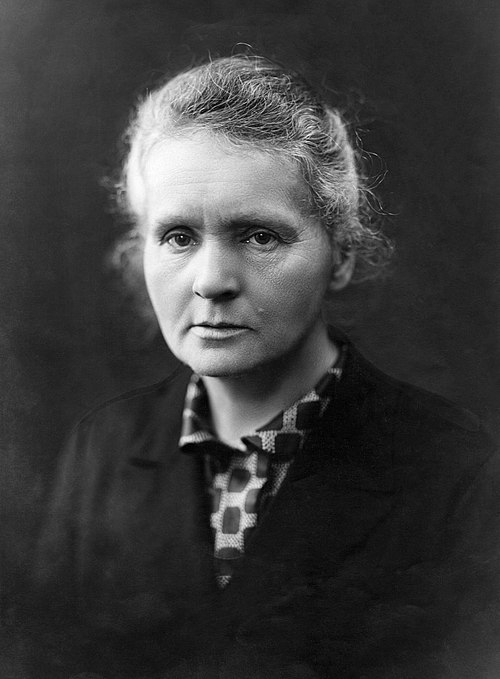
Marie Curie
92Marie Curie was a Polish-French physicist and chemist who pioneered research on radioactivity and became the first person to win Nobel Prizes in two different sciences.
Why A later scientist whose rigorous experimental measurement shared the precision Gauss championed in physics.

Albert Einstein
99Albert Einstein was a German-born theoretical physicist who developed the theory of relativity, one of the two pillars of modern physics, and won the 1921 Nobel Prize.
Why A later physicist whose general relativity relied on the differential geometry Gauss helped found.

Galileo Galilei
95Galileo Galilei was an Italian astronomer, physicist and engineer, the "father of modern science", whose telescopic discoveries and championing of heliocentrism transformed our understanding of the cosmos.
Why Also a astronomer & physicist · Worked in astronomy & physics

James Clerk Maxwell
92James Clerk Maxwell was a Scottish physicist whose equations unified electricity, magnetism and light into a single electromagnetic theory, one of the greatest achievements in the history of physics.
Why Also a physicist & mathematician · Worked in physics & mathematics