Physicists
The scientists who uncovered the fundamental laws governing matter, energy, space and time.
Physicists seek the deepest rules of the universe — from the motion of planets to the behavior of subatomic particles. This page gathers the most influential physicists in history, ranked by impact.
Key Takeaways
- Physics seeks the fundamental laws of matter, energy, space and time.
- Newton founded classical mechanics; Einstein revolutionized it with relativity.
- Marie Curie opened the study of radioactivity and atomic physics.

Albert Einstein
99Albert Einstein was a German-born theoretical physicist who developed the theory of relativity, one of the two pillars of modern physics, and won the 1921 Nobel Prize.

Isaac Newton
99Isaac Newton was an English physicist and mathematician whose laws of motion and universal gravitation laid the foundation of classical mechanics and the Scientific Revolution.
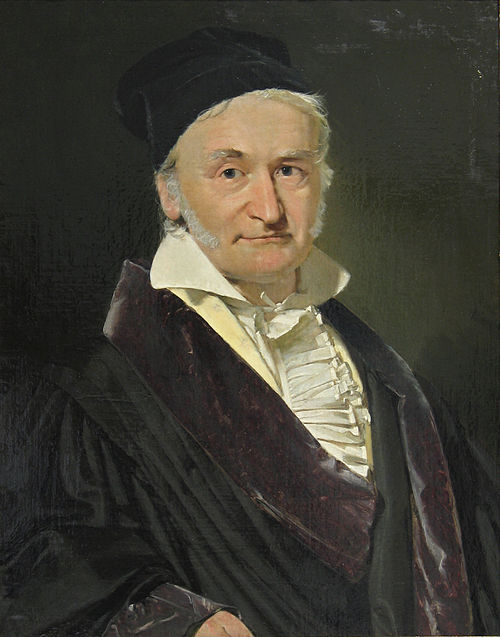
Carl Friedrich Gauss
95Carl Friedrich Gauss was a German mathematician and physicist whose profound contributions to number theory, statistics, geometry, astronomy and magnetism earned him the title "Prince of Mathematicians."

Galileo Galilei
95Galileo Galilei was an Italian astronomer, physicist and engineer, the "father of modern science", whose telescopic discoveries and championing of heliocentrism transformed our understanding of the cosmos.

Archimedes
94Archimedes was an ancient Greek mathematician, physicist and inventor, widely regarded as the greatest mathematician of antiquity and a founder of mathematical physics and engineering.

Leonhard Euler
93Leonhard Euler was a Swiss mathematician and physicist, the most prolific mathematician in history, whose work shaped modern analysis, number theory, graph theory and mathematical notation.

Michael Faraday
93Michael Faraday was an English scientist whose discoveries in electromagnetism and electrochemistry, above all electromagnetic induction, laid the experimental foundation of the electrical age.

James Clerk Maxwell
92James Clerk Maxwell was a Scottish physicist whose equations unified electricity, magnetism and light into a single electromagnetic theory, one of the greatest achievements in the history of physics.
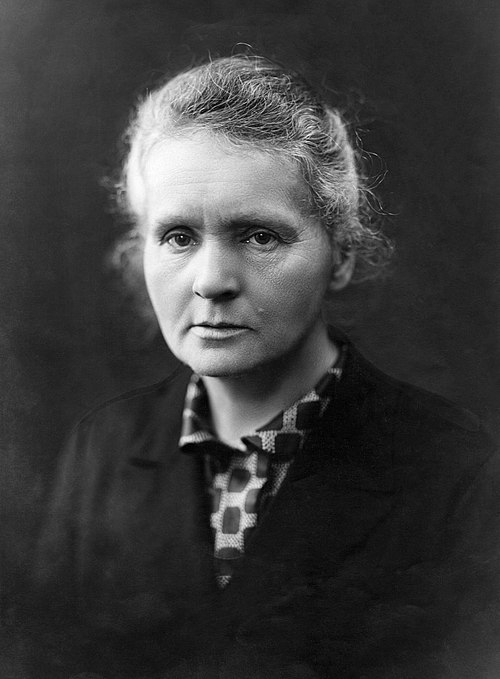
Marie Curie
92Marie Curie was a Polish-French physicist and chemist who pioneered research on radioactivity and became the first person to win Nobel Prizes in two different sciences.

Niels Bohr
90Niels Bohr was a Danish physicist who created the first quantum model of the atom and became a leading architect of quantum mechanics through the Copenhagen interpretation.

Nikola Tesla
90Nikola Tesla was a Serbian-American inventor and electrical engineer whose pioneering work on alternating current and electromagnetism helped electrify the modern world.

Max Planck
89Max Planck was a German physicist who originated quantum theory by introducing the quantum of action, a discovery that launched modern physics and earned him the 1918 Nobel Prize.

Werner Heisenberg
87Werner Heisenberg was a German physicist who founded matrix mechanics and formulated the uncertainty principle, two of the cornerstones of quantum mechanics.

Erwin Schrödinger
86Erwin Schrödinger was an Austrian physicist who formulated the wave equation governing quantum systems and devised the famous Schrödinger's cat thought experiment.
Frequently Asked Questions
Who is the greatest physicist of all time?
Isaac Newton and Albert Einstein are most often cited as the greatest physicists in history.