Physicist · 1858 – 1947
Max Planck
Key Takeaways
- Planck founded quantum theory by proposing that energy comes in discrete packets.
- He introduced Planck's constant, a fundamental constant of nature.
- His black-body radiation law solved a major crisis in classical physics.
- He won the 1918 Nobel Prize in Physics.
Max Planck opened the door to the quantum world. A conservative classical physicist by temperament, he made the revolutionary discovery that energy is not continuous but comes in discrete packets — a finding that overturned physics.
The quantum hypothesis
In 1900, struggling to explain the spectrum of light from a heated body, Planck proposed that energy is emitted only in fixed units, or quanta, proportional to frequency. The constant of proportionality, now called Planck’s constant, became one of the fundamental numbers of nature and earned him the 1918 Nobel Prize.
A reluctant revolutionary
Planck saw his quantum as a desperate mathematical device. It fell to others to grasp its full meaning: Albert Einstein applied it to light, while Niels Bohr used it to model the atom. Planck himself was an early and influential champion of Einstein’s relativity.
A life marked by tragedy
Planck’s personal life was shadowed by loss. His first wife died young, one son was killed in the First World War, and both daughters died in childbirth. During the Nazi era he remained in Germany and tried to preserve its scientific institutions, even appealing directly to Hitler on behalf of Jewish colleagues, with little success. His younger son Erwin was implicated in the 1944 plot against Hitler and executed in 1945, a blow from which the aged physicist never recovered. The wave mechanics of Erwin Schrödinger and the matrix mechanics of others completed the theory his quantum had begun.
Legacy
Working through the turmoil of two world wars, Planck strove to protect German science at great personal cost. His name endures in the Max Planck Society, the prestigious research network, and in Planck’s constant and the quantum theory that, with Werner Heisenberg and others, became the framework of the modern era.
Influence
Planck's quantum hypothesis triggered the quantum revolution, providing the foundation for atomic physics, chemistry and the whole of modern technology.
Legacy
Germany's premier research organization, the Max Planck Society, bears his name, and Planck units and Planck's constant remain central to physics.
Major Works
- On the Law of Distribution of Energy in the Normal Spectrum (1901)
- Treatise on Thermodynamics
- The Theory of Heat Radiation
Controversies
- He chose to remain in Nazi Germany, working to protect science while his son was executed for his part in the 1944 plot against Hitler.
Notable Quotes
“A new scientific truth does not triumph by convincing its opponents, but rather because its opponents eventually die.”
Connections
Frequently Asked Questions
Who was Max Planck?
Max Planck (1858–1947) was a German physicist who founded quantum theory by proposing that energy is emitted in discrete quanta.
What is Planck's constant?
It is a fundamental constant of nature, denoted h, that relates the energy of a quantum of radiation to its frequency.
Citations & Sources
People Like Max

Albert Einstein
99Albert Einstein was a German-born theoretical physicist who developed the theory of relativity, one of the two pillars of modern physics, and won the 1921 Nobel Prize.
Why Planck championed Einstein's relativity and Einstein extended Planck's quantum idea to light.

Niels Bohr
90Niels Bohr was a Danish physicist who created the first quantum model of the atom and became a leading architect of quantum mechanics through the Copenhagen interpretation.
Why Bohr built his atomic model directly on Planck's quantum of action.

Werner Heisenberg
87Werner Heisenberg was a German physicist who founded matrix mechanics and formulated the uncertainty principle, two of the cornerstones of quantum mechanics.
Why A founder of quantum mechanics whose work developed the theory Planck began.

Erwin Schrödinger
86Erwin Schrödinger was an Austrian physicist who formulated the wave equation governing quantum systems and devised the famous Schrödinger's cat thought experiment.
Why Extended quantum theory with wave mechanics, building on Planck's foundation.
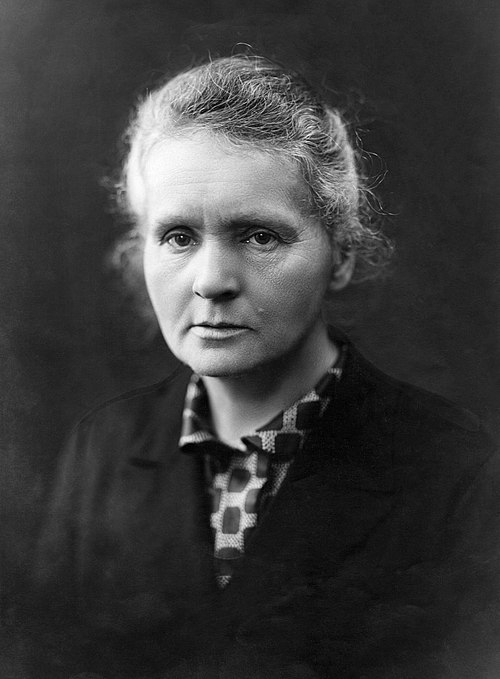
Marie Curie
92Marie Curie was a Polish-French physicist and chemist who pioneered research on radioactivity and became the first person to win Nobel Prizes in two different sciences.
Why Also a physicist & scientist · Worked in physics

Nikola Tesla
90Nikola Tesla was a Serbian-American inventor and electrical engineer whose pioneering work on alternating current and electromagnetism helped electrify the modern world.
Why Also a physicist & scientist · Worked in physics