Physicist · 1885 – 1962
Niels Bohr
Key Takeaways
- Bohr's atomic model introduced quantized electron orbits and explained spectral lines.
- He developed the principle of complementarity central to quantum theory.
- His Copenhagen interpretation became the standard reading of quantum mechanics.
- He won the 1922 Nobel Prize in Physics.
Niels Bohr was the Danish physicist who brought the quantum into the atom. His model of the atom and his philosophical interpretation of quantum theory made Copenhagen the world’s leading centre of physics in the early twentieth century.
The quantum atom
In 1913 Bohr combined Rutherford’s nuclear atom with the quantum idea of Max Planck, proposing that electrons occupy fixed energy levels and emit light when they jump between them. The Bohr model explained the spectral lines of hydrogen and won him the 1922 Nobel Prize.
The Copenhagen interpretation
At his Copenhagen institute, Bohr mentored a generation of young physicists, including Werner Heisenberg. Together they shaped the Copenhagen interpretation, built on Bohr’s principle of complementarity. His famous, friendly debates with Albert Einstein over the meaning of quantum mechanics became a defining dialogue of the modern era.
War and conscience
When Germany occupied Denmark, Bohr, who was of partly Jewish descent, escaped in 1943 on a dramatic flight to Sweden and then to Britain and the United States, where he briefly contributed to the Allied atomic project. Yet he grew deeply concerned about nuclear weapons and spent his later years urging international cooperation and an “open world” to control them, even appealing personally to political leaders. His fellow founder of quantum theory, Erwin Schrödinger, shared his unease about how the new physics should be understood.
Legacy
Bohr trained much of the founding generation of quantum physics at his Copenhagen institute and used his enormous stature to aid scientific refugees from Nazism. His principle of complementarity influenced thinkers well beyond physics. The element bohrium honours a man ranked among the principal architects of modern science, and his institute remains a leading center of theoretical physics today.
Influence
Bohr's atomic theory and institute trained a generation of physicists and made Copenhagen the centre of quantum physics, shaping the interpretation of the theory to this day.
Legacy
Element 107, bohrium, is named after him, and he is regarded as one of the founders of modern physics.
Major Works
- On the Constitution of Atoms and Molecules (1913)
- Atomic Theory and the Description of Nature
- The Quantum Postulate and the Recent Development of Atomic Theory
Controversies
- His 1941 wartime meeting in Copenhagen with Heisenberg about nuclear weapons remains debated.
Notable Quotes
“Anyone who is not shocked by quantum theory has not understood it.”
Connections
Frequently Asked Questions
Who was Niels Bohr?
Niels Bohr (1885–1962) was a Danish physicist who created the first quantum model of the atom and was a leading founder of quantum mechanics.
What is the Bohr model?
It is a model in which electrons orbit the nucleus in fixed, quantized energy levels, emitting or absorbing light when they jump between them.
Citations & Sources
People Like Niels

Max Planck
89Max Planck was a German physicist who originated quantum theory by introducing the quantum of action, a discovery that launched modern physics and earned him the 1918 Nobel Prize.
Why Bohr built his atomic model on Planck's quantum of action.

Albert Einstein
99Albert Einstein was a German-born theoretical physicist who developed the theory of relativity, one of the two pillars of modern physics, and won the 1921 Nobel Prize.
Why Bohr's decades-long debates with Einstein over quantum theory are legendary in physics.

Werner Heisenberg
87Werner Heisenberg was a German physicist who founded matrix mechanics and formulated the uncertainty principle, two of the cornerstones of quantum mechanics.
Why Bohr mentored Heisenberg and together they shaped the Copenhagen interpretation.

Erwin Schrödinger
86Erwin Schrödinger was an Austrian physicist who formulated the wave equation governing quantum systems and devised the famous Schrödinger's cat thought experiment.
Why A fellow pioneer of quantum mechanics whose wave approach Bohr debated and reconciled.
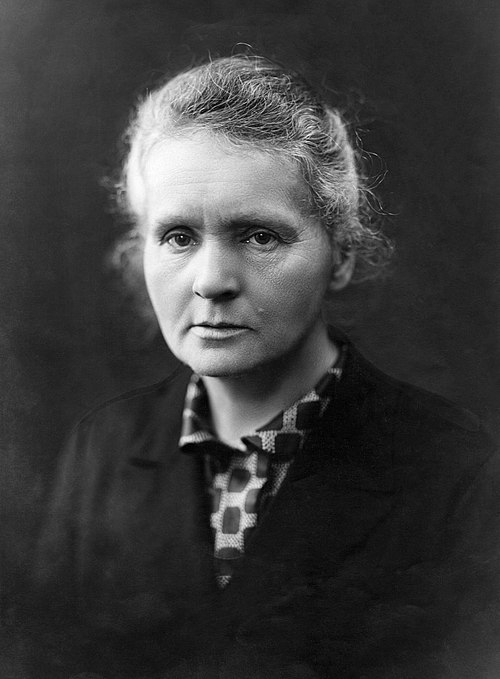
Marie Curie
92Marie Curie was a Polish-French physicist and chemist who pioneered research on radioactivity and became the first person to win Nobel Prizes in two different sciences.
Why Also a physicist & scientist · Worked in physics

Nikola Tesla
90Nikola Tesla was a Serbian-American inventor and electrical engineer whose pioneering work on alternating current and electromagnetism helped electrify the modern world.
Why Also a physicist & scientist · Worked in physics