Physicist · 1901 – 1976
Werner Heisenberg
Key Takeaways
- Heisenberg created matrix mechanics, the first full formulation of quantum theory.
- His uncertainty principle set fundamental limits on what can be known about particles.
- He won the 1932 Nobel Prize in Physics.
- He led the German nuclear program during World War II, a lasting source of controversy.
Werner Heisenberg was one of the founders of quantum mechanics, the theory that governs the world of atoms and particles. His uncertainty principle revealed a profound limit on what can ever be known about nature.
Matrix mechanics
In 1925, at just twenty-three, Heisenberg devised a radically new way of describing the atom using only observable quantities such as the frequencies and intensities of spectral lines. This became matrix mechanics, the first complete formulation of quantum theory, soon shown equivalent to the wave mechanics of Erwin Schrödinger.
The uncertainty principle
In 1927 Heisenberg announced that the position and momentum of a particle cannot both be measured precisely at the same time. Working closely with Niels Bohr, he helped forge the Copenhagen interpretation, which holds probability to be fundamental to nature — a view that Albert Einstein never accepted.
The German nuclear program
During World War II Heisenberg led Germany’s nuclear research effort. The program never came close to building a bomb, and after the war Heisenberg suggested he had quietly steered it away from weapons. Historians remain sharply divided: some see deliberate restraint, others mere miscalculation about how much fissile material a bomb would require. His enigmatic 1941 wartime meeting with Niels Bohr in occupied Copenhagen, dramatized in the play Copenhagen, has come to symbolize these unresolved questions of science and conscience.
Legacy
After the war Heisenberg helped rebuild German science, directing the Max Planck Institute for Physics and pursuing a unified theory of elementary particles. Whatever the verdict of history on his wartime role, his uncertainty principle and his matrix mechanics remain permanent pillars of physics. His place among the architects of the modern era, alongside Erwin Schrödinger and Max Planck, is secure.
Influence
Heisenberg's uncertainty principle and matrix mechanics are foundational to all modern physics, while his wartime role has made him a focus of debate on science and morality.
Legacy
He is remembered as one of the principal creators of quantum mechanics and as a central figure in twentieth-century physics.
Major Works
- Über quantentheoretische Umdeutung kinematischer und mechanischer Beziehungen
- The Physical Principles of the Quantum Theory
- Physics and Philosophy
Controversies
- Heisenberg's leadership of the Nazi-era German nuclear program and his postwar claims about deliberately impeding it remain intensely debated by historians.
Notable Quotes
“What we observe is not nature itself, but nature exposed to our method of questioning.”
Connections
Frequently Asked Questions
Who was Werner Heisenberg?
Werner Heisenberg (1901–1976) was a German physicist who founded matrix mechanics and discovered the uncertainty principle, winning the 1932 Nobel Prize in Physics.
What is the uncertainty principle?
It states that certain pairs of physical properties, such as a particle's position and momentum, cannot both be known with unlimited precision at the same time.
Citations & Sources
People Like Werner

Niels Bohr
90Niels Bohr was a Danish physicist who created the first quantum model of the atom and became a leading architect of quantum mechanics through the Copenhagen interpretation.
Why Bohr was Heisenberg's mentor and collaborator in shaping the Copenhagen interpretation of quantum mechanics.

Erwin Schrödinger
86Erwin Schrödinger was an Austrian physicist who formulated the wave equation governing quantum systems and devised the famous Schrödinger's cat thought experiment.
Why Schrödinger's wave mechanics was shown to be mathematically equivalent to Heisenberg's matrix mechanics.

Max Planck
89Max Planck was a German physicist who originated quantum theory by introducing the quantum of action, a discovery that launched modern physics and earned him the 1918 Nobel Prize.
Why Planck's quantum hypothesis opened the field that Heisenberg helped bring to completion.

Albert Einstein
99Albert Einstein was a German-born theoretical physicist who developed the theory of relativity, one of the two pillars of modern physics, and won the 1921 Nobel Prize.
Why Einstein famously resisted the probabilistic quantum mechanics Heisenberg's uncertainty principle implied.
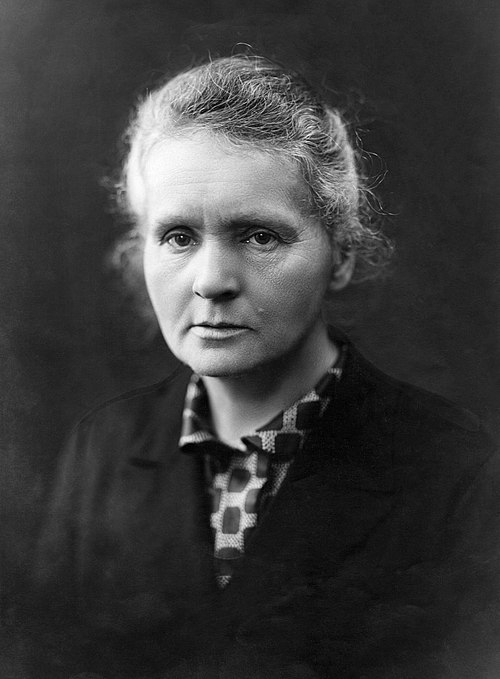
Marie Curie
92Marie Curie was a Polish-French physicist and chemist who pioneered research on radioactivity and became the first person to win Nobel Prizes in two different sciences.
Why Also a physicist & scientist · Worked in physics

Nikola Tesla
90Nikola Tesla was a Serbian-American inventor and electrical engineer whose pioneering work on alternating current and electromagnetism helped electrify the modern world.
Why Also a physicist & scientist · Worked in physics