Physicist · 1887 – 1961
Erwin Schrödinger
Key Takeaways
- Schrödinger formulated the wave equation at the heart of quantum mechanics.
- His wave mechanics was shown equivalent to Heisenberg's matrix mechanics.
- The Schrödinger's cat thought experiment dramatizes quantum superposition.
- His book What Is Life? influenced the founders of molecular biology.
Erwin Schrödinger gave quantum mechanics one of its most powerful tools and one of its most famous puzzles. His wave equation describes how the quantum world evolves, while his imagined cat captures the theory’s deep strangeness.
Wave mechanics
In 1926 Schrödinger published the equation that bears his name, describing matter in terms of waves. This wave mechanics offered an intuitive alternative to the matrix mechanics of Werner Heisenberg, and the two were soon proven mathematically equivalent. For this work he shared the 1933 Nobel Prize.
Schrödinger’s cat
Uneasy with the probabilistic reading of quantum theory championed by Niels Bohr, Schrödinger devised in 1935 a thought experiment in which a cat is suspended between life and death. Conceived in dialogue with Albert Einstein, it remains the most famous illustration of quantum superposition.
Exile and What Is Life?
A vocal opponent of Nazism, Schrödinger left Germany and eventually settled in Ireland, where he helped found the Dublin Institute for Advanced Studies. There, in 1944, he published the slender but influential book What Is Life?, which asked how the laws of physics could account for heredity and proposed that genetic information must be stored in an “aperiodic crystal.” The book is widely credited with steering a generation of physicists toward biology and inspiring the search for the structure of DNA.
Legacy
Beyond his wave equation, Schrödinger contributed to statistical mechanics, general relativity, and the philosophy of science, reflecting an unusually broad and humanistic mind. He shared the 1933 Nobel Prize with Paul Dirac, and his equation remains one of the most widely used in all of science, applied daily by physicists and chemists. With Werner Heisenberg and Max Planck, he ranks among the wide-ranging minds who built the physics of the modern era.
Influence
The Schrödinger equation is one of the most important equations in all of science, used daily across physics and chemistry, while What Is Life? helped launch molecular biology.
Legacy
Schrödinger is remembered as a principal founder of quantum mechanics and as a thinker who probed its deepest conceptual questions.
Major Works
- Quantisierung als Eigenwertproblem (papers on wave mechanics)
- What Is Life?
- Collected Papers on Wave Mechanics
Controversies
- Schrödinger himself disliked the probabilistic interpretation his equation inspired, and his unconventional personal life drew criticism.
Notable Quotes
“The task is not so much to see what no one has yet seen, but to think what nobody has yet thought about that which everybody sees.”
Connections
Frequently Asked Questions
Who was Erwin Schrödinger?
Erwin Schrödinger (1887–1961) was an Austrian physicist who developed wave mechanics and the Schrödinger equation, winning the 1933 Nobel Prize in Physics.
What is Schrödinger's cat?
It is a thought experiment in which a cat in a sealed box is, by a strict quantum description, both alive and dead until observed, illustrating the strangeness of superposition.
Citations & Sources
People Like Erwin

Werner Heisenberg
87Werner Heisenberg was a German physicist who founded matrix mechanics and formulated the uncertainty principle, two of the cornerstones of quantum mechanics.
Why Heisenberg's matrix mechanics and Schrödinger's wave mechanics were two equivalent formulations of quantum theory.

Niels Bohr
90Niels Bohr was a Danish physicist who created the first quantum model of the atom and became a leading architect of quantum mechanics through the Copenhagen interpretation.
Why Bohr and Schrödinger debated the interpretation of the quantum theory Schrödinger's equation described.

Albert Einstein
99Albert Einstein was a German-born theoretical physicist who developed the theory of relativity, one of the two pillars of modern physics, and won the 1921 Nobel Prize.
Why Einstein and Schrödinger corresponded on the puzzles of quantum mechanics, prompting the cat paradox.

Max Planck
89Max Planck was a German physicist who originated quantum theory by introducing the quantum of action, a discovery that launched modern physics and earned him the 1918 Nobel Prize.
Why Planck's quantum hypothesis began the revolution that Schrödinger's wave mechanics helped complete.
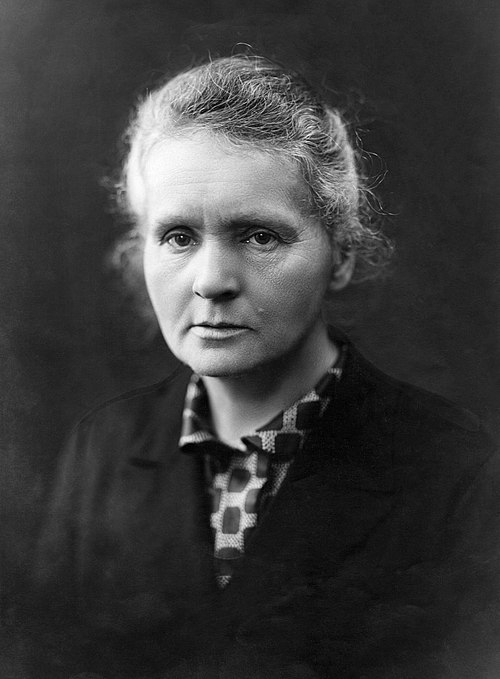
Marie Curie
92Marie Curie was a Polish-French physicist and chemist who pioneered research on radioactivity and became the first person to win Nobel Prizes in two different sciences.
Why Also a physicist & scientist · Worked in physics

Nikola Tesla
90Nikola Tesla was a Serbian-American inventor and electrical engineer whose pioneering work on alternating current and electromagnetism helped electrify the modern world.
Why Also a physicist & scientist · Worked in physics