Physicist · 1791 – 1867
Michael Faraday
Key Takeaways
- Faraday discovered electromagnetic induction, the principle behind electric generators.
- He built the first electric motor and dynamo, founding electrical engineering.
- His laws of electrolysis established the basis of electrochemistry.
- He introduced the idea of fields of force, which transformed physics.
Michael Faraday rose from a poor London family and little formal schooling to become one of history’s greatest experimental scientists. Working at the Royal Institution, he united electricity, magnetism and chemistry through a lifetime of meticulous experiment.
From bookbinder to scientist
Apprenticed to a bookbinder, the young Faraday taught himself science from the books he handled. A set of lecture tickets led him to Humphry Davy, who took him on as an assistant — the beginning of a career that would eclipse his mentor’s.
Electromagnetism and the field
In 1821 Faraday produced the first electric motor, and in 1831 he discovered electromagnetic induction, showing that a changing magnetic field generates an electric current. From this came the dynamo and the foundations of electric power. He also conceived of invisible lines and fields of force — an idea that James Clerk Maxwell would later express in mathematics and that Albert Einstein admired as a forerunner of his own work.
A gift for explanation
Faraday was also a celebrated communicator. He founded the Royal Institution’s Christmas Lectures for young audiences, and his series The Chemical History of a Candle remains a classic of popular science. Famously humble, he declined a knighthood and twice refused the presidency of the Royal Society, preferring the laboratory bench to public honors. Beyond induction, he discovered benzene, established the laws of electrolysis, and demonstrated that magnetism could rotate the plane of polarized light, linking light and electromagnetism for the first time.
Legacy
Faraday’s laws of electrolysis founded electrochemistry, and his induction principle made possible the work of inventors like Nikola Tesla and the entire electrical grid. His concept of the field, refined into the periodic patterns of matter that chemists such as Dmitri Mendeleev would chart, became one of the deepest ideas in physics. A central figure of the Industrial Revolution, he transformed both science and the practical world that runs on electricity, and the farad, the unit of capacitance, carries his name.
Influence
Faraday's discoveries underlie virtually all electric power generation and electric motors, while his field concept reshaped theoretical physics through Maxwell and Einstein.
Legacy
The farad, the unit of electrical capacitance, is named in his honour, and he is regarded as one of the greatest experimentalists in the history of science.
Major Works
- Experimental Researches in Electricity
- Experimental Researches in Chemistry and Physics
- The Chemical History of a Candle
Controversies
- Largely self-educated, he faced snobbery from some peers and lacked formal mathematical training.
Notable Quotes
“Nothing is too wonderful to be true, if it be consistent with the laws of nature.”
Connections
Frequently Asked Questions
Who was Michael Faraday?
Michael Faraday (1791–1867) was an English physicist and chemist whose discovery of electromagnetic induction founded the electrical age.
What is electromagnetic induction?
It is the generation of an electric current in a conductor by a changing magnetic field, the principle behind electric generators and transformers.
Citations & Sources
People Like Michael

James Clerk Maxwell
92James Clerk Maxwell was a Scottish physicist whose equations unified electricity, magnetism and light into a single electromagnetic theory, one of the greatest achievements in the history of physics.
Why Translated Faraday's intuitive field concepts into rigorous mathematical equations.

Nikola Tesla
90Nikola Tesla was a Serbian-American inventor and electrical engineer whose pioneering work on alternating current and electromagnetism helped electrify the modern world.
Why Built on Faraday's induction principle to develop alternating-current technology.

Albert Einstein
99Albert Einstein was a German-born theoretical physicist who developed the theory of relativity, one of the two pillars of modern physics, and won the 1921 Nobel Prize.
Why Kept a portrait of Faraday and credited his field idea as a forerunner of relativity.

Dmitri Mendeleev
88Dmitri Mendeleev was a Russian chemist who created the periodic table of the elements, one of the most important organizing principles in all of science.
Why A fellow nineteenth-century chemist whose work, like Faraday's electrolysis, ordered chemical knowledge.
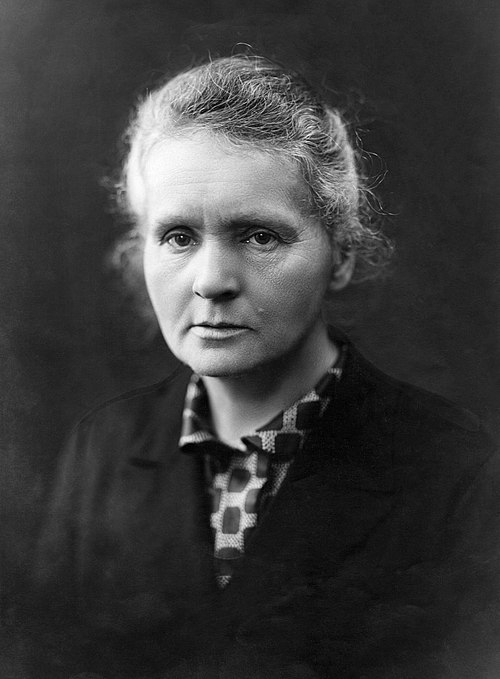
Marie Curie
92Marie Curie was a Polish-French physicist and chemist who pioneered research on radioactivity and became the first person to win Nobel Prizes in two different sciences.
Why Also a physicist & chemist · Worked in physics & chemistry

Louis Pasteur
90Louis Pasteur was a French chemist and microbiologist whose work on germ theory, vaccination, and pasteurization revolutionized medicine and saved countless lives.
Why Also a chemist & scientist · Worked in chemistry