Chemist · 1834 – 1907
Dmitri Mendeleev
Key Takeaways
- Mendeleev created the periodic table of the elements in 1869.
- He arranged elements by atomic weight and recurring chemical properties.
- He left gaps and predicted the properties of then-undiscovered elements.
- His predictions were confirmed, securing the table's acceptance.
Dmitri Mendeleev gave chemistry its master map. By arranging the elements into the periodic table, he revealed a hidden order in matter that has guided science ever since.
The periodic table
In 1869 Mendeleev arranged the known elements in order of atomic weight and noticed that their properties recurred at regular intervals — the periodic law. His genius lay in leaving gaps where no known element fit, confident that undiscovered elements would fill them. He built upon the foundational chemistry of Antoine Lavoisier and the broader scientific ferment of the Industrial Revolution.
Bold predictions
Mendeleev predicted the properties of three missing elements with remarkable precision. When gallium, scandium, and germanium were discovered and matched his forecasts, his table won lasting acceptance.
A practical scientist
Mendeleev was far more than a theorist. He wrote Principles of Chemistry, a textbook that taught the subject to generations of students, and he applied his knowledge to Russia’s industries, advising on petroleum, agriculture, and the metric system. As director of Russia’s Bureau of Weights and Measures, he helped modernize the empire’s standards. His scientific curiosity even led him to ascend alone in a hydrogen balloon to observe a solar eclipse in 1887.
Legacy
Working in the Russian Empire, Mendeleev shaped science far beyond his homeland. His table was later given its deeper explanation by the atomic theory of Niels Bohr, which revealed why the elements repeat their properties, and it was extended by the element-hunting of Marie Curie. Though controversially passed over for the Nobel Prize, Mendeleev is honored by the element mendelevium, and his periodic table hangs in every chemistry classroom in the world.
Influence
The periodic table is the central organizing framework of chemistry, taught worldwide and guiding research across the physical sciences.
Legacy
The element mendelevium is named in his honor, and his periodic table remains one of the most recognizable icons of science.
Major Works
- Principles of Chemistry
- On the Relationship of the Properties of the Elements to their Atomic Weights
Controversies
- Mendeleev shared the periodic idea with Lothar Meyer and others, and priority disputes arose; he was also controversially passed over for the Nobel Prize.
Notable Quotes
“I saw in a dream a table where all the elements fell into place as required. Awakening, I immediately wrote it down on a piece of paper.”
Connections
Frequently Asked Questions
Who was Dmitri Mendeleev?
Dmitri Mendeleev (1834–1907) was a Russian chemist who created the periodic table of the elements and formulated the periodic law.
Why is the periodic table important?
It organizes all known chemical elements by their properties, revealing patterns that predict how elements behave and guide scientific discovery.
Citations & Sources
People Like Dmitri

Louis Pasteur
90Louis Pasteur was a French chemist and microbiologist whose work on germ theory, vaccination, and pasteurization revolutionized medicine and saved countless lives.
Why A contemporary chemist whose work, like Mendeleev's, defined nineteenth-century science.
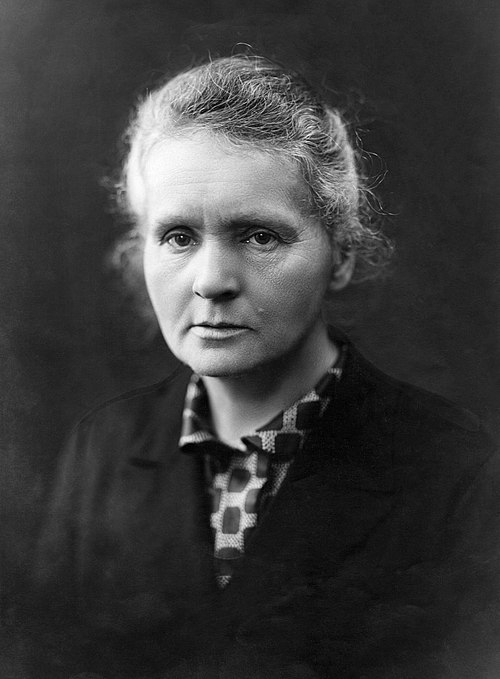
Marie Curie
92Marie Curie was a Polish-French physicist and chemist who pioneered research on radioactivity and became the first person to win Nobel Prizes in two different sciences.
Why Curie's discovery of new elements filled and extended the periodic table Mendeleev created.

Gregor Mendel
84Gregor Mendel was an Austrian friar and scientist whose experiments on pea plants revealed the basic laws of heredity, earning him recognition as the father of modern genetics.
Why A contemporary whose discovery of nature's hidden order in heredity paralleled Mendeleev's order in the elements.

Niels Bohr
90Niels Bohr was a Danish physicist who created the first quantum model of the atom and became a leading architect of quantum mechanics through the Copenhagen interpretation.
Why Bohr's atomic theory later explained the periodicity Mendeleev had discovered empirically.

Michael Faraday
93Michael Faraday was an English scientist whose discoveries in electromagnetism and electrochemistry, above all electromagnetic induction, laid the experimental foundation of the electrical age.
Why Also a chemist & scientist · Worked in chemistry

Rosalind Franklin
85Rosalind Franklin was an English chemist and X-ray crystallographer whose images of DNA were crucial to discovering its double-helix structure, a contribution long under-recognized.
Why Also a chemist & scientist · Worked in chemistry