Chemist · 1920 – 1958
Rosalind Franklin
Key Takeaways
- Franklin's X-ray images were crucial to discovering DNA's double-helix structure.
- Her famous "Photo 51" revealed the helical form of DNA.
- She also pioneered research on the structures of viruses and coal.
- Her contribution was long overshadowed and under-recognized.
Rosalind Franklin was a brilliant chemist whose work lay at the heart of one of the greatest discoveries in modern science — the structure of DNA — yet whose contribution was long overlooked.
The science of crystallography
A master of X-ray crystallography, Franklin used the diffraction of X-rays to map the structures of molecules. Her meticulous images of DNA, above all the famous “Photo 51,” captured clear evidence of its double-helix form.
A contested discovery
Franklin’s data was shown — without her knowledge — to James Watson and Francis Crick, who used it to build their celebrated model of DNA in 1953. For decades her essential role was minimized. She died of cancer at just 37, before the Nobel Prize for the discovery was awarded.
Legacy
Today Franklin is recognized as a pivotal figure in molecular biology, her later work on viruses also highly influential. Like Marie Curie before her, she stands among the great women of science — and her story has become a touchstone for the recognition long denied to women in the field.
Influence
Franklin's crystallography was essential to one of the greatest discoveries of modern science — the structure of DNA — and her story has become emblematic of the overlooked contributions of women in science.
Legacy
Increasingly recognized as a pivotal figure in the discovery of DNA's structure, Franklin is honored by institutions, awards and a Mars rover named in her memory.
Controversies
- Her data was shown to Watson and Crick without her knowledge, and her role was long under-credited.
Notable Quotes
“Science and everyday life cannot and should not be separated.”
Connections
Frequently Asked Questions
Who was Rosalind Franklin?
Rosalind Franklin (1920–1958) was an English chemist whose X-ray images of DNA, including 'Photo 51', were crucial to discovering its double-helix structure.
Why was Rosalind Franklin under-recognized?
Her crucial data was shared with Watson and Crick without her knowledge, and she died before the Nobel Prize for the DNA discovery was awarded, leaving her role long overlooked.
Citations & Sources
- Maddox, B. — Rosalind Franklin: The Dark Lady of DNA.
- Encyclopædia Britannica — 'Rosalind Franklin'.
People Like Rosalind
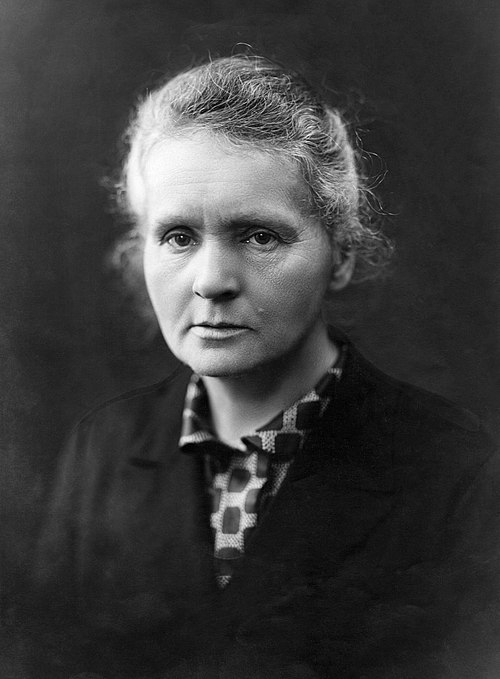
Marie Curie
92Marie Curie was a Polish-French physicist and chemist who pioneered research on radioactivity and became the first person to win Nobel Prizes in two different sciences.
Why An earlier woman scientist whose pioneering work in physics and chemistry Franklin's career echoed.

Charles Darwin
96Charles Darwin was an English naturalist whose theory of evolution by natural selection became the unifying foundation of modern biology and transformed humanity's understanding of life.
Why Whose theory of inheritance found its molecular basis in the DNA Franklin helped reveal.

Albert Einstein
99Albert Einstein was a German-born theoretical physicist who developed the theory of relativity, one of the two pillars of modern physics, and won the 1921 Nobel Prize.
Why A fellow scientist of the modern era whose work reshaped its field.

Dmitri Mendeleev
88Dmitri Mendeleev was a Russian chemist who created the periodic table of the elements, one of the most important organizing principles in all of science.
Why Also a chemist & scientist · Worked in chemistry

Louis Pasteur
90Louis Pasteur was a French chemist and microbiologist whose work on germ theory, vaccination, and pasteurization revolutionized medicine and saved countless lives.
Why Also a chemist & scientist · Worked in chemistry

Michael Faraday
93Michael Faraday was an English scientist whose discoveries in electromagnetism and electrochemistry, above all electromagnetic induction, laid the experimental foundation of the electrical age.
Why Also a chemist & scientist · Worked in chemistry