Chemist · 1822 – 1895
Louis Pasteur
Key Takeaways
- Pasteur established that microorganisms cause disease and spoilage.
- He invented pasteurization to preserve food and drink safely.
- He developed vaccines for anthrax and rabies.
- His work disproved the theory of spontaneous generation.
Louis Pasteur ranks among the greatest benefactors of humanity. By proving that invisible microbes cause disease, spoilage, and fermentation, he transformed medicine, food safety, and public health.
Germ theory
Pasteur showed that fermentation and decay are caused by living microorganisms, not by spontaneous chemical change. Through elegant experiments he disproved the ancient idea of spontaneous generation and established the germ theory of disease — finally explaining the maladies that Hippocrates had only described and vindicating the sanitation reforms of Florence Nightingale.
Pasteurization and vaccines
To save France’s wine and beer, Pasteur devised gentle heating to kill spoiling microbes, the process now called pasteurization. He then turned to disease, developing vaccines against anthrax and, in 1885, rabies, founding the science of immunology.
Saving industry and the rabies cure
Pasteur repeatedly put science to practical use. He rescued the French wine and beer trades from spoilage, saved the silk industry by identifying the microbes killing silkworms, and helped farmers protect livestock with his anthrax vaccine. His most dramatic success came in 1885, when he treated a young boy bitten by a rabid dog with an experimental rabies vaccine. The boy survived, and patients soon traveled from across the world for the treatment, leading to the founding of the Pasteur Institute in 1887.
Legacy
A contemporary of Charles Darwin, Pasteur reshaped the life sciences of the Industrial Revolution and gave surgeons and physicians the understanding they needed to fight infection. The Pasteur Institute he founded remains a leading center of biomedical research, and pasteurization protects billions of people every day. Few scientists have done more to extend human life.
Influence
Pasteur's germ theory transformed medicine, surgery, and public health, while pasteurization and vaccination remain in worldwide use, saving countless lives.
Legacy
The Pasteur Institute, founded in 1887, remains a leading center of biomedical research, and pasteurization bears his name.
Major Works
- Études sur le vin
- Études sur la maladie des vers à soie
- Mémoire sur la fermentation
Controversies
- Later examination of his notebooks revealed Pasteur sometimes obscured methods and used results in ways that diverged from his public accounts, raising ethical debate.
Notable Quotes
“In the fields of observation chance favors only the prepared mind.”
Connections
Frequently Asked Questions
Who was Louis Pasteur?
Louis Pasteur (1822–1895) was a French chemist and microbiologist who established the germ theory of disease and developed pasteurization and vaccines.
What is pasteurization?
It is a process of heating food or drink to a temperature that kills harmful microbes without ruining the product, named after Pasteur.
Citations & Sources
People Like Louis

Hippocrates
88Hippocrates was an ancient Greek physician regarded as the father of Western medicine, who established medicine as a rational discipline distinct from superstition and inspired the Hippocratic Oath.
Why Pasteur's germ theory finally explained disease causes that Hippocrates had only described millennia earlier.

Charles Darwin
96Charles Darwin was an English naturalist whose theory of evolution by natural selection became the unifying foundation of modern biology and transformed humanity's understanding of life.
Why A contemporary whose biology, like Pasteur's microbiology, reshaped nineteenth-century understanding of life.

Florence Nightingale
86Florence Nightingale was an English social reformer and statistician, the founder of modern nursing, whose work in the Crimean War and pioneering use of data transformed hospital care and public health.
Why Nightingale's sanitation reforms were vindicated and explained by Pasteur's germ theory of disease.
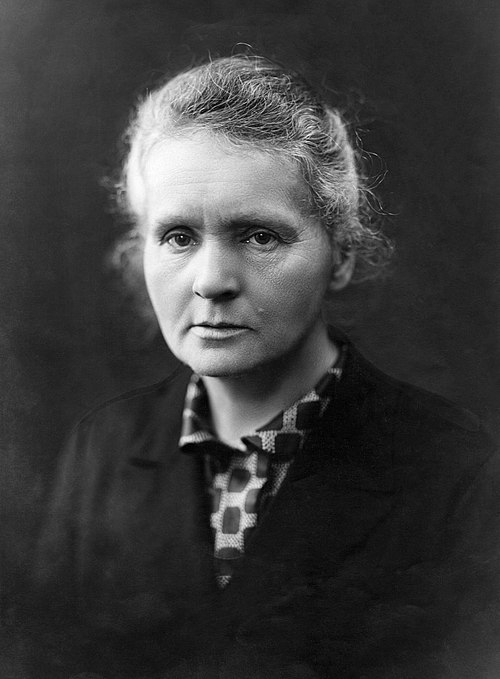
Marie Curie
92Marie Curie was a Polish-French physicist and chemist who pioneered research on radioactivity and became the first person to win Nobel Prizes in two different sciences.
Why A later French-based scientist whose research institute, like Pasteur's, became a world center of discovery.

Dmitri Mendeleev
88Dmitri Mendeleev was a Russian chemist who created the periodic table of the elements, one of the most important organizing principles in all of science.
Why Also a chemist & scientist · Worked in chemistry

Michael Faraday
93Michael Faraday was an English scientist whose discoveries in electromagnetism and electrochemistry, above all electromagnetic induction, laid the experimental foundation of the electrical age.
Why Also a chemist & scientist · Worked in chemistry