Empress · 497 – 548
Theodora
Key Takeaways
- Theodora was the effective co-ruler of the Byzantine Empire alongside Justinian I.
- She famously saved Justinian's throne by refusing to flee during the Nika riots of 532.
- She championed laws protecting women from exploitation and abuse.
- She rose from actress and courtesan origins to become empress.
Theodora saved an empire with a speech. In 532 CE, with rioters burning Constantinople and Justinian I preparing to flee, she stood firm: “Those who have worn the crown should never survive its loss… Imperial purple makes the finest shroud.” The riots were crushed. The empire survived.
Rise from the streets to the palace
Theodora’s origins were as low as her heights were great. Born to a circus animal trainer, she worked as an actress and entertainer — among the most socially stigmatized occupations in Byzantium. Her relationship with the future emperor Justinian was so scandalous that his aunt tried to prevent it; he changed the law to marry her. From the moment she became empress she exercised real power alongside him, not mere consort influence.
The reforming empress
Theodora used her power to protect those she had once been among. She championed laws banning the forcing of women into prostitution, improved conditions for actresses, strengthened divorce rights for women, and advocated for the poor. She also held independent theological views — supporting the Miaphysite Christianity of Egypt and Syria against official policy — demonstrating that her influence extended into the empire’s religious life. When she died of cancer in 548, Justinian reportedly never recovered from the loss of his partner and confidant.
Co-ruled with Justinian I as empress of the Byzantine Empire, personally urged him to stand firm during the deadly Nika revolt, championed legal reforms for women, and shaped religious policy in the complex theological disputes of her age.
Political Achievements
- Co-ruled with Justinian I and influenced legislation on women's rights, divorce, and slavery.
- Refused to flee during the Nika revolt, rallying Justinian to crush the rebellion.
- Shaped Byzantine religious policy on theological controversies (Miaphysitism).
Historical influence score: 84/100
Influence
Theodora proved that a woman could exercise real imperial power in the ancient world, and her legal reforms protecting women were centuries ahead of their time.
Legacy
One of the most powerful women in antiquity, she is celebrated for her courage, her advocacy for the vulnerable, and her extraordinary rise from poverty to the apex of power.
Little-Known Facts
- According to the historian Procopius (who despised her), she had worked as an actress and entertainer — occupations of very low social status in Byzantium — before becoming empress.
- She championed the Miaphysite form of Christianity against her husband's Chalcedonian orthodoxy, showing that she had independent religious views even from Justinian.
Myths & Misconceptions
Was Theodora just Justinian's wife?
She was his co-ruler in practice — Justinian consulted her on major decisions, issued laws in both their names, and her intervention at the Nika riots arguably saved his throne. She was a genuine partner in power, not a decorative consort.
Connections
Frequently Asked Questions
Who was Theodora?
Theodora (c. 497–548) was the Byzantine empress who co-ruled with Justinian I, saved his throne during the Nika riots through personal courage, and championed legal reforms protecting women and the vulnerable.
What were the Nika riots?
The Nika riots (532 CE) were a massive rebellion in Constantinople that nearly overthrew Justinian — Theodora's famous speech refusing to flee ('purple is a glorious shroud') rallied the emperor to stand firm and crush the revolt.
Citations & Sources
People Like Theodora

Justinian I
84Justinian I was the Byzantine emperor who sought to restore the glory of Rome, reconquering lost western lands, codifying Roman law in the Corpus Juris Civilis, and building the magnificent church of Hagia Sophia.
Why Her husband and co-ruler, whose reign she shaped and whose nerve she steeled during the Nika crisis.

Cleopatra VII
90Cleopatra VII was the last active ruler of the Ptolemaic Kingdom of Egypt, a shrewd and learned monarch whose alliances with Julius Caesar and Mark Antony placed her at the center of Roman politics.
Why A fellow woman who wielded supreme power in the ancient world through political intelligence and force of personality.

Eleanor of Aquitaine
86Eleanor of Aquitaine was the most powerful woman of 12th-century Europe — queen of France, then queen of England, mother of Richard the Lionheart and King John, patron of troubadour culture, and crusader — who wielded political power across seven decades.
Why A later medieval queen who similarly exercised political power at the highest level in a world dominated by men.

Catherine II of Russia
87Catherine the Great was Empress of Russia for more than three decades, an enlightened despot who expanded the empire, modernized its administration, and made her court a brilliant centre of art and learning.
Why Also a empress & ruler · Comparable historical impact

Wu Zetian
86Wu Zetian was the only woman in Chinese history to rule as emperor in her own name, founding the Zhou dynasty, governing China at the height of Tang power, and expanding the civil examination system to build a meritocratic bureaucracy.
Why Also a empress & ruler · Comparable historical impact
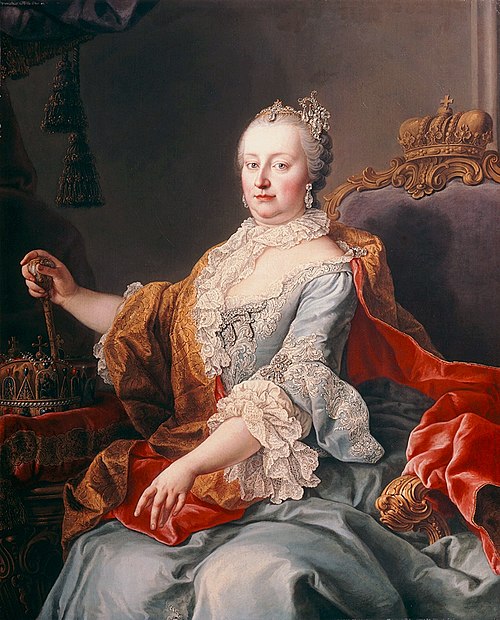
Maria Theresa
81Maria Theresa was the only female ruler of the Habsburg domains, a formidable empress who defended and reformed her vast inheritance against powerful enemies and reshaped Austria into a modern state while raising sixteen children.
Why Also a empress & ruler · Comparable historical impact