Empress · 624 – 705
Wu Zetian
Key Takeaways
- Wu Zetian is the only woman to have ruled China as emperor in her own name.
- She rose from imperial concubine to empress dowager to emperor.
- She expanded the civil service examination system to include more talented commoners.
- She ruled for over 50 years and presided over a prosperous, expanding China.
Wu Zetian accomplished something no other woman in Chinese history achieved: she ruled China as emperor in her own name. Rising from teenage concubine at the court of Emperor Taizong to the supreme ruler of the world’s most populous empire, she did it through intelligence, ruthlessness, and extraordinary political skill.
The ascent to power
She entered the imperial court as a concubine at fourteen. After Taizong’s death she married his son Gaozong and became empress consort, then effectively ran the government as Gaozong’s health declined. After his death she ruled as regent for her sons, then removed them and declared herself Empress Regnant — founding her own dynasty, the Zhou, in 690 CE. She was the first and only woman to hold this title in Chinese history.
The reforming emperor
Wu Zetian’s reign was not merely the story of a woman seizing power — it was the story of an able ruler who governed well. She expanded the imperial examination system, allowing talented men from non-aristocratic families to enter the civil service on merit, breaking the monopoly of old noble families. China prospered under her rule, and the Tang golden age reached its heights during her decades of governance. When she was overthrown by a coup in 705, aged eighty, the Tang dynasty was restored — but many of her reforms endured, and her blank tomb stele stands as a silent challenge to the verdict of history.
Rose from concubine to empress, ruled as regent, then established herself as emperor of China, expanded the imperial civil service examinations to recruit talent from common families, and presided over a period of territorial and cultural expansion.
Military Feats
- Conducted successful military campaigns in Korea and Central Asia.
Political Achievements
- Ruled China de facto for over 40 years and officially as emperor from 690 to 705.
- Expanded the imperial civil service examinations, drawing talent from beyond the aristocracy.
- Consolidated Tang territorial power and presided over administrative reform.
Historical influence score: 86/100
Influence
Wu Zetian proved a woman could govern China effectively at the height of its Tang golden age — and the civil service reforms she promoted outlasted her dynasty.
Legacy
A controversial figure in Chinese history, condemned for centuries by Confucian historians as a usurper, she has been reassessed as an able and reforming ruler who expanded access to power beyond the aristocracy.
Controversies
- Accused in traditional histories of eliminating rivals ruthlessly, including members of her own family.
- Her dynasty (Zhou) was erased by Tang restoration — official histories were written by those who overthrew her.
Little-Known Facts
- She commissioned a blank stone stele at her tomb — a wordless monument she reportedly left for later generations to judge her as they saw fit.
- She used Buddhism as a political tool, presenting herself as a manifestation of the Maitreya Buddha to legitimize her rule.
Myths & Misconceptions
Was Wu Zetian a cruel tyrant?
Traditional Chinese histories, written by her enemies and successors, portrayed her as a scheming monster — but modern historians recognize that many of her alleged crimes were standard political behavior for the era, and that her government was actually competent and reform-minded.
Connections
Frequently Asked Questions
Who was Wu Zetian?
Wu Zetian (624–705) was the only woman to rule China as emperor in her own right, rising from concubine to emperor, founding the Zhou dynasty, and governing China at the height of Tang power.
Citations & Sources
People Like Wu

Emperor Taizong of Tang
82Emperor Taizong of Tang was one of the greatest emperors in Chinese history, whose reign launched the golden age of the Tang dynasty, combining military conquest with wise, benevolent government that became a model for later rulers.
Why The Tang emperor at whose court she began as a concubine, and whose successor she helped shape.

Kangxi Emperor
81The Kangxi Emperor was the longest-reigning emperor in Chinese history, a ruler of the Qing dynasty who consolidated Manchu rule over China, expanded the empire, and presided over an era of prosperity, stability and learning.
Why A later ruler whose long, successful reign and interest in governance resonated with Wu Zetian's own imperial model.

Cleopatra VII
90Cleopatra VII was the last active ruler of the Ptolemaic Kingdom of Egypt, a shrewd and learned monarch whose alliances with Julius Caesar and Mark Antony placed her at the center of Roman politics.
Why A fellow woman who seized supreme power in a world ruled by men, using intelligence and political skill to maintain it.

Catherine II of Russia
87Catherine the Great was Empress of Russia for more than three decades, an enlightened despot who expanded the empire, modernized its administration, and made her court a brilliant centre of art and learning.
Why Also a empress & ruler · Comparable historical impact

Theodora
84Theodora was the Byzantine empress who co-ruled with Justinian I, saved his throne through her courage at the Nika riots, influenced imperial policy on women's rights and religious affairs, and rose from humble origins to become one of antiquity's most powerful women.
Why Also a empress & ruler · Comparable historical impact
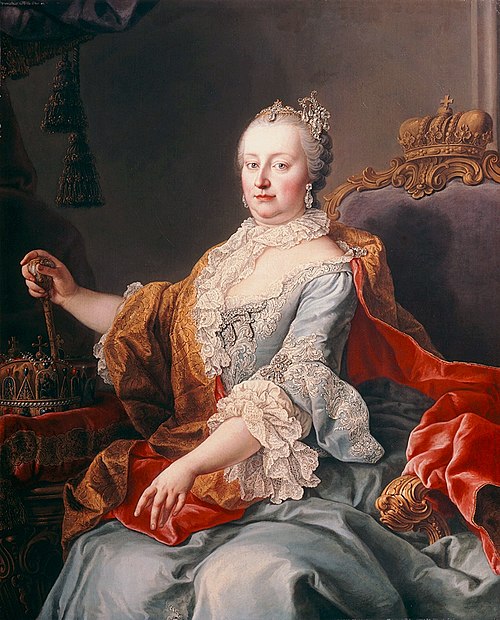
Maria Theresa
81Maria Theresa was the only female ruler of the Habsburg domains, a formidable empress who defended and reformed her vast inheritance against powerful enemies and reshaped Austria into a modern state while raising sixteen children.
Why Also a empress & ruler · Comparable historical impact