Empress · 497 – 548
Theodora
If you're interested in Theodora, these historical figures share a similar impact, discipline, philosophy, or era. Each recommendation explains why the connection exists.
Similar Impact & Significance

Justinian I
84Justinian I was the Byzantine emperor who sought to restore the glory of Rome, reconquering lost western lands, codifying Roman law in the Corpus Juris Civilis, and building the magnificent church of Hagia Sophia.
Why Her husband and co-ruler, whose reign she shaped and whose nerve she steeled during the Nika crisis.

Cleopatra VII
90Cleopatra VII was the last active ruler of the Ptolemaic Kingdom of Egypt, a shrewd and learned monarch whose alliances with Julius Caesar and Mark Antony placed her at the center of Roman politics.
Why A fellow woman who wielded supreme power in the ancient world through political intelligence and force of personality.

Eleanor of Aquitaine
86Eleanor of Aquitaine was the most powerful woman of 12th-century Europe — queen of France, then queen of England, mother of Richard the Lionheart and King John, patron of troubadour culture, and crusader — who wielded political power across seven decades.
Why A later medieval queen who similarly exercised political power at the highest level in a world dominated by men.

Catherine II of Russia
87Catherine the Great was Empress of Russia for more than three decades, an enlightened despot who expanded the empire, modernized its administration, and made her court a brilliant centre of art and learning.
Why Also a empress & ruler · Comparable historical impact

Wu Zetian
86Wu Zetian was the only woman in Chinese history to rule as emperor in her own name, founding the Zhou dynasty, governing China at the height of Tang power, and expanding the civil examination system to build a meritocratic bureaucracy.
Why Also a empress & ruler · Comparable historical impact
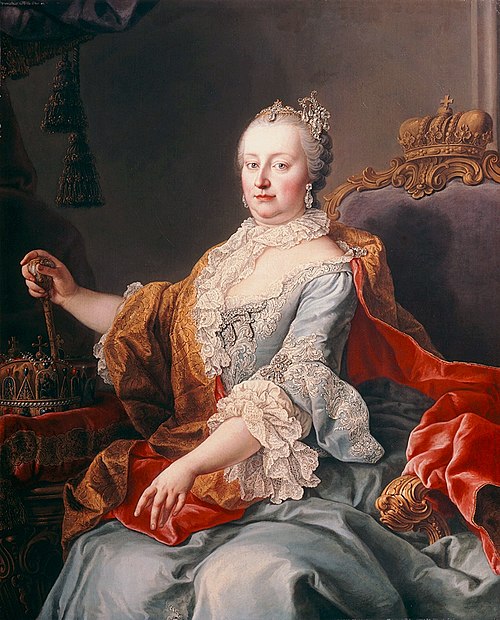
Maria Theresa
81Maria Theresa was the only female ruler of the Habsburg domains, a formidable empress who defended and reformed her vast inheritance against powerful enemies and reshaped Austria into a modern state while raising sixteen children.
Why Also a empress & ruler · Comparable historical impact

Queen Victoria
85Queen Victoria was the longest-reigning British monarch of her era, who presided over the height of the British Empire and the Victorian age of industrialization, reform, and global expansion, becoming a grandmother to most of Europe's royal houses.
Why Also a empress & ruler · Comparable historical impact

Boudicca
80Boudicca was the queen of the Iceni tribe who led a major uprising against Roman rule in Britain around 60–61 CE, sacking Camulodunum, Londinium, and Verulamium before being defeated by the Roman governor Paulinus.
Why Also a ruler · Comparable historical impact

Augustus
94Augustus was the first Roman emperor, the heir of Julius Caesar who ended a century of civil war, established the Roman Empire, and inaugurated the Pax Romana.
Why Also a ruler · Comparable historical impact

Catherine de' Medici
84Catherine de' Medici was the Italian-born queen consort and regent of France who governed the kingdom through three of her sons' reigns, navigated the devastating Wars of Religion between Catholics and Huguenots, and shaped French politics for thirty years.
Why Also a ruler · Comparable historical impact

Elizabeth I
89Elizabeth I was Queen of England from 1558 to 1603, whose long and stable reign — the Elizabethan era — saw a golden age of culture, the defeat of the Spanish Armada, and England's rise as a sea power.
Why Also a ruler · Comparable historical impact

Hadrian
80Hadrian was a Roman emperor, one of the "Five Good Emperors", who consolidated rather than expanded the empire, traveled tirelessly through its provinces, and built the great frontier wall in Britain that still bears his name.
Why Also a ruler · Comparable historical impact

Hatshepsut
83Hatshepsut was one of the few women to rule ancient Egypt as pharaoh in her own right, a peaceful and prosperous reign marked by ambitious building projects and far-reaching trade.
Why Also a ruler · Comparable historical impact

Marcus Aurelius
90Marcus Aurelius was a Roman emperor and Stoic philosopher, the last of the "Five Good Emperors", whose private journal, the Meditations, is the most cherished work of Stoic thought.
Why Also a ruler · Comparable historical impact

Mary Queen of Scots
82Mary Queen of Scots was the queen of Scotland and briefly queen of France whose Catholic faith, claim to the English throne, and tragic fate made her the central figure in the religious and political struggles of 16th-century Britain — executed by her cousin Elizabeth I after nineteen years of imprisonment.
Why Also a ruler · Comparable historical impact

Nefertiti
79Nefertiti was an Egyptian queen, principal wife of the pharaoh Akhenaten, who wielded unusual power during his religious revolution and whose painted limestone bust is one of the most admired images of the ancient world.
Why Also a ruler · Comparable historical impact

Nero
78Nero was the fifth Roman emperor, remembered as a byword for tyranny and excess, whose reign saw the Great Fire of Rome, the persecution of Christians, and a descent into cruelty that ended in his suicide and the fall of his dynasty.
Why Also a ruler · Comparable historical impact

Trajan
81Trajan was a Roman emperor under whom the Roman Empire reached its greatest territorial extent, a soldier-emperor remembered as one of the "Five Good Emperors" and celebrated by Romans as the best of all rulers.
Why Also a ruler · Comparable historical impact

Abu'l-Fath Jalal-ud-din Muhammad Akbar
88Akbar was the third Mughal emperor, who expanded the empire across much of the Indian subcontinent and is remembered for his administrative reforms, religious tolerance and patronage of the arts during a long and powerful reign.
Why Also a ruler · Comparable historical impact

Akhenaten
78Akhenaten was an Egyptian pharaoh of the Eighteenth Dynasty who launched a religious revolution, replacing Egypt's many gods with the worship of a single deity, the sun-disc Aten — one of the earliest experiments with monotheism.
Why Also a ruler · Comparable historical impact

Alfred the Great
80Alfred the Great was the king of Wessex who defended Anglo-Saxon England against the Vikings, reformed law, learning and defense, and is the only English monarch ever called "the Great".
Why Also a ruler · Comparable historical impact

Ashoka the Great
90Ashoka was the third emperor of the Maurya Empire who, after a devastating war, embraced Buddhism and non-violence, becoming one of history's most remarkable rulers.
Why Also a ruler · Comparable historical impact
Same Field or Discipline

Constantine the Great
87Constantine the Great was the Roman emperor who became the first to embrace Christianity, ended its persecution, and founded Constantinople as a new capital — decisions that reshaped the Roman world and the future of Europe.
Why Also a ruler · Active in the same era

Clovis I
80Clovis I was the king who united the Frankish tribes into a single kingdom and converted to Catholic Christianity, founding the Merovingian dynasty and laying the foundations of medieval France.
Why Also a ruler · Active in the same era