Queen · 1370 BC – 1330 BC
Nefertiti
Key Takeaways
- Nefertiti was the principal queen of the pharaoh Akhenaten.
- She shared prominently in his revolution to worship the single god, the Aten.
- Her painted bust, now in Berlin, is among the most famous artworks of antiquity.
- Some scholars believe she ruled Egypt as pharaoh after Akhenaten's death.
Nefertiti was the great queen of Egypt’s most turbulent reign, a woman whose name means “the beautiful one has come” and whose serene painted face has outlived empires.
Queen of the Amarna revolution
As the principal wife of Akhenaten, Nefertiti stood at the centre of his revolution to worship a single god, the Aten. The art of the period gives her a prominence almost unheard of for an Egyptian queen — shown worshipping the sun-disc, riding chariots, even smiting enemies in poses usually reserved for the king.
An enduring icon
Some scholars believe she may have ruled Egypt in her own right after Akhenaten, perhaps as a co-regent linked to the young Tutankhamun. Her end remains a mystery, but the limestone bust unearthed at Amarna in 1912 made her, alongside Cleopatra, one of the two most recognizable women of ancient Egypt.
Influence
Nefertiti embodied a rare moment of female royal power in ancient Egypt, and her serene bust has made her an enduring icon of beauty and antiquity.
Legacy
Her likeness, rediscovered in 1912, became one of the most reproduced images of the ancient world.
Controversies
- Her fate and final resting place remain unknown and much debated.
Connections
Frequently Asked Questions
Who was Nefertiti?
Nefertiti (c. 1370–1330 BC) was the powerful queen of the Egyptian pharaoh Akhenaten, known for her role in his religious revolution and her famous painted bust.
Why is Nefertiti famous?
She is famous for her extraordinary prominence as an Egyptian queen, her part in the Amarna revolution, and the iconic bust now displayed in Berlin.
Citations & Sources
People Like Nefertiti

Akhenaten
78Akhenaten was an Egyptian pharaoh of the Eighteenth Dynasty who launched a religious revolution, replacing Egypt's many gods with the worship of a single deity, the sun-disc Aten — one of the earliest experiments with monotheism.
Why Akhenaten was Nefertiti's husband and partner in the Aten revolution.
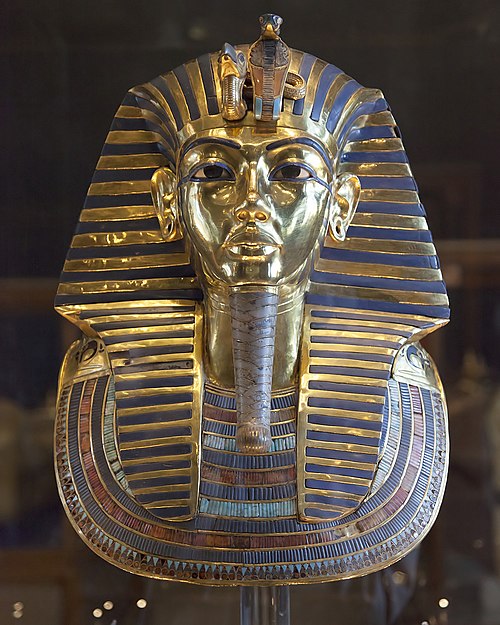
Tutankhamun
80Tutankhamun was an Egyptian pharaoh of the Eighteenth Dynasty whose near-intact tomb, discovered in 1922, became the most famous archaeological find in history and made him the best-known of all ancient Egyptians.
Why Tutankhamun was a member of the same Amarna royal family.

Hatshepsut
83Hatshepsut was one of the few women to rule ancient Egypt as pharaoh in her own right, a peaceful and prosperous reign marked by ambitious building projects and far-reaching trade.
Why An earlier woman who held supreme power in ancient Egypt.

Cleopatra VII
90Cleopatra VII was the last active ruler of the Ptolemaic Kingdom of Egypt, a shrewd and learned monarch whose alliances with Julius Caesar and Mark Antony placed her at the center of Roman politics.
Why Another famous and powerful queen of Egypt.

Ramesses II
84Ramesses II was the most powerful pharaoh of Egypt's New Kingdom, whose 66-year reign brought military campaigns, colossal building projects and a prosperity that earned him the title Ramesses the Great.
Why Also a ruler · Active in the same era

Elizabeth I
89Elizabeth I was Queen of England from 1558 to 1603, whose long and stable reign — the Elizabethan era — saw a golden age of culture, the defeat of the Spanish Armada, and England's rise as a sea power.
Why Also a queen & ruler · Comparable historical impact