Pharaoh · 1380 BC – 1334 BC
Akhenaten
Key Takeaways
- Akhenaten replaced Egypt's traditional gods with the worship of a single deity, the sun-disc Aten.
- He founded a new capital, Akhetaten (modern Amarna), dedicated to the Aten.
- His reign produced a uniquely naturalistic style of Egyptian art.
- His revolution was reversed after his death, largely under his son Tutankhamun.
Akhenaten is among the most extraordinary and controversial of all the rulers of Egypt. In a land devoted to a vast family of gods, he swept them aside in favour of one — the radiant sun-disc, the Aten.
A religious revolution
Born Amenhotep IV, he renamed himself Akhenaten and declared the Aten Egypt’s sole god, closing temples and redirecting their wealth. With his queen Nefertiti he founded a brand-new capital, Akhetaten — modern Amarna — built from nothing in the desert to honour the new faith.
Art and aftermath
His reign produced a startling new ancient Egyptian art, naturalistic and intimate where earlier styles were rigid and formal. But the revolution did not outlive him. After his death his city was abandoned and his reforms undone — largely under his son Tutankhamun — and later Egyptians struck his name from history as a heretic.
Influence
Akhenaten's elevation of a single god has fascinated scholars as one of history's earliest monotheistic experiments, while the art of his reign broke sharply from millennia of Egyptian convention.
Legacy
Condemned as a heretic in antiquity, Akhenaten is now studied as a radical religious innovator and the father of Tutankhamun.
Controversies
- His neglect of foreign affairs is blamed for a weakening of Egypt's empire.
- After his death his monuments were defaced and his name struck from king lists as a heretic.
Connections
Frequently Asked Questions
Who was Akhenaten?
Akhenaten (c. 1380–1334 BC) was an Egyptian pharaoh who replaced the traditional gods with worship of the single sun-disc deity, the Aten, and built a new capital at Amarna.
What is Akhenaten famous for?
He is famous for his radical religious revolution toward worship of one god, the distinctive Amarna art of his reign, and as the father of Tutankhamun.
Citations & Sources
People Like Akhenaten

Nefertiti
79Nefertiti was an Egyptian queen, principal wife of the pharaoh Akhenaten, who wielded unusual power during his religious revolution and whose painted limestone bust is one of the most admired images of the ancient world.
Why Nefertiti was Akhenaten's principal queen and partner in his religious revolution.
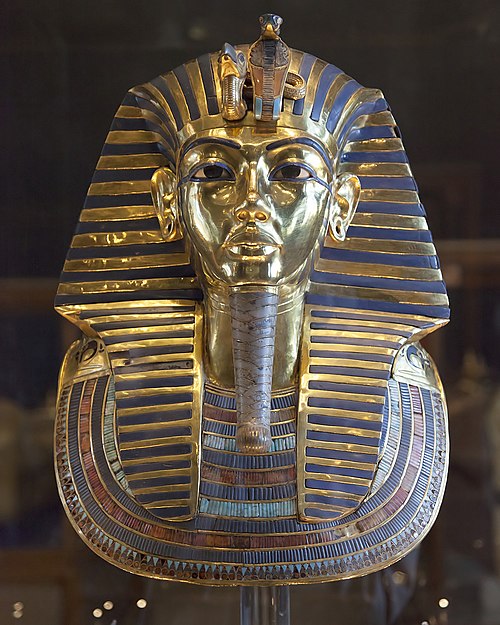
Tutankhamun
80Tutankhamun was an Egyptian pharaoh of the Eighteenth Dynasty whose near-intact tomb, discovered in 1922, became the most famous archaeological find in history and made him the best-known of all ancient Egyptians.
Why Tutankhamun was Akhenaten's son, who reversed his father's religious reforms.

Hatshepsut
83Hatshepsut was one of the few women to rule ancient Egypt as pharaoh in her own right, a peaceful and prosperous reign marked by ambitious building projects and far-reaching trade.
Why An earlier pharaoh of the same Eighteenth Dynasty.

Ramesses II
84Ramesses II was the most powerful pharaoh of Egypt's New Kingdom, whose 66-year reign brought military campaigns, colossal building projects and a prosperity that earned him the title Ramesses the Great.
Why Also a pharaoh & ruler · Active in the same era

Cleopatra VII
90Cleopatra VII was the last active ruler of the Ptolemaic Kingdom of Egypt, a shrewd and learned monarch whose alliances with Julius Caesar and Mark Antony placed her at the center of Roman politics.
Why Also a ruler & pharaoh · Active in the same era

Abu'l-Fath Jalal-ud-din Muhammad Akbar
88Akbar was the third Mughal emperor, who expanded the empire across much of the Indian subcontinent and is remembered for his administrative reforms, religious tolerance and patronage of the arts during a long and powerful reign.
Why Also a ruler · Comparable historical impact