Queen · 1819 – 1901
Queen Victoria
Key Takeaways
- Victoria reigned for 63 years — the longest of any British monarch to that point.
- She presided over the British Empire at its greatest extent.
- Her reign defined the Victorian era of industrial, social, and cultural transformation.
- She was called the "Grandmother of Europe" for her descendants across European royal houses.
Queen Victoria gave her name to an age. Her 63-year reign over the British Empire witnessed the transformation of the world through industrialization, and her court’s moral seriousness set the cultural tone of the 19th century in Britain and across its global reach.
The Victorian Empire
When Victoria came to the throne in 1837, Britain was already a world power. When she died in 1901, it was the largest empire the world had ever seen — covering a quarter of the Earth’s land surface. She became Empress of India in 1876, and the pink sprawl of British territory on the world map seemed to embody the era’s confidence that progress and civilization were one and the same thing.
The Grandmother of Europe
Victoria was as important dynastically as she was politically. Her nine children married into royal houses across Europe, making her the “Grandmother of Europe” — her grandchildren included Kaiser Wilhelm II of Germany and Tsar Nicholas II of Russia. The family connections that she imagined as guarantors of peace proved tragically unable to prevent the catastrophe of World War I, which swept away most of the dynastic world she had personified.
Reigned for 63 years over the British Empire at its greatest extent, presided over the Industrial Revolution's social transformation, and became a powerful symbol of imperial power and Victorian morality.
Political Achievements
- Presided over the expansion of the British Empire to its greatest extent.
- Became Empress of India in 1876.
- Oversaw major reforms including the extension of voting rights and factory legislation.
Historical influence score: 85/100
Influence
Victoria's reign defined an era of global British power, industrial transformation, and social reform that shaped the modern world — the Victorian age bears her name because she dominated it.
Legacy
The Victorian era she defined set the cultural, moral, and imperial tone of the 19th century, and her descendants ruled Europe until the catastrophe of World War I.
Little-Known Facts
- She mourned her husband Prince Albert so deeply that she wore black for the remaining 40 years of her life.
- She was the first British monarch to use a railway, travelling by train in 1842.
Myths & Misconceptions
Did Queen Victoria rule the British Empire directly?
As a constitutional monarch she governed within parliamentary constraints — the Empire was administered by ministers and governors — but she was a politically engaged monarch who influenced policy, especially foreign affairs.
Connections
Frequently Asked Questions
Who was Queen Victoria?
Queen Victoria (1819–1901) was the British monarch who reigned for 63 years over the British Empire at its height, defining the Victorian era of industrial, social, and imperial expansion.
Why is the era called Victorian?
The 19th century is called the Victorian era because Victoria's exceptionally long reign (1837–1901) spanned nearly the entire century, and her court's moral and cultural tone shaped the age.
Citations & Sources
People Like Queen

Kaiser Wilhelm II
82Kaiser Wilhelm II was the last German Emperor and King of Prussia, whose erratic and belligerent foreign policy helped plunge Europe into World War I, ending with his abdication in 1918 and the collapse of the German Empire.
Why Her grandson, whose belligerence she often tried to moderate and who would help destroy the European order she had presided over.

Otto von Bismarck
89Otto von Bismarck was the Prussian statesman who unified the German states into the German Empire in 1871, serving as its first chancellor and reshaping the balance of power in Europe through ruthless realpolitik and diplomatic mastery.
Why The dominant European statesman of her later reign, whose unification of Germany transformed the continent.

Napoleon III
79Napoleon III was the nephew of Napoleon Bonaparte who became the first elected president of France and then its last emperor, modernizing Paris and French industry before his empire collapsed with defeat in the Franco-Prussian War of 1870.
Why The French emperor who was her ally in the Crimean War and a major figure in her early reign.
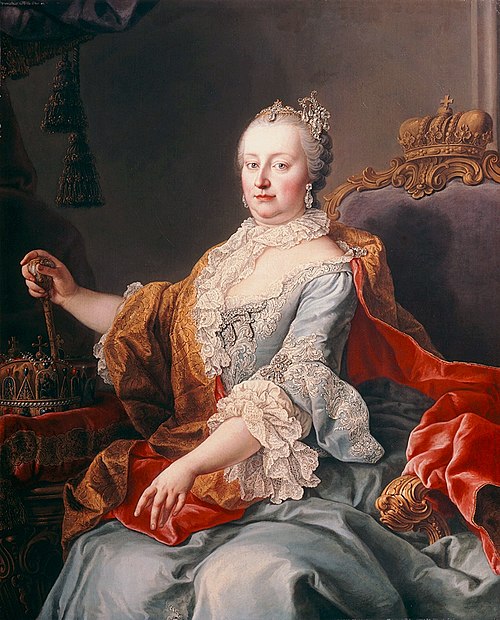
Maria Theresa
81Maria Theresa was the only female ruler of the Habsburg domains, a formidable empress who defended and reformed her vast inheritance against powerful enemies and reshaped Austria into a modern state while raising sixteen children.
Why Also a empress & ruler · Comparable historical impact

Boudicca
80Boudicca was the queen of the Iceni tribe who led a major uprising against Roman rule in Britain around 60–61 CE, sacking Camulodunum, Londinium, and Verulamium before being defeated by the Roman governor Paulinus.
Why Also a queen & ruler · Comparable historical impact

Catherine II of Russia
87Catherine the Great was Empress of Russia for more than three decades, an enlightened despot who expanded the empire, modernized its administration, and made her court a brilliant centre of art and learning.
Why Also a empress & ruler · Comparable historical impact