Physicist · 1942 – 2018
Stephen Hawking
If you're interested in Stephen Hawking, these historical figures share a similar impact, discipline, philosophy, or era. Each recommendation explains why the connection exists.
Similar Impact & Significance

Albert Einstein
99Albert Einstein was a German-born theoretical physicist who developed the theory of relativity, one of the two pillars of modern physics, and won the 1921 Nobel Prize.
Why Hawking extended Einstein's general relativity to black holes and the early universe.

Isaac Newton
99Isaac Newton was an English physicist and mathematician whose laws of motion and universal gravitation laid the foundation of classical mechanics and the Scientific Revolution.
Why Hawking held the Lucasian Professorship at Cambridge once held by Newton.

Max Planck
89Max Planck was a German physicist who originated quantum theory by introducing the quantum of action, a discovery that launched modern physics and earned him the 1918 Nobel Prize.
Why Hawking's work united Planck's quantum theory with gravity to predict black-hole radiation.
Same Field or Discipline

Erwin Schrödinger
86Erwin Schrödinger was an Austrian physicist who formulated the wave equation governing quantum systems and devised the famous Schrödinger's cat thought experiment.
Why Also a physicist · Worked in physics

James Clerk Maxwell
92James Clerk Maxwell was a Scottish physicist whose equations unified electricity, magnetism and light into a single electromagnetic theory, one of the greatest achievements in the history of physics.
Why Also a physicist · Worked in physics
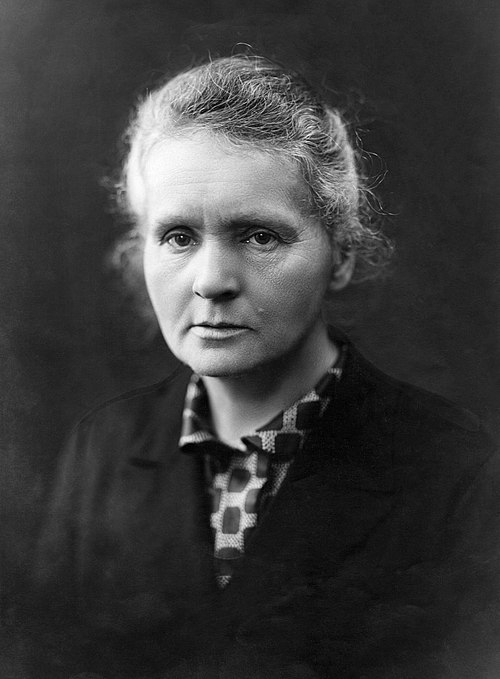
Marie Curie
92Marie Curie was a Polish-French physicist and chemist who pioneered research on radioactivity and became the first person to win Nobel Prizes in two different sciences.
Why Also a physicist · Worked in physics

Michael Faraday
93Michael Faraday was an English scientist whose discoveries in electromagnetism and electrochemistry, above all electromagnetic induction, laid the experimental foundation of the electrical age.
Why Also a physicist · Worked in physics

Niels Bohr
90Niels Bohr was a Danish physicist who created the first quantum model of the atom and became a leading architect of quantum mechanics through the Copenhagen interpretation.
Why Also a physicist · Worked in physics

Werner Heisenberg
87Werner Heisenberg was a German physicist who founded matrix mechanics and formulated the uncertainty principle, two of the cornerstones of quantum mechanics.
Why Also a physicist · Worked in physics

Nikola Tesla
90Nikola Tesla was a Serbian-American inventor and electrical engineer whose pioneering work on alternating current and electromagnetism helped electrify the modern world.
Why Also a physicist · Worked in physics

Archimedes
94Archimedes was an ancient Greek mathematician, physicist and inventor, widely regarded as the greatest mathematician of antiquity and a founder of mathematical physics and engineering.
Why Also a physicist · Worked in physics

Galileo Galilei
95Galileo Galilei was an Italian astronomer, physicist and engineer, the "father of modern science", whose telescopic discoveries and championing of heliocentrism transformed our understanding of the cosmos.
Why Also a physicist · Worked in physics
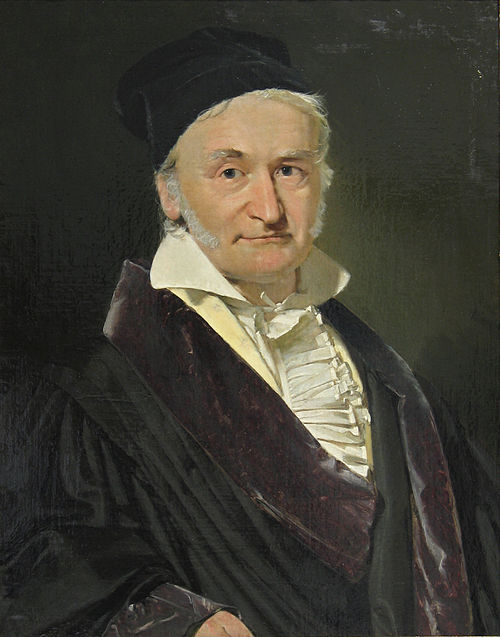
Carl Friedrich Gauss
95Carl Friedrich Gauss was a German mathematician and physicist whose profound contributions to number theory, statistics, geometry, astronomy and magnetism earned him the title "Prince of Mathematicians."
Why Also a physicist · Worked in physics

Leonhard Euler
93Leonhard Euler was a Swiss mathematician and physicist, the most prolific mathematician in history, whose work shaped modern analysis, number theory, graph theory and mathematical notation.
Why Also a physicist · Worked in physics

Helen Keller
80Helen Keller was an American author, disability rights advocate and activist who, though deaf and blind from infancy, learned to communicate, graduated from college, and wrote books that inspired the world and advanced the cause of people with disabilities.
Why Also a author · Active in the same era
Same Era or Civilization

Agatha Christie
81Agatha Christie was an English writer, the best-selling novelist of all time, whose ingenious detective stories featuring Hercule Poirot and Miss Marple made her the undisputed "Queen of Crime".
Why Active in the same era · From the same civilization

Alan Turing
91Alan Turing was an English mathematician and computer scientist who founded theoretical computer science, helped break the German Enigma cipher in World War II, and pioneered the study of artificial intelligence.
Why Active in the same era · From the same civilization

Aldous Huxley
80Aldous Huxley was an English writer and philosopher whose dystopian novel Brave New World became one of the most influential warnings of the 20th century, imagining a future enslaved not by terror but by pleasure and conditioning.
Why Active in the same era · From the same civilization

Arthur Conan Doyle
81Arthur Conan Doyle was a British writer and physician who created Sherlock Holmes, the most famous detective in fiction, whose stories of brilliant deduction defined the detective genre and remain among the best-loved in the world.
Why Active in the same era · From the same civilization
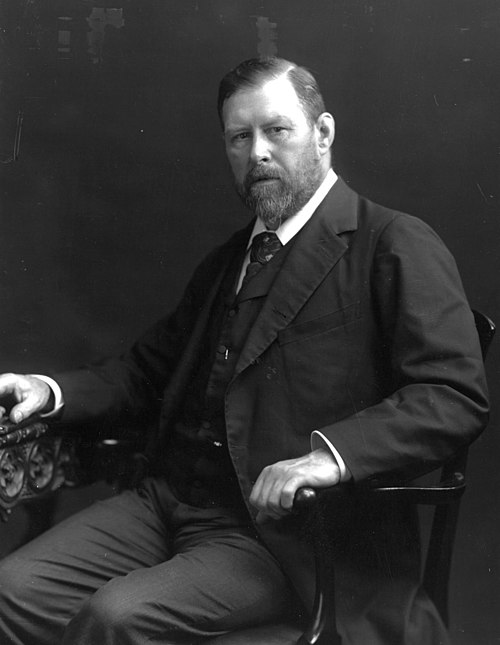
Bram Stoker
78Bram Stoker was an Irish writer and theatre manager whose 1897 Gothic novel Dracula created the modern vampire and became one of the most influential works of horror fiction ever written.
Why Active in the same era · From the same civilization

Charles Dickens
86Charles Dickens was an English novelist of the Victorian age, the most popular writer of his time and one of the greatest in the English language, whose vivid characters and social conscience defined the 19th-century novel.
Why Active in the same era · From the same civilization
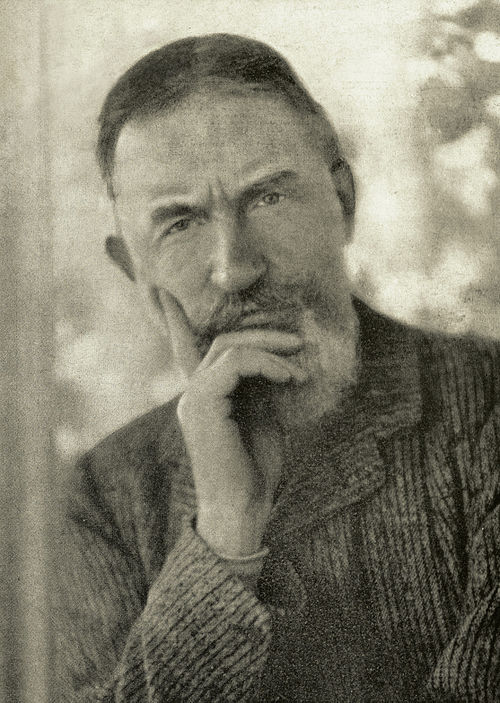
George Bernard Shaw
80George Bernard Shaw was an Irish playwright, critic and polemicist, the leading dramatist of his age after Shakespeare, whose witty, idea-driven plays such as Pygmalion won him the Nobel Prize in Literature and, uniquely, an Academy Award.
Why Active in the same era · From the same civilization

George Orwell
84George Orwell was an English writer and journalist whose novels Nineteen Eighty-Four and Animal Farm became the defining warnings against totalitarianism, giving the world terms such as "Big Brother", "doublethink" and "Orwellian".
Why Active in the same era · From the same civilization
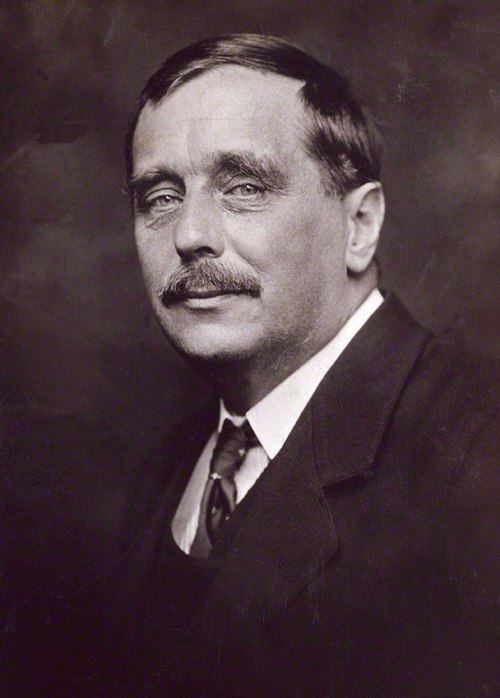
H. G. Wells
81H. G. Wells was an English writer, a founding father of science fiction, whose visionary novels — The Time Machine, The War of the Worlds and The Invisible Man — imagined time travel, alien invasion and other ideas that have shaped the genre ever since.
Why Active in the same era · From the same civilization