Writer · 1847 – 1912
Bram Stoker
Key Takeaways
- Stoker wrote Dracula (1897), the defining vampire novel.
- Count Dracula became the template for vampires in all later fiction and film.
- He worked for decades as the manager of a famous London theatre.
- The novel is told through letters, diaries and news clippings.
For most of his life, Bram Stoker was a busy London theatre manager. But in 1897 he published a novel that would outlive every play he ever staged: Dracula, the book that gave the world its modern vampire.
The Count from Transylvania
Drawing on Eastern European folklore and naming his villain after the medieval prince Vlad the Impaler, Stoker created Count Dracula — the cloaked, castle-dwelling, blood-drinking aristocrat who fears the cross and dies by the stake. Told through letters, diaries and newspaper clippings, the novel brought a new realism to Gothic horror in Victorian Britain.
The undying legacy
Like Mary Shelley’s Frankenstein before it, Dracula created a monster that escaped the page entirely. It has inspired more films than almost any other novel, fixing forever how we imagine vampires. Drawing on the Gothic tradition of Edgar Allan Poe, this writer of the modern era is remembered for a single immortal creation.
Influence
Stoker's Dracula fixed the image of the vampire — the cape, the castle, the fear of the cross and the stake — that has dominated horror for over a century.
Legacy
Dracula has never gone out of print and has inspired more films than almost any other novel, making Stoker the father of modern vampire fiction.
Major Works
- Dracula
Connections
Frequently Asked Questions
Who was Bram Stoker?
Bram Stoker (1847–1912) was an Irish writer and theatre manager best known for his 1897 Gothic novel Dracula, which created the modern vampire.
What is Dracula about?
Dracula tells of the vampire Count Dracula's move from Transylvania to England and the group who unite to destroy him, told through letters and diaries — the foundation of modern vampire fiction.
Citations & Sources
People Like Bram
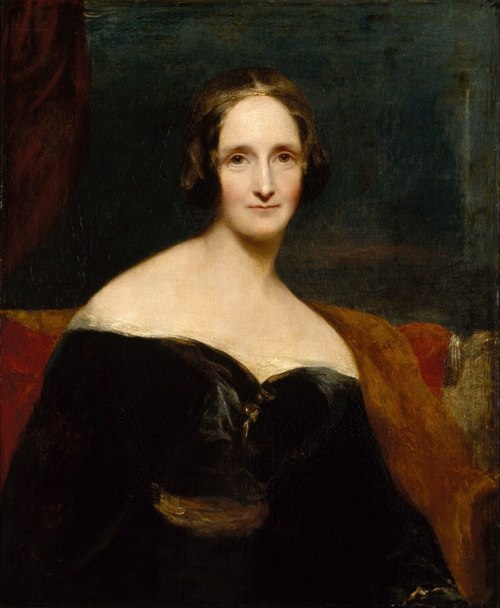
Mary Shelley
80Mary Shelley was an English writer who, at just eighteen, conceived Frankenstein — a novel often called the first work of science fiction — and went on to a notable literary career while editing the works of her husband, the poet Percy Bysshe Shelley.
Why An earlier author whose Frankenstein, like Dracula, created an immortal Gothic monster.

Edgar Allan Poe
81Edgar Allan Poe was an American writer and poet, a master of the macabre, who invented the detective story, helped shape the modern short story and science fiction, and gave the world haunting tales and poems such as "The Raven".
Why A foundational writer of the Gothic horror tradition Stoker drew upon.

Oscar Wilde
81Oscar Wilde was an Irish writer and wit, one of the most celebrated playwrights of late-Victorian London, whose sparkling comedies, the novel The Picture of Dorian Gray, and famous epigrams made him a legend — before a scandalous trial destroyed his career.
Why A fellow Dublin-born writer; the two moved in overlapping circles.

Robert Louis Stevenson
79Robert Louis Stevenson was a Scottish writer whose adventure and Gothic tales — Treasure Island, Strange Case of Dr Jekyll and Mr Hyde, and Kidnapped — became enduring classics read around the world.
Why Also a novelist & writer · Active in the same era

Agatha Christie
81Agatha Christie was an English writer, the best-selling novelist of all time, whose ingenious detective stories featuring Hercule Poirot and Miss Marple made her the undisputed "Queen of Crime".
Why Also a novelist & writer · Active in the same era

Aldous Huxley
80Aldous Huxley was an English writer and philosopher whose dystopian novel Brave New World became one of the most influential warnings of the 20th century, imagining a future enslaved not by terror but by pleasure and conditioning.
Why Also a novelist & writer · Active in the same era