Writer · 1854 – 1900
Oscar Wilde
Key Takeaways
- Wilde was the most celebrated wit and playwright of late-Victorian London.
- His comedy The Importance of Being Earnest is a classic of the stage.
- His only novel, The Picture of Dorian Gray, is a Gothic study of vanity.
- His career was destroyed by a trial and imprisonment for homosexuality.
Oscar Wilde was the wittiest man in late-Victorian London — a writer whose every remark seemed destined to be quoted, and whose dazzling rise was matched only by the cruelty of his fall.
The art of the epigram
Wilde mastered the comedy of manners. The Importance of Being Earnest and Lady Windermere’s Fan packed the stage with paradox and sparkle, while his only novel, The Picture of Dorian Gray, told a darker tale of beauty and corruption. His epigrams — “I can resist everything except temptation” — remain among the most repeated lines in English.
Triumph and tragedy
At the height of his fame, Wilde was prosecuted and imprisoned for his homosexuality, a persecution now seen as a grave injustice. Broken, he died in exile in Paris. A contemporary of Arthur Conan Doyle and fellow Irish wit George Bernard Shaw, this writer of the modern era is mourned as much for his suffering as he is celebrated for his genius.
Influence
Wilde perfected the comedy of manners and the art of the epigram, and his life became a landmark in the history of art, celebrity and gay rights.
Legacy
His plays are perennially performed and his witticisms endlessly quoted, while his persecution is remembered as a great injustice.
Major Works
- The Importance of Being Earnest
- The Picture of Dorian Gray
- The Ballad of Reading Gaol
Connections
Frequently Asked Questions
Who was Oscar Wilde?
Oscar Wilde (1854–1900) was an Irish writer and wit famous for The Importance of Being Earnest and The Picture of Dorian Gray, and for his brilliant epigrams.
What is The Picture of Dorian Gray about?
It tells of a beautiful young man whose portrait ages and bears the marks of his sins while he stays young — a Gothic fable about vanity, art and corruption.
Citations & Sources
People Like Oscar

Arthur Conan Doyle
81Arthur Conan Doyle was a British writer and physician who created Sherlock Holmes, the most famous detective in fiction, whose stories of brilliant deduction defined the detective genre and remain among the best-loved in the world.
Why A contemporary literary star of late-Victorian London who knew Wilde.
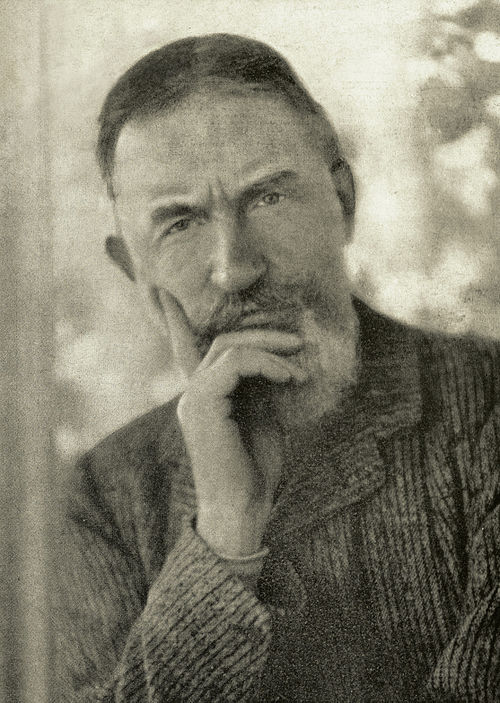
George Bernard Shaw
80George Bernard Shaw was an Irish playwright, critic and polemicist, the leading dramatist of his age after Shakespeare, whose witty, idea-driven plays such as Pygmalion won him the Nobel Prize in Literature and, uniquely, an Academy Award.
Why A fellow Irish playwright and wit who rose in the same London theatre world.

Edgar Allan Poe
81Edgar Allan Poe was an American writer and poet, a master of the macabre, who invented the detective story, helped shape the modern short story and science fiction, and gave the world haunting tales and poems such as "The Raven".
Why An earlier writer of Gothic fiction in the vein of Dorian Gray.

William Butler Yeats
80William Butler Yeats was an Irish poet and dramatist, one of the greatest poets of the 20th century and a driving force of the Irish Literary Revival, who won the Nobel Prize in Literature and helped found Ireland's national theatre.
Why Also a poet & playwright · Active in the same era

Agatha Christie
81Agatha Christie was an English writer, the best-selling novelist of all time, whose ingenious detective stories featuring Hercule Poirot and Miss Marple made her the undisputed "Queen of Crime".
Why Also a writer & playwright · Active in the same era

Lewis Carroll
80Lewis Carroll was the pen name of Charles Dodgson, an English writer and mathematician whose Alice's Adventures in Wonderland and Through the Looking-Glass revolutionized children's literature with their playful logic, nonsense and imagination.
Why Also a writer & poet · Active in the same era