Writer · 1832 – 1898
Lewis Carroll
Key Takeaways
- Lewis Carroll was the pen name of mathematician Charles Dodgson.
- His Alice books transformed children's literature with nonsense and fantasy.
- He was a lecturer in mathematics at Oxford University.
- His nonsense poem 'Jabberwocky' invented words still used today.
By day, Charles Dodgson lectured in mathematics at Oxford. Under the name Lewis Carroll, he wrote two of the most imaginative books ever made — and changed children’s literature forever.
Down the rabbit hole
Carroll invented the story of Alice’s Adventures in Wonderland to amuse a real little girl on a summer boating trip. Its dream-logic, talking creatures and joyful nonsense — continued in Through the Looking-Glass and the poem “Jabberwocky” — broke completely from the heavy moralizing of Victorian children’s books, treating imagination itself as the point.
Logic and nonsense
The mathematician’s love of logic runs all through the playful puzzles of Wonderland. Like the later Oxford storyteller J. R. R. Tolkien, this writer of the modern era built an imaginary world so complete that it became a permanent part of culture — endlessly adapted, quoted and reimagined.
Influence
Carroll freed children's books from heavy moral instruction, showing that nonsense, wordplay and imagination could be high art, and influenced literature far beyond the nursery.
Legacy
Alice has become a permanent part of world culture, endlessly adapted, quoted and reinterpreted.
Major Works
- Alice's Adventures in Wonderland
- Through the Looking-Glass
- The Hunting of the Snark
Connections
Frequently Asked Questions
Who was Lewis Carroll?
Lewis Carroll (1832–1898) was the pen name of Charles Dodgson, an English writer and mathematician famous for Alice's Adventures in Wonderland.
What is Alice in Wonderland about?
It follows a girl named Alice who falls down a rabbit hole into a fantastical world of nonsensical characters and dream logic, a landmark of children's literature.
Citations & Sources
People Like Lewis
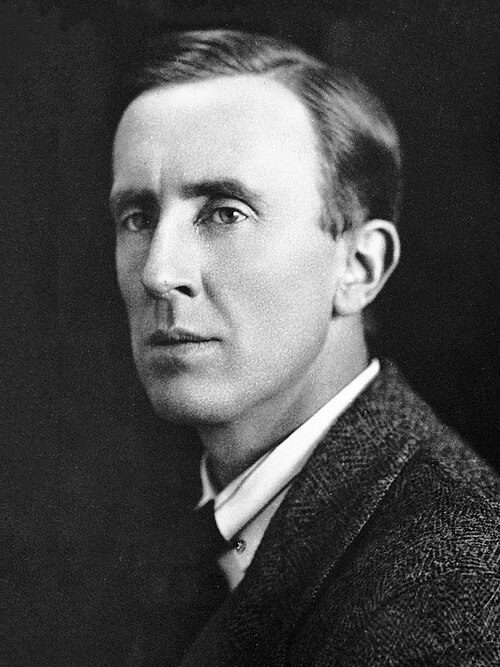
J. R. R. Tolkien
84J. R. R. Tolkien was an English writer and Oxford philologist whose novels The Hobbit and The Lord of the Rings created the modern genre of epic fantasy and built one of the most fully imagined fictional worlds ever conceived.
Why A later Oxford writer who, like Carroll, created an enduring imaginative world.

Charles Dickens
86Charles Dickens was an English novelist of the Victorian age, the most popular writer of his time and one of the greatest in the English language, whose vivid characters and social conscience defined the 19th-century novel.
Why A leading Victorian novelist of the same era of English literature.

Jules Verne
81Jules Verne was a French novelist whose pioneering adventure stories — including Twenty Thousand Leagues Under the Sea and Around the World in Eighty Days — helped found science fiction and imagined technologies decades before they existed.
Why A contemporary who likewise expanded the imaginative possibilities of fiction.

Oscar Wilde
81Oscar Wilde was an Irish writer and wit, one of the most celebrated playwrights of late-Victorian London, whose sparkling comedies, the novel The Picture of Dorian Gray, and famous epigrams made him a legend — before a scandalous trial destroyed his career.
Why Also a writer & poet · Active in the same era

Rabindranath Tagore
81Rabindranath Tagore was a Bengali poet, writer, composer and polymath who reshaped Indian literature and music and, in 1913, became the first non-European to win the Nobel Prize in Literature.
Why Also a poet & writer · Active in the same era

Robert Louis Stevenson
79Robert Louis Stevenson was a Scottish writer whose adventure and Gothic tales — Treasure Island, Strange Case of Dr Jekyll and Mr Hyde, and Kidnapped — became enduring classics read around the world.
Why Also a writer & poet · Active in the same era