Poet · 1865 – 1939
William Butler Yeats
Key Takeaways
- Yeats was one of the greatest poets writing in English in the 20th century.
- He led the Irish Literary Revival, drawing on Irish myth and identity.
- He co-founded Dublin's Abbey Theatre, Ireland's national theatre.
- He won the Nobel Prize in Literature in 1923.
William Butler Yeats stands at the meeting point of two ages of poetry — the last of the great Romantics and one of the first of the moderns. He is widely counted among the finest poets of the 20th century.
Poet of Ireland
Yeats drew deeply on Irish myth, landscape and politics, helping lead the Irish Literary Revival and co-founding Dublin’s Abbey Theatre, Ireland’s national stage. His poem “Easter, 1916” wrestled with the cost of Irish rebellion, while “The Second Coming” — “things fall apart; the centre cannot hold” — gave the modern era some of its most quoted lines.
A voice that grew with time
Unusually, Yeats wrote some of his greatest work in old age, his style growing sparer and more powerful. He championed the poetry of Rabindranath Tagore and worked alongside fellow Irishman George Bernard Shaw. Winner of the Nobel Prize and a senator of the new Irish state, this poet is, with T. S. Eliot, a defining voice of modern verse.
Influence
Yeats bridged Romantic and modern poetry, gave literary voice to Ireland's national awakening, and wrote lines — 'the centre cannot hold' — that have become part of the language.
Legacy
Widely regarded as one of the supreme poets of the modern age, he remains central to Irish culture and world literature.
Major Works
- The Second Coming
- Easter, 1916
- Sailing to Byzantium
Connections
Frequently Asked Questions
Who was William Butler Yeats?
W. B. Yeats (1865–1939) was an Irish poet and dramatist, a leader of the Irish Literary Revival and winner of the 1923 Nobel Prize in Literature.
What is 'The Second Coming' about?
Written after World War I, it envisions a world spinning out of control — 'things fall apart; the centre cannot hold' — and the dawning of a terrifying new age.
Citations & Sources
People Like William

Rabindranath Tagore
81Rabindranath Tagore was a Bengali poet, writer, composer and polymath who reshaped Indian literature and music and, in 1913, became the first non-European to win the Nobel Prize in Literature.
Why Whose Gitanjali Yeats championed, writing its introduction for English readers.
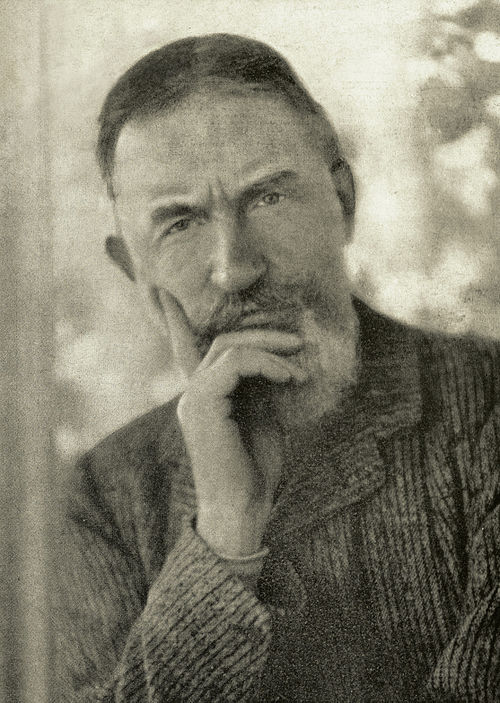
George Bernard Shaw
80George Bernard Shaw was an Irish playwright, critic and polemicist, the leading dramatist of his age after Shakespeare, whose witty, idea-driven plays such as Pygmalion won him the Nobel Prize in Literature and, uniquely, an Academy Award.
Why A fellow Irish writer of the same generation who reshaped English-language drama.
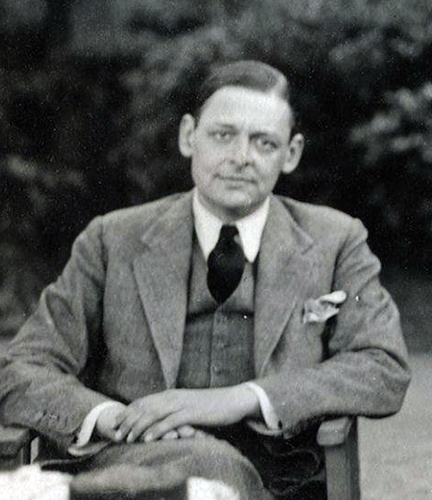
T. S. Eliot
80T. S. Eliot was an American-British poet, critic and playwright, a towering figure of literary modernism whose poem The Waste Land redefined 20th-century poetry and who won the Nobel Prize in Literature.
Why A leading modernist poet of the same era, often considered alongside Yeats.

Oscar Wilde
81Oscar Wilde was an Irish writer and wit, one of the most celebrated playwrights of late-Victorian London, whose sparkling comedies, the novel The Picture of Dorian Gray, and famous epigrams made him a legend — before a scandalous trial destroyed his career.
Why Also a playwright & writer · Active in the same era

Alexander Pushkin
81Alexander Pushkin was a Russian poet, playwright and novelist, regarded as the founder of modern Russian literature, whose verse novel Eugene Onegin and other works shaped the language and the writers who followed him.
Why Also a poet & playwright · Active in the same era

Rudyard Kipling
79Rudyard Kipling was a British writer and poet, author of The Jungle Book and the poem "If—", who became the first English-language winner of the Nobel Prize in Literature, though his association with British imperialism has made his legacy contested.
Why Also a writer & poet · Active in the same era