Philosopher · 1712 – 1778
Jean-Jacques Rousseau
If you're interested in Jean-Jacques Rousseau, these historical figures share a similar impact, discipline, philosophy, or era. Each recommendation explains why the connection exists.
Similar Impact & Significance

John Locke
93John Locke was an English philosopher and physician, widely regarded as the father of liberalism, whose theories of empiricism, natural rights, and government by consent shaped the Enlightenment and the founding of modern democracies.
Why Rousseau engaged Locke's social contract and theory of natural rights.

Thomas Hobbes
88Thomas Hobbes was an English philosopher whose masterwork Leviathan founded modern political philosophy, arguing that to escape the violent state of nature people must submit to a powerful sovereign through a social contract.
Why Rousseau responded directly to Hobbes's account of the state of nature.

Immanuel Kant
94Immanuel Kant was a German philosopher of the Enlightenment, one of the most influential thinkers in history, who reconciled rationalism and empiricism and transformed ethics, metaphysics and epistemology.
Why Kant credited Rousseau with teaching him to respect the common person.

Karl Marx
95Karl Marx was a German philosopher, economist, and revolutionary whose theories of historical materialism and class struggle, set out in The Communist Manifesto and Das Kapital, became among the most influential and contested ideas in modern history.
Why Rousseau's critique of inequality and property fed later radical political thought.

Voltaire
90Voltaire was a French Enlightenment writer, philosopher and wit, a tireless champion of reason, free speech and religious tolerance and one of the most influential figures of his age.
Why A fellow Enlightenment giant with whom Rousseau famously quarreled over reason and society.

Aldous Huxley
80Aldous Huxley was an English writer and philosopher whose dystopian novel Brave New World became one of the most influential warnings of the 20th century, imagining a future enslaved not by terror but by pleasure and conditioning.
Why Also a writer & philosopher · Comparable historical impact

Augustine of Hippo
92Augustine of Hippo was a Roman North African theologian and philosopher whose works, including Confessions and City of God, shaped Western Christianity and laid intellectual foundations for medieval and modern thought.
Why Also a philosopher & writer · Comparable historical impact

Cicero
88Cicero was a Roman statesman, orator and philosopher whose speeches and writings defined Latin prose, transmitted Greek philosophy to Rome, and championed the values of the Roman Republic.
Why Also a philosopher & writer · Comparable historical impact

Francis Bacon
82Francis Bacon was an English philosopher, statesman and writer who served as Lord Chancellor and, in works such as the Novum Organum and his Essays, founded the modern scientific method of reasoning from evidence and experiment.
Why Also a philosopher & writer · Comparable historical impact

Friedrich Nietzsche
92Friedrich Nietzsche was a German philosopher whose radical critiques of morality, religion, and truth—including the proclamation that "God is dead" and the ideal of the Übermensch—made him one of the most influential and provocative thinkers of the modern era.
Why Also a philosopher & writer · Comparable historical impact

Henry David Thoreau
80Henry David Thoreau was an American writer, naturalist and philosopher whose book Walden and essay "Civil Disobedience" became foundational texts of environmental thought and nonviolent resistance, influencing reformers around the world.
Why Also a writer & philosopher · Comparable historical impact
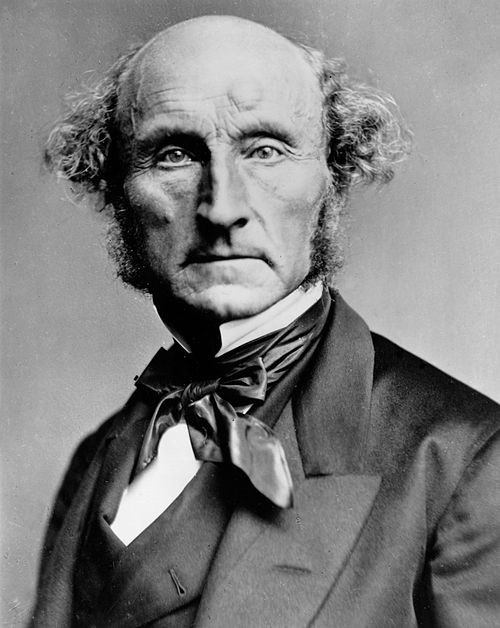
John Stuart Mill
87John Stuart Mill was an English philosopher and economist, the leading liberal thinker of the nineteenth century, whose works on utilitarianism, liberty, and the rights of women shaped modern political and ethical thought.
Why Also a philosopher & writer · Comparable historical impact

Niccolò Machiavelli
88Niccolò Machiavelli was a Renaissance Italian diplomat, political philosopher and writer whose treatise The Prince founded modern political science and gave his name to ruthless statecraft.
Why Also a philosopher & writer · Comparable historical impact

Hildegard of Bingen
84Hildegard of Bingen was a German Benedictine abbess and one of the most remarkable polymaths of the Middle Ages — a visionary, composer, writer, healer and natural philosopher.
Why Also a composer & writer · Comparable historical impact

Rabindranath Tagore
81Rabindranath Tagore was a Bengali poet, writer, composer and polymath who reshaped Indian literature and music and, in 1913, became the first non-European to win the Nobel Prize in Literature.
Why Also a writer & composer · Comparable historical impact
Same Field or Discipline

Mary Wollstonecraft
85Mary Wollstonecraft was an English Enlightenment writer and philosopher, a pioneer of feminist thought whose A Vindication of the Rights of Woman argued for the education and equality of women.
Why Also a writer & philosopher · Active in the same era

Georg Wilhelm Friedrich Hegel
88Georg Wilhelm Friedrich Hegel was a German philosopher and the leading figure of German idealism, whose dialectical method and grand vision of history as the self-development of Spirit profoundly shaped modern philosophy.
Why Also a philosopher & writer · Active in the same era

Michel de Montaigne
80Michel de Montaigne was a French Renaissance thinker and nobleman who invented the essay as a literary form, using candid self-examination to explore the human condition with unmatched honesty and wit.
Why Also a philosopher & writer · From the same civilization

René Descartes
92René Descartes was a French philosopher, mathematician and scientist, the "father of modern philosophy", famous for "I think, therefore I am" and for founding analytic geometry.
Why Also a philosopher · Active in the same era

Adam Smith
90Adam Smith was a Scottish Enlightenment philosopher and economist, the father of modern economics, whose work The Wealth of Nations laid the foundations of free-market thought.
Why Also a philosopher · Active in the same era

Benjamin Franklin
90Benjamin Franklin was an American polymath — a founding father, scientist, inventor, writer and diplomat — whose work on electricity and statesmanship made him one of the most admired figures of the 18th century.
Why Also a writer · Active in the same era

David Hume
89David Hume was a Scottish philosopher, historian, and economist of the Enlightenment whose rigorous empiricism and skepticism—especially his analysis of causation and the problem of induction—made him one of the most important philosophers in the English language.
Why Also a philosopher · Active in the same era

Thomas Jefferson
88Thomas Jefferson was an American statesman, the principal author of the Declaration of Independence and third President of the United States, who was also a prolific writer, architect and scholar whose Notes on the State of Virginia was a landmark of early American letters.
Why Also a writer · Active in the same era

Alexandre Dumas
81Alexandre Dumas was a French writer whose swashbuckling historical novels — The Three Musketeers and The Count of Monte Cristo — became some of the most popular and widely adapted stories in the world.
Why Also a writer · From the same civilization