Naturalist · 1769 – 1859
Alexander von Humboldt
If you're interested in Alexander von Humboldt, these historical figures share a similar impact, discipline, philosophy, or era. Each recommendation explains why the connection exists.
Similar Impact & Significance

Charles Darwin
96Charles Darwin was an English naturalist whose theory of evolution by natural selection became the unifying foundation of modern biology and transformed humanity's understanding of life.
Why Darwin took Humboldt's travel writings to sea and called him a key inspiration.

Carl Sagan
82Carl Sagan was an American astronomer and planetary scientist who became the world's most famous communicator of science, reaching millions through the television series Cosmos and best-selling books that made him a celebrated author as well as a researcher.
Why A later scientist-author who, like Humboldt, sought to convey the whole cosmos to a wide public.

Carl Linnaeus
81Carl Linnaeus was a Swedish naturalist whose book Systema Naturae established the modern system for naming and classifying living things, earning him the title "father of taxonomy" and making him one of the most influential scientific authors in history.
Why An earlier naturalist whose system of classifying life Humboldt built upon in the field.

Benjamin Franklin
90Benjamin Franklin was an American polymath — a founding father, scientist, inventor, writer and diplomat — whose work on electricity and statesmanship made him one of the most admired figures of the 18th century.
Why Also a scientist & writer · Comparable historical impact

Francis Bacon
82Francis Bacon was an English philosopher, statesman and writer who served as Lord Chancellor and, in works such as the Novum Organum and his Essays, founded the modern scientific method of reasoning from evidence and experiment.
Why Also a writer & scientist · Comparable historical impact

Marco Polo
84Marco Polo was a Venetian merchant and explorer whose travels across Asia to the court of Kublai Khan, recorded in The Travels of Marco Polo, gave medieval Europe its most influential account of the East.
Why Also a explorer & writer · Comparable historical impact
Same Field or Discipline

Henry David Thoreau
80Henry David Thoreau was an American writer, naturalist and philosopher whose book Walden and essay "Civil Disobedience" became foundational texts of environmental thought and nonviolent resistance, influencing reformers around the world.
Why Also a writer & naturalist · Active in the same era

Gregor Mendel
84Gregor Mendel was an Austrian friar and scientist whose experiments on pea plants revealed the basic laws of heredity, earning him recognition as the father of modern genetics.
Why Also a scientist · Worked in botany

Al-Khwarizmi
89Al-Khwarizmi was a Persian mathematician and scholar of the Islamic Golden Age, the "father of algebra", whose name gave us the word "algorithm".
Why Also a scientist · Worked in geography

Erwin Schrödinger
86Erwin Schrödinger was an Austrian physicist who formulated the wave equation governing quantum systems and devised the famous Schrödinger's cat thought experiment.
Why Also a scientist · Active in the same era

Hildegard of Bingen
84Hildegard of Bingen was a German Benedictine abbess and one of the most remarkable polymaths of the Middle Ages — a visionary, composer, writer, healer and natural philosopher.
Why Also a writer · Worked in natural history

Max Planck
89Max Planck was a German physicist who originated quantum theory by introducing the quantum of action, a discovery that launched modern physics and earned him the 1918 Nobel Prize.
Why Also a scientist · Active in the same era

Niels Bohr
90Niels Bohr was a Danish physicist who created the first quantum model of the atom and became a leading architect of quantum mechanics through the Copenhagen interpretation.
Why Also a scientist · Active in the same era

Rosalind Franklin
85Rosalind Franklin was an English chemist and X-ray crystallographer whose images of DNA were crucial to discovering its double-helix structure, a contribution long under-recognized.
Why Also a scientist · Active in the same era

Werner Heisenberg
87Werner Heisenberg was a German physicist who founded matrix mechanics and formulated the uncertainty principle, two of the cornerstones of quantum mechanics.
Why Also a scientist · Active in the same era

William Wordsworth
80William Wordsworth was an English poet who, with the Lyrical Ballads, helped launch the Romantic movement in English literature, celebrating nature, memory and ordinary life in language closer to common speech.
Why Also a writer · Active in the same era

Agatha Christie
81Agatha Christie was an English writer, the best-selling novelist of all time, whose ingenious detective stories featuring Hercule Poirot and Miss Marple made her the undisputed "Queen of Crime".
Why Also a writer · Active in the same era

Aldous Huxley
80Aldous Huxley was an English writer and philosopher whose dystopian novel Brave New World became one of the most influential warnings of the 20th century, imagining a future enslaved not by terror but by pleasure and conditioning.
Why Also a writer · Active in the same era

Alexandre Dumas
81Alexandre Dumas was a French writer whose swashbuckling historical novels — The Three Musketeers and The Count of Monte Cristo — became some of the most popular and widely adapted stories in the world.
Why Also a writer · Active in the same era

Anne Frank
81Anne Frank was a German-Dutch Jewish girl whose diary, written while hiding from the Nazis in occupied Amsterdam, became one of the most widely read accounts of the Holocaust and a lasting testament to humanity amid persecution.
Why Also a writer · Active in the same era

Anton Chekhov
81Anton Chekhov was a Russian playwright and short-story writer — and a practising physician — widely regarded as among the greatest masters of both the short story and modern drama, whose plays like The Cherry Orchard transformed the theatre.
Why Also a writer · Active in the same era

Arthur Conan Doyle
81Arthur Conan Doyle was a British writer and physician who created Sherlock Holmes, the most famous detective in fiction, whose stories of brilliant deduction defined the detective genre and remain among the best-loved in the world.
Why Also a writer · Active in the same era
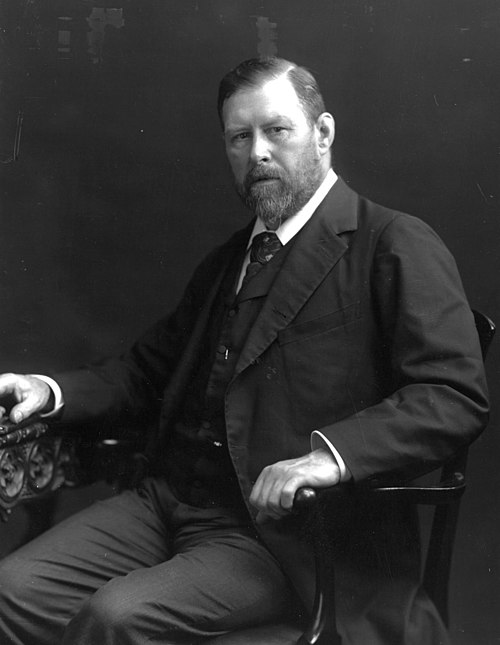
Bram Stoker
78Bram Stoker was an Irish writer and theatre manager whose 1897 Gothic novel Dracula created the modern vampire and became one of the most influential works of horror fiction ever written.
Why Also a writer · Active in the same era

Charles Dickens
86Charles Dickens was an English novelist of the Victorian age, the most popular writer of his time and one of the greatest in the English language, whose vivid characters and social conscience defined the 19th-century novel.
Why Also a writer · Active in the same era