Writer · 1860 – 1904
Anton Chekhov
Key Takeaways
- Chekhov is considered one of the greatest short-story writers ever.
- His plays, like The Cherry Orchard, transformed modern drama.
- He worked as a doctor throughout his literary career.
- He favoured mood and character over plot, influencing all later drama.
Anton Chekhov kept two careers his whole life: he was a working doctor and one of the greatest writers who ever lived. “Medicine is my lawful wife,” he joked, “and literature is my mistress.”
Master of the short story
Chekhov brought the short story to new heights, trading neat plots for mood, subtext and the quiet, unresolved truths of ordinary Russian life. His advice to writers — that every detail must count, that a gun shown early must later be fired — became the famous principle of “Chekhov’s gun.”
A new kind of theatre
On stage he was just as revolutionary. The Seagull, Uncle Vanya and The Cherry Orchard abandoned grand action for the small disappointments and longings of real people. Working in the tradition founded by Alexander Pushkin and admired by Leo Tolstoy, this writer of the modern era joined Henrik Ibsen in founding modern drama.
Influence
Chekhov stripped drama and the short story down to mood, subtext and the quiet truths of ordinary life, reshaping both forms for the 20th century.
Legacy
His plays remain staples of world theatre, and 'Chekhovian' describes a whole mode of understated, character-driven storytelling.
Major Works
- The Cherry Orchard
- The Seagull
- Uncle Vanya
Connections
Frequently Asked Questions
Who was Anton Chekhov?
Anton Chekhov (1860–1904) was a Russian writer and physician, a master of the short story and modern drama, author of The Cherry Orchard and The Seagull.
What is 'Chekhov's gun'?
It is Chekhov's storytelling principle that every element introduced must serve a purpose — famously, a gun shown in an early scene must be fired by the end.
Citations & Sources
People Like Anton

Lev Nikolayevich Tolstoy
92Leo Tolstoy was a Russian novelist and moral philosopher whose epics War and Peace and Anna Karenina rank among the greatest works of fiction, and whose later doctrine of nonviolence influenced Gandhi and King.
Why An admired older contemporary and friend among Russia's literary giants.

Alexander Pushkin
81Alexander Pushkin was a Russian poet, playwright and novelist, regarded as the founder of modern Russian literature, whose verse novel Eugene Onegin and other works shaped the language and the writers who followed him.
Why The founder of the Russian literary tradition Chekhov perfected.

Henrik Ibsen
81Henrik Ibsen was a Norwegian playwright, often called the "father of modern drama" and second only to Shakespeare in influence on the theatre, whose realistic plays like A Doll's House confronted the moral and social questions of his age.
Why A contemporary playwright who, with Chekhov, founded modern drama.
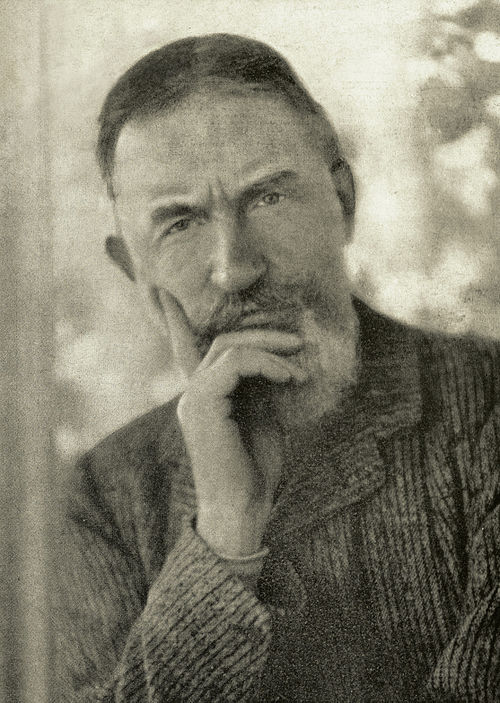
George Bernard Shaw
80George Bernard Shaw was an Irish playwright, critic and polemicist, the leading dramatist of his age after Shakespeare, whose witty, idea-driven plays such as Pygmalion won him the Nobel Prize in Literature and, uniquely, an Academy Award.
Why Also a playwright & writer · Active in the same era

Oscar Wilde
81Oscar Wilde was an Irish writer and wit, one of the most celebrated playwrights of late-Victorian London, whose sparkling comedies, the novel The Picture of Dorian Gray, and famous epigrams made him a legend — before a scandalous trial destroyed his career.
Why Also a playwright & writer · Active in the same era

Agatha Christie
81Agatha Christie was an English writer, the best-selling novelist of all time, whose ingenious detective stories featuring Hercule Poirot and Miss Marple made her the undisputed "Queen of Crime".
Why Also a writer & playwright · Active in the same era