Statesman · 1755 – 1804
Alexander Hamilton
If you're interested in Alexander Hamilton, these historical figures share a similar impact, discipline, philosophy, or era. Each recommendation explains why the connection exists.
Similar Impact & Significance
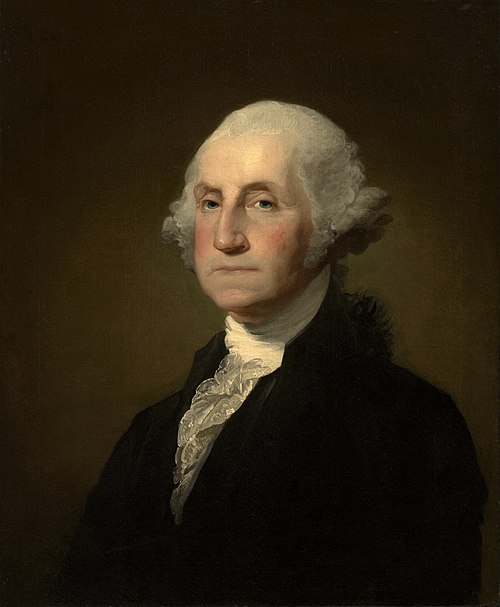
George Washington
91George Washington was the commander of the Continental Army in the American Revolution and the first President of the United States, whose leadership and restraint shaped the new republic.
Why His patron and commander — Washington chose Hamilton as his aide-de-camp during the Revolution and then as his Treasury Secretary, the most important relationship of Hamilton's career.

Thomas Jefferson
88Thomas Jefferson was an American statesman, the principal author of the Declaration of Independence and third President of the United States, who was also a prolific writer, architect and scholar whose Notes on the State of Virginia was a landmark of early American letters.
Why His great rival — the Jefferson-Hamilton debate over federal power versus states' rights and manufacturing versus agrarian economy defined the first decades of American politics.

Benjamin Franklin
90Benjamin Franklin was an American polymath — a founding father, scientist, inventor, writer and diplomat — whose work on electricity and statesmanship made him one of the most admired figures of the 18th century.
Why A fellow Founding Father whose polymath ambitions and self-made rise from humble origins paralleled Hamilton's own remarkable ascent.
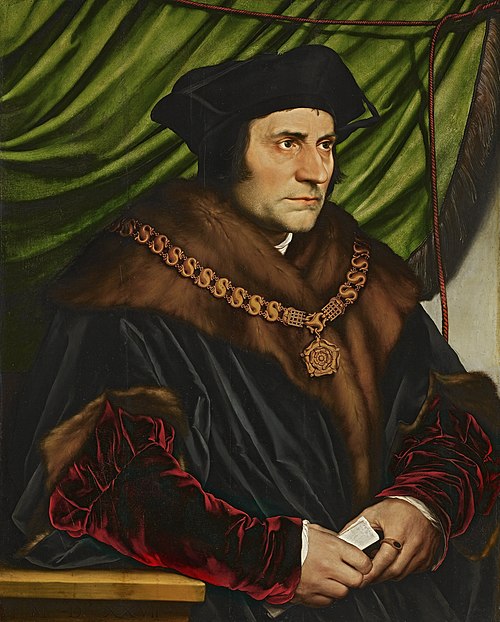
Thomas More
79Thomas More was an English statesman, lawyer and Renaissance humanist who served as Lord Chancellor and coined the word "utopia" in his book of that name — and who was executed for refusing to accept King Henry VIII's break with Rome.
Why Also a statesman & writer · Comparable historical impact

Cicero
88Cicero was a Roman statesman, orator and philosopher whose speeches and writings defined Latin prose, transmitted Greek philosophy to Rome, and championed the values of the Roman Republic.
Why Also a statesman & writer · Comparable historical impact
Same Field or Discipline

Abraham Lincoln
92Abraham Lincoln was the 16th President of the United States, who led the nation through its Civil War, preserved the Union, and abolished slavery before his assassination in 1865.
Why Also a statesman & lawyer · Active in the same era

Tecumseh
83Tecumseh was the Shawnee leader who built the largest Native American confederacy in history to resist US expansion, allied with the British in the War of 1812, and was killed at the Battle of the Thames — becoming the greatest pan-Indian leader America ever faced.
Why Also a military leader & statesman · Active in the same era

Theodore Roosevelt
85Theodore Roosevelt was the 26th President of the United States, a soldier, conservationist and reformer — and a remarkably prolific author who wrote around forty books on history, nature, politics and exploration alongside his public career.
Why Also a statesman & writer · Active in the same era

Winston Churchill
90Winston Churchill was the British statesman who led the United Kingdom to victory in World War II — and a prolific historian and writer whose books and speeches won him the Nobel Prize in Literature, a rare honour for a man of action.
Why Also a statesman & writer · Active in the same era

Jawaharlal Nehru
88Jawaharlal Nehru was India's first Prime Minister, who guided the country's independence from Britain, built its democratic institutions, launched industrialization and scientific development, and co-founded the Non-Aligned Movement of nations uncommitted to either Cold War superpower.
Why Also a statesman & lawyer · Active in the same era

Nelson Mandela
92Nelson Mandela was a South African anti-apartheid revolutionary and statesman who, after 27 years in prison, became the country's first democratically elected president and a global symbol of reconciliation.
Why Also a statesman & lawyer · Active in the same era

Amelia Earhart
84Amelia Earhart was the American aviator who became the first woman to fly solo across the Atlantic in 1932, setting multiple speed and altitude records, and who disappeared over the Pacific in 1937 while attempting to become the first woman to circumnavigate the globe.
Why Also a writer · Active in the same era

Eleanor Roosevelt
88Eleanor Roosevelt was the longest-serving First Lady of the United States, a human rights champion who chaired the UN commission that drafted the Universal Declaration of Human Rights, and redefined the role of first lady as an independent political force.
Why Also a writer · Active in the same era

Franklin D. Roosevelt
92Franklin D. Roosevelt was the 32nd President of the United States who led the country through the Great Depression with the New Deal and through most of World War II, serving an unprecedented four terms and reshaping the role of the federal government in American life.
Why Also a statesman · Active in the same era

Geronimo
81Geronimo was the Apache leader whose decade-long guerrilla resistance against the United States and Mexico made him the most feared and pursued Native American fighter of the 19th century, requiring 5,000 US troops to finally capture 38 warriors.
Why Also a military leader · Active in the same era

Haile Selassie I
85Haile Selassie was the Emperor of Ethiopia who modernized his country, became the symbol of African resistance to European colonialism after surviving Mussolini's invasion, championed African unity at the UN and as founder of the African Union, and is venerated as a messiah by the Rastafari movement.
Why Also a statesman · Active in the same era

Harriet Beecher Stowe
84Harriet Beecher Stowe was the American author whose novel Uncle Tom's Cabin (1852) galvanized the abolitionist movement in the North and became the best-selling novel of the 19th century, helping precipitate the Civil War.
Why Also a writer · Active in the same era
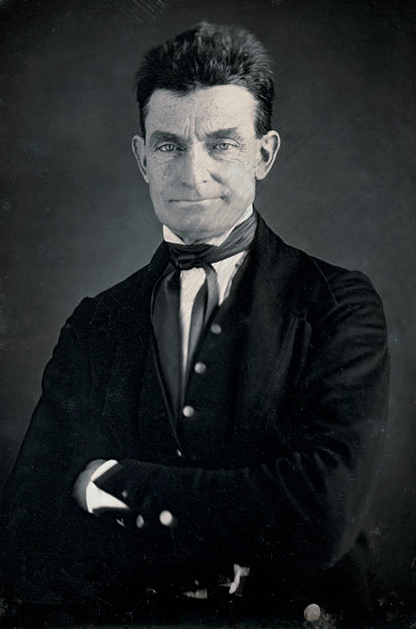
John Brown
81John Brown was the American abolitionist who believed that slavery could only be ended by armed violence, led the raid on the federal arsenal at Harpers Ferry in 1859, was hanged for treason, and became the most polarizing and prophetic figure of the American antislavery movement.
Why Also a military leader · Active in the same era

Sitting Bull
84Sitting Bull was the Hunkpapa Lakota chief and holy man who united the Sioux nations against American expansion, led the coalition that defeated Custer at the Little Bighorn in 1876, and became a symbol of Native American resistance to US conquest.
Why Also a military leader · Active in the same era

Carl Sagan
82Carl Sagan was an American astronomer and planetary scientist who became the world's most famous communicator of science, reaching millions through the television series Cosmos and best-selling books that made him a celebrated author as well as a researcher.
Why Also a writer · Active in the same era

Che Guevara
83Che Guevara was the Argentine Marxist revolutionary who helped Fidel Castro seize power in Cuba, theorized guerrilla warfare as the path to revolution in the developing world, and became an iconic symbol of rebellion after his execution in Bolivia in 1967.
Why Also a military leader · Active in the same era

Edgar Allan Poe
81Edgar Allan Poe was an American writer and poet, a master of the macabre, who invented the detective story, helped shape the modern short story and science fiction, and gave the world haunting tales and poems such as "The Raven".
Why Also a writer · Active in the same era

Emily Dickinson
80Emily Dickinson was an American poet who lived in near-seclusion and published almost nothing in her lifetime, yet whose nearly 1,800 original, compressed poems made her, after her death, one of the most important poets in the English language.
Why Also a writer · Active in the same era

Ernest Hemingway
82Ernest Hemingway was an American novelist and short-story writer whose spare, understated prose style revolutionized 20th-century fiction, winning the Nobel Prize in Literature for works such as The Old Man and the Sea.
Why Also a writer · Active in the same era