Military Leader · 1829 – 1909
Geronimo
Key Takeaways
- Geronimo led the last significant armed resistance of Native Americans against the US government.
- His band of 38 warriors required 5,000 US troops and months of pursuit to capture.
- He was never defeated in battle — he surrendered on terms in 1886.
- He spent his final years as a celebrity prisoner, appearing at the 1904 World's Fair.
Geronimo was never defeated in battle. The most relentlessly pursued man in America surrendered on terms — and was then betrayed, imprisoned for life, and turned into a tourist attraction. His story is one of extraordinary defiance followed by extraordinary indignity.
The resistance
After Mexican soldiers killed his mother, wife, and three children while he was away trading, Geronimo swore vengeance against Mexico and became a relentless raider. When the US government began confining the Chiricahua Apache to reservations in the 1870s, he refused confinement and broke out multiple times. His final period of resistance (1881–1886) pitted his band — at its smallest, just 38 warriors including women and children — against 5,000 US troops and 500 Apache scouts. He moved through the Sonoran Desert like a ghost, crossing the US-Mexico border at will, striking and vanishing.
Surrender and betrayal
In 1886, Geronimo agreed to surrender to General Nelson Miles on the condition that his people would be held as prisoners for two years and then returned to Arizona. The US government violated every term: the Chiricahua Apaches — including those who had helped the army track Geronimo — were shipped to Florida and then Alabama as prisoners. Geronimo spent the rest of his life at Fort Sill, Oklahoma, never returning to his homeland. He appeared at the 1904 World’s Fair, Theodore Roosevelt’s inauguration, and Wild West shows — a conquered man displayed as spectacle. He dictated his autobiography in 1905 and died in 1909, still a prisoner of war.
Led the last major armed resistance by Native Americans against the United States, evaded capture for years across the southwestern deserts, and became the enduring symbol of Apache defiance before surrendering in 1886 and living out his days as a celebrity prisoner of war.
Military Feats
- Led guerrilla campaigns across the Sonoran Desert of Arizona, New Mexico, and northern Mexico.
- Evaded capture by thousands of US troops for years using intimate knowledge of desert terrain.
- Conducted raids deep into Mexico and the United States, striking and vanishing before forces could respond.
Historical influence score: 81/100
Influence
Geronimo's resistance demonstrated the limits of US military power against determined guerrilla fighters who knew the terrain — and his capture on violated terms discredited the government's promises to Native peoples.
Legacy
An enduring symbol of resistance, survival, and defiance against overwhelming power — his name became a battle cry used by American paratroopers in World War II, and he remains one of the most recognizable Native American figures in history.
Controversies
- American settlers and the US Army viewed him as a murderous terrorist; his own people saw him as a protector.
- His surrender terms were violated by the US government, which imprisoned the entire Chiricahua Apache tribe including those who had helped the army track him.
Little-Known Facts
- He appeared at President Theodore Roosevelt's 1905 inaugural parade and at the 1904 St. Louis World's Fair — a celebrity prisoner touring an America that had conquered him.
- He converted to Christianity late in life while a prisoner at Fort Sill, though he later regretted it, saying Christianity had not helped him recover his homeland.
Myths & Misconceptions
Was Geronimo a chief?
He was never a hereditary chief — he was a war leader and shaman whose military brilliance and spiritual authority gave him influence. The Chiricahua Apache leadership structure was more fluid than formal chieftainship.
Connections
Frequently Asked Questions
Who was Geronimo?
Geronimo (1829–1909) was the Apache leader who led the last major Native American armed resistance against the United States, requiring 5,000 troops to capture his band of 38, and becoming one of the most famous Native Americans in history.
Citations & Sources
People Like Geronimo

Sitting Bull
84Sitting Bull was the Hunkpapa Lakota chief and holy man who united the Sioux nations against American expansion, led the coalition that defeated Custer at the Little Bighorn in 1876, and became a symbol of Native American resistance to US conquest.
Why A contemporary Lakota leader who similarly led armed resistance against US expansion, both becoming the defining symbols of Native American defiance in their respective regions.

William Wallace
82William Wallace was the Scottish knight who led the first great uprising against English rule, winning the Battle of Stirling Bridge in 1297, serving as Guardian of Scotland, and enduring a brutal execution that made him the enduring martyr-hero of Scottish independence.
Why A medieval resistance fighter who, like Geronimo, became a posthumous symbol of his people's struggle against a dominant power.

Shaka Zulu
80Shaka Zulu was the founder and greatest king of the Zulu Kingdom, a military revolutionary whose new tactics and weapons transformed warfare in southern Africa and forged a small clan into a powerful nation.
Why An African military innovator of roughly the same era who also led fierce resistance against European expansion into his people's territory.

Tecumseh
83Tecumseh was the Shawnee leader who built the largest Native American confederacy in history to resist US expansion, allied with the British in the War of 1812, and was killed at the Battle of the Thames — becoming the greatest pan-Indian leader America ever faced.
Why Also a military leader · Active in the same era
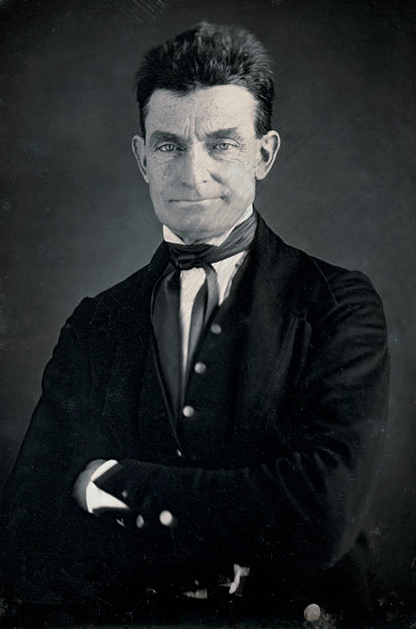
John Brown
81John Brown was the American abolitionist who believed that slavery could only be ended by armed violence, led the raid on the federal arsenal at Harpers Ferry in 1859, was hanged for treason, and became the most polarizing and prophetic figure of the American antislavery movement.
Why Also a military leader · Active in the same era

Alexander Hamilton
87Alexander Hamilton was the American Founding Father who designed the United States financial system, co-wrote the Federalist Papers, founded the first national bank, served as the first Secretary of the Treasury, and was killed in a duel by Vice President Aaron Burr in 1804.
Why Also a military leader · Active in the same era