Aviator · 1897 – 1937
Amelia Earhart
Key Takeaways
- She was the first woman to fly solo across the Atlantic Ocean (May 1932).
- She broke numerous aviation records and wrote bestselling books about her adventures.
- She advocated for women in aviation and professional careers beyond domestic life.
- She disappeared over the central Pacific in 1937 during an around-the-world flight attempt.
Amelia Earhart flew because it was the most dangerous, demanding, and celebrated thing a person could do — and she wanted to prove that the person who did it did not have to be a man. She succeeded beyond any expectation, and then she vanished.
The records
Earhart learned to fly in 1921, mortgaging everything she had for lessons. In 1928 she crossed the Atlantic as a passenger and was annoyed — she had wanted to fly it herself. In May 1932, she did: 15 hours and 18 minutes solo from Newfoundland to Northern Ireland, the first woman to do what Lindbergh had done five years before. She followed it with the first solo flight from Hawaii to the US mainland (1935) — a route more difficult than the Atlantic crossing, over a larger ocean with fewer landmarks. She set speed and altitude records, wore flying clothes designed by herself, wrote bestselling books about her adventures, and lectured across the country arguing that women belonged anywhere they chose to go. She was close friends with Eleanor Roosevelt, who shared her belief that convention was not destiny.
The disappearance
In 1937, she set out to fly around the world at the equator — the longest possible route. In June, nearing completion of the circumnavigation, she and navigator Fred Noonan took off from Lae, New Guinea, for the 2,556-mile flight to Howland Island in the central Pacific. Their last radio contact came on 2 July 1937. Despite the largest search in naval history to that point, neither Earhart, Noonan, nor their aircraft were ever found. What happened remains unknown: crash at sea, landing on a remote island, capture by the Japanese — theories proliferate. She was declared legally dead in 1939, age 39. The mystery completed the legend.
First woman to fly solo across the Atlantic (1932), first person to fly solo from Hawaii to the US mainland (1935), set multiple aviation records, wrote bestselling books about her flights, and disappeared over the central Pacific during an around-the-world flight attempt in 1937.
Historical influence score: 84/100
Influence
Earhart transformed public perception of what women could do — her Atlantic solo flight was not just an aviation achievement but a cultural statement that women could do the most dangerous, demanding, and celebrated things men could do.
Legacy
The most famous aviator in American history after Charles Lindbergh, and the defining symbol of women's capability in the 20th century — her mysterious disappearance turned a celebrated life into a legend.
Controversies
- The circumstances of her disappearance remain unknown — theories range from crash at sea to capture by the Japanese to survival on a Pacific island.
- Some aviation experts questioned her technical skill, suggesting she was better at publicity than piloting.
Little-Known Facts
- She had a remarkable correspondence with Eleanor Roosevelt, who was also interested in flying — the two were close friends, and Roosevelt obtained a student pilot's license under Earhart's encouragement.
- She helped found the Ninety-Nines, an organization of women pilots that still exists today, serving as its first president.
Myths & Misconceptions
Was Earhart the first person to fly solo across the Atlantic?
No — Charles Lindbergh did it in 1927, five years before her. She was the first WOMAN to do it. She had previously crossed the Atlantic by air in 1928 as a passenger (though she was nominally the commander), which initially frustrated her — she wanted to fly herself, not be carried.
Connections
Frequently Asked Questions
Who was Amelia Earhart?
Amelia Earhart (1897–1937) was the American aviator who became the first woman to fly solo across the Atlantic in 1932, broke multiple aviation records, and disappeared over the Pacific in 1937 during an around-the-world flight attempt — becoming an enduring symbol of women's courage and capability.
Citations & Sources
People Like Amelia

Wright Brothers
85The Wright Brothers, Orville and Wilbur, were American inventors who designed, built and flew the world's first successful powered aeroplane in 1903, launching the age of human flight.
Why The aviation pioneers whose invention she built upon — Earhart was born just six years after their first flight and became one of the defining figures of aviation's heroic age.
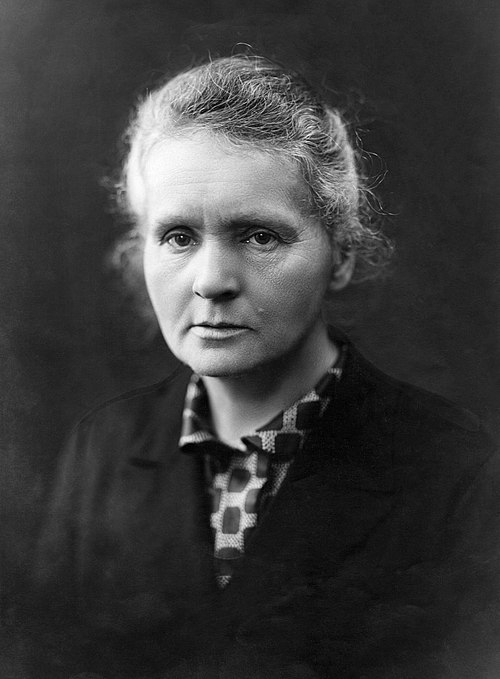
Marie Curie
92Marie Curie was a Polish-French physicist and chemist who pioneered research on radioactivity and became the first person to win Nobel Prizes in two different sciences.
Why A fellow pioneering woman in a male-dominated field who broke barriers and served as a model that women could excel where convention said they could not.

Ada Lovelace
84Ada Lovelace was an English mathematician widely regarded as the first computer programmer, who saw that Charles Babbage's Analytical Engine could go beyond calculation to manipulate symbols of any kind.
Why An earlier woman pioneer in technology whose example prefigured Earhart's — both forced their way into domains reserved for men and proved the conventions wrong.

Harriet Beecher Stowe
84Harriet Beecher Stowe was the American author whose novel Uncle Tom's Cabin (1852) galvanized the abolitionist movement in the North and became the best-selling novel of the 19th century, helping precipitate the Civil War.
Why Also a writer & activist · Active in the same era

Frederick Douglass
84Frederick Douglass was an American abolitionist, orator and writer who escaped slavery to become the most powerful voice of the antislavery movement and one of the foremost advocates for equality and human rights in the 19th century.
Why Also a activist & writer · Active in the same era

Maya Angelou
80Maya Angelou was an American writer, poet and civil rights activist whose autobiography I Know Why the Caged Bird Sings became a landmark of American literature, giving powerful voice to Black womanhood, trauma and resilience.
Why Also a writer & activist · Active in the same era