Human Rights Advocate · 1884 – 1962
Eleanor Roosevelt
Key Takeaways
- Eleanor Roosevelt chaired the UN commission that drafted the Universal Declaration of Human Rights (1948).
- She transformed the role of first lady from ceremonial to politically active.
- She championed civil rights for Black Americans when it was politically costly to do so.
- She served as US delegate to the United Nations after FDR's death.
Eleanor Roosevelt entered the White House as a shy, diffident first lady and left it as one of the most powerful advocates for human rights the world had known. Her transformation — from an insecure woman in her husband’s shadow to “First Lady of the World” — is one of the defining personal stories of the 20th century.
First Lady redefined
When Franklin D. Roosevelt became president in 1933, Eleanor refused to play the traditional ceremonial role. She held her own press conferences (women reporters only), wrote a daily newspaper column, and traveled the country reporting on poverty and injustice. She championed civil rights for Black Americans at a time when it cost her husband politically — inviting Marian Anderson to perform at the Lincoln Memorial after the DAR refused her a concert venue, and publicly resigning from the DAR in protest.
First Lady of the World
After FDR’s death in 1945, Eleanor’s career was just beginning. As US delegate to the United Nations she chaired the commission that produced the Universal Declaration of Human Rights (1948) — shepherding it through eighteen months of argument between nations with radically different conceptions of rights. The document she produced remains the foundational text of international human rights law. Martin Luther King Jr. called her “the greatest woman of our time.” Truman called her “First Lady of the World.” The titles were earned.
Chaired the UN Human Rights Commission that produced the Universal Declaration of Human Rights (1948), championed civil rights and women's equality, transformed the role of first lady into an active political office, and advocated for refugees and the poor.
Political Achievements
- Chaired the UN Commission on Human Rights that produced the Universal Declaration of Human Rights (1948).
- Served as US delegate to the United Nations.
- Championed civil rights, anti-lynching legislation, and racial equality from the White House.
Historical influence score: 88/100
Influence
Eleanor Roosevelt's Universal Declaration of Human Rights remains the foundational document of international human rights law, and her model of the engaged first lady shaped the role for all who came after.
Legacy
Voted the most admired woman in America multiple years running after her husband's death, she is remembered as 'First Lady of the World' for her global advocacy for human rights and dignity.
Little-Known Facts
- She carried a pistol and had a Secret Service special agent teach her to shoot — she was a rare first lady who insisted on traveling without a security detail.
- She was FDR's distant cousin (fifth cousin once removed) and President Theodore Roosevelt was her uncle.
Myths & Misconceptions
Was Eleanor just a supportive spouse?
She was far more — she pushed FDR on civil rights when he was reluctant, built her own national political base through her columns, broadcasts, and advocacy, and became even more influential after his death as a global human rights champion.
Connections
Frequently Asked Questions
Who was Eleanor Roosevelt?
Eleanor Roosevelt (1884–1962) was the longest-serving US First Lady who chaired the UN commission that produced the Universal Declaration of Human Rights and became one of the 20th century's most influential advocates for human rights and civil equality.
Citations & Sources
People Like Eleanor

Franklin D. Roosevelt
92Franklin D. Roosevelt was the 32nd President of the United States who led the country through the Great Depression with the New Deal and through most of World War II, serving an unprecedented four terms and reshaping the role of the federal government in American life.
Why Her husband and president, whose disability and political career she supported while carving out her own independent role.
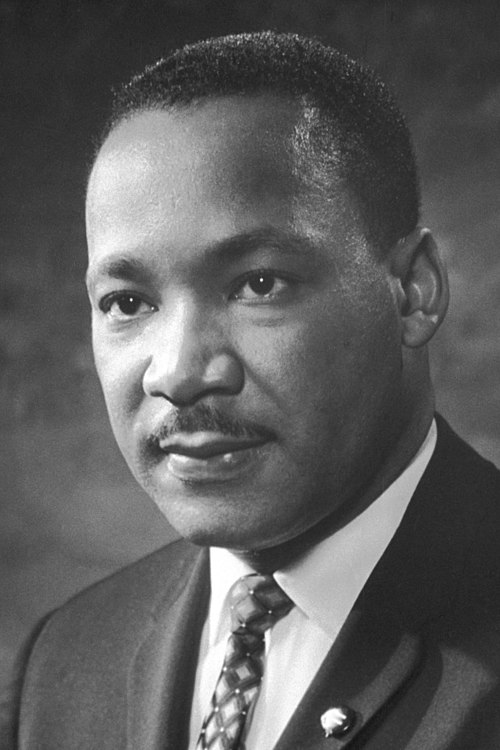
Martin Luther King Jr.
95Martin Luther King Jr. was an American Baptist minister and civil rights leader who championed nonviolent resistance to racial injustice and became the most prominent voice of the movement for equality in the United States.
Why The civil rights leader who carried forward the struggle for Black equality Eleanor had championed from the White House.

Mahatma Gandhi
93Mahatma Gandhi was the leader of India's independence movement, who pioneered the philosophy and practice of nonviolent civil disobedience and inspired movements for civil rights across the world.
Why A contemporary champion of human dignity whose non-violent methods resonated with Eleanor's own vision of human rights.

Amelia Earhart
84Amelia Earhart was the American aviator who became the first woman to fly solo across the Atlantic in 1932, setting multiple speed and altitude records, and who disappeared over the Pacific in 1937 while attempting to become the first woman to circumnavigate the globe.
Why Also a writer · Active in the same era

Benjamin Franklin
90Benjamin Franklin was an American polymath — a founding father, scientist, inventor, writer and diplomat — whose work on electricity and statesmanship made him one of the most admired figures of the 18th century.
Why Also a writer & diplomat · From the same civilization

Harriet Beecher Stowe
84Harriet Beecher Stowe was the American author whose novel Uncle Tom's Cabin (1852) galvanized the abolitionist movement in the North and became the best-selling novel of the 19th century, helping precipitate the Civil War.
Why Also a writer · Active in the same era