Writer · 1811 – 1896
Harriet Beecher Stowe
Key Takeaways
- Uncle Tom's Cabin (1852) was the best-selling novel of the 19th century after the Bible.
- The book humanized enslaved people for Northern readers who had little direct knowledge of slavery.
- Abraham Lincoln reportedly greeted her as "the little woman who wrote the book that started this great war."
- She was one of the most prominent women writers and reformers of the 19th century.
Harriet Beecher Stowe never owned a slave, never escaped bondage, and never led a resistance. She wrote a novel. And according to Abraham Lincoln — who greeted her as “the little woman who wrote the book that started this great war” — that novel did more to cause the Civil War than almost any political act.
Uncle Tom’s Cabin
Published in 1852, Uncle Tom’s Cabin was a direct response to the Fugitive Slave Act (1850), which required Northerners to assist in the capture and return of escaped enslaved people. Stowe, a Connecticut minister’s daughter living in Cincinnati near the Ohio-Kentucky border, had witnessed slavery firsthand. She wanted to show Northern readers not the abstract political question of slavery but its human cost: the breaking of families, the casual brutality, the individual lives destroyed. The novel sold 300,000 copies in its first year in the United States. It was translated into dozens of languages. It was banned across the South. In Britain it sold over a million copies, building the international pressure that prevented Britain from recognizing the Confederacy.
Impact
The novel worked because it did what statistics and political speeches could not: it made slavery personal. Northern readers who had never met an enslaved person now felt they had — and felt the horror of the institution viscerally rather than abstractly. It transformed abolitionism from a fringe movement into a moral mainstream position. Frederick Douglass and Harriet Tubman had shown the reality of slavery through their own lives; Stowe brought that reality into the parlors of white Northern families who had never ventured south. Together, these voices made the moral compromise of slavery increasingly untenable — and Abraham Lincoln’s election on an anti-expansion platform was the political result.
Wrote Uncle Tom's Cabin (1852), the most influential American novel of the 19th century, which humanized enslaved people for Northern readers, massively strengthened the abolitionist movement, and contributed to the political conditions that led to the Civil War and emancipation.
Historical influence score: 84/100
Influence
Uncle Tom's Cabin transformed American public opinion about slavery from an abstract political question into a moral emergency — it made millions of Northerners feel the human reality of the institution they had tolerated at a distance.
Legacy
One of the most consequential novels in history — its influence on the moral debate over slavery helped create the conditions for the Civil War and emancipation, making Stowe one of the few writers who genuinely changed the course of history.
Controversies
- Some critics, including Black writers, argued her depiction of enslaved characters reinforced certain stereotypes even while condemning slavery.
- The novel was banned in the South and in some countries as dangerous propaganda.
Little-Known Facts
- She was the daughter of a prominent abolitionist minister and the sister of Henry Ward Beecher, one of America's most famous preachers — she came from a family of reformers.
- The phrase 'Uncle Tom' has reversed meaning over the centuries — originally the character was a heroic figure of quiet dignity; over time it became a derogatory term for subservience, the opposite of Stowe's intent.
Myths & Misconceptions
Did Lincoln really say the famous quote about Stowe?
The attribution 'So you're the little woman who wrote the book that made this great war!' comes from a memoir written decades after the supposed meeting, and its authenticity is disputed. But the sentiment captures her genuine influence on the era.
Connections
Frequently Asked Questions
Who was Harriet Beecher Stowe?
Harriet Beecher Stowe (1811–1896) was the American author of Uncle Tom's Cabin (1852), the best-selling novel of the 19th century, which galvanized Northern opposition to slavery and helped precipitate the Civil War.
Citations & Sources
People Like Harriet

Abraham Lincoln
92Abraham Lincoln was the 16th President of the United States, who led the nation through its Civil War, preserved the Union, and abolished slavery before his assassination in 1865.
Why The president who reportedly greeted her as the woman who started the Civil War — her novel shaped the moral climate that made emancipation politically possible.

Frederick Douglass
84Frederick Douglass was an American abolitionist, orator and writer who escaped slavery to become the most powerful voice of the antislavery movement and one of the foremost advocates for equality and human rights in the 19th century.
Why The abolitionist whose firsthand testimonies of slavery informed her depiction — both were moral voices who made the reality of slavery impossible for Northerners to ignore.

Harriet Tubman
83Harriet Tubman was an American abolitionist who escaped slavery and then risked her life repeatedly to lead dozens of enslaved people to freedom via the Underground Railroad, becoming one of the great heroes of the fight against slavery.
Why A contemporary abolitionist whose courage in personally freeing enslaved people complemented Stowe's literary warfare against the institution.

Amelia Earhart
84Amelia Earhart was the American aviator who became the first woman to fly solo across the Atlantic in 1932, setting multiple speed and altitude records, and who disappeared over the Pacific in 1937 while attempting to become the first woman to circumnavigate the globe.
Why Also a writer & activist · Active in the same era
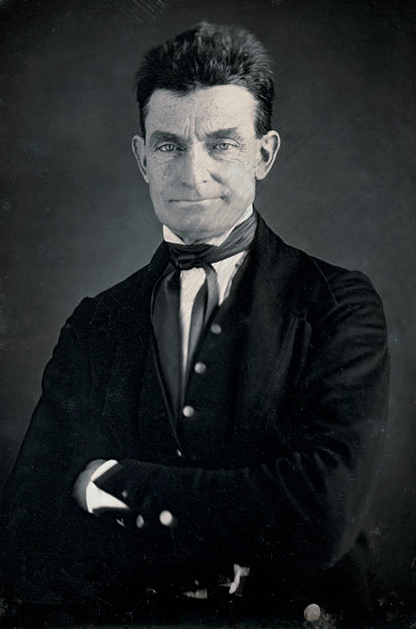
John Brown
81John Brown was the American abolitionist who believed that slavery could only be ended by armed violence, led the raid on the federal arsenal at Harpers Ferry in 1859, was hanged for treason, and became the most polarizing and prophetic figure of the American antislavery movement.
Why Also a abolitionist & activist · Active in the same era

Maya Angelou
80Maya Angelou was an American writer, poet and civil rights activist whose autobiography I Know Why the Caged Bird Sings became a landmark of American literature, giving powerful voice to Black womanhood, trauma and resilience.
Why Also a writer & activist · Active in the same era