Poet · 1207 – 1273
Rumi
If you're interested in Rumi, these historical figures share a similar impact, discipline, philosophy, or era. Each recommendation explains why the connection exists.
Similar Impact & Significance

Omar Khayyam
79Omar Khayyam was a Persian polymath of the Islamic Golden Age — a leading mathematician and astronomer — who is remembered in the West above all for the Rubaiyat, a collection of quatrains on life, fate and pleasure.
Why An earlier Persian poet whose verse, like Rumi's, became famous far beyond Persia.

Avicenna
90Avicenna was a Persian polymath of the Islamic Golden Age, one of the greatest physicians and philosophers of the medieval world, whose Canon of Medicine was a standard text for six centuries.
Why An earlier Persian thinker of the Islamic Golden Age whose tradition shaped Rumi's world.

Augustine of Hippo
92Augustine of Hippo was a Roman North African theologian and philosopher whose works, including Confessions and City of God, shaped Western Christianity and laid intellectual foundations for medieval and modern thought.
Why Another religious writer whose work fused intense personal devotion with literary power.
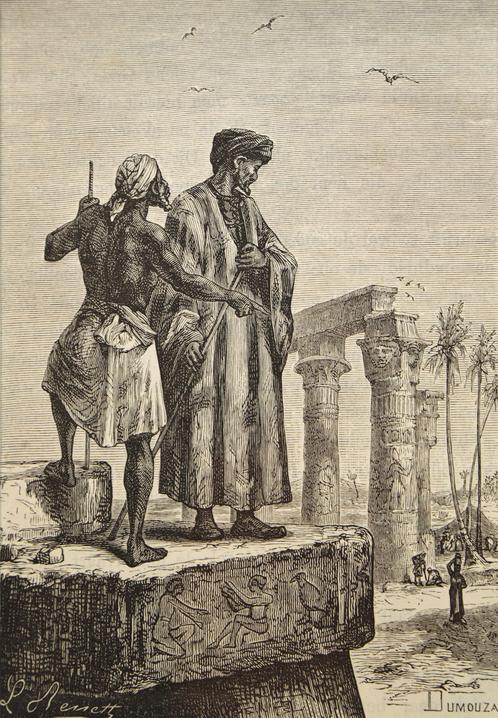
Ibn Battuta
78Ibn Battuta was a Moroccan scholar and traveller of the 14th century who journeyed some 75,000 miles across Africa, the Middle East, India, Central Asia, Southeast Asia and China — one of the greatest travellers of the pre-modern world.
Why Active in the same era · Comparable historical impact

Ibn Khaldun
80Ibn Khaldun was a North African scholar of the 14th century widely regarded as a founder of historiography, sociology and economics, whose Muqaddimah pioneered the analytical study of how societies rise and fall.
Why Active in the same era · Comparable historical impact

Alexander Pushkin
81Alexander Pushkin was a Russian poet, playwright and novelist, regarded as the founder of modern Russian literature, whose verse novel Eugene Onegin and other works shaped the language and the writers who followed him.
Why Also a poet · Comparable historical impact

Averroes
87Averroes was a philosopher and polymath of Al-Andalus whose commentaries on Aristotle profoundly shaped medieval European philosophy and the relationship between reason and faith.
Why Active in the same era · Comparable historical impact

Emily Dickinson
80Emily Dickinson was an American poet who lived in near-seclusion and published almost nothing in her lifetime, yet whose nearly 1,800 original, compressed poems made her, after her death, one of the most important poets in the English language.
Why Also a poet · Comparable historical impact

John Keats
79John Keats was an English Romantic poet who, despite dying at just 25, produced some of the most beautiful and enduring poetry in the language, including a series of great odes that secured his place among the immortals of English verse.
Why Also a poet · Comparable historical impact

John Milton
83John Milton was an English poet and political writer of the 17th century whose epic Paradise Lost is considered the greatest long poem in the English language and one of the supreme achievements of world literature.
Why Also a poet · Comparable historical impact

Lord Byron
80Lord Byron was an English Romantic poet, one of the most famous and scandalous figures of his age, whose works such as Don Juan and Childe Harold's Pilgrimage created the brooding "Byronic hero" and made him a celebrity across Europe.
Why Also a poet · Comparable historical impact

Ovid
82Ovid was a Roman poet of the Augustan age whose Metamorphoses, a sweeping collection of mythological tales, became one of the most influential works of classical literature on later Western art and poetry.
Why Also a poet · Comparable historical impact

Percy Bysshe Shelley
79Percy Bysshe Shelley was an English Romantic poet, among the greatest lyric poets in the language, whose visionary and politically radical verse — including Ozymandias and Prometheus Unbound — influenced generations of poets and reformers.
Why Also a poet · Comparable historical impact

Rabindranath Tagore
81Rabindranath Tagore was a Bengali poet, writer, composer and polymath who reshaped Indian literature and music and, in 1913, became the first non-European to win the Nobel Prize in Literature.
Why Also a poet · Comparable historical impact

Rudyard Kipling
79Rudyard Kipling was a British writer and poet, author of The Jungle Book and the poem "If—", who became the first English-language winner of the Nobel Prize in Literature, though his association with British imperialism has made his legacy contested.
Why Also a poet · Comparable historical impact
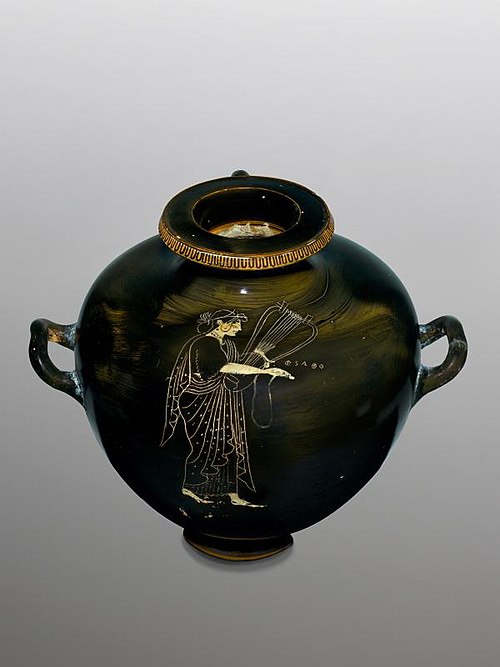
Sappho
78Sappho was an ancient Greek lyric poet from the island of Lesbos, celebrated in antiquity as one of the greatest of all poets and revered for her intimate, intensely personal verse on love and longing.
Why Also a poet · Comparable historical impact
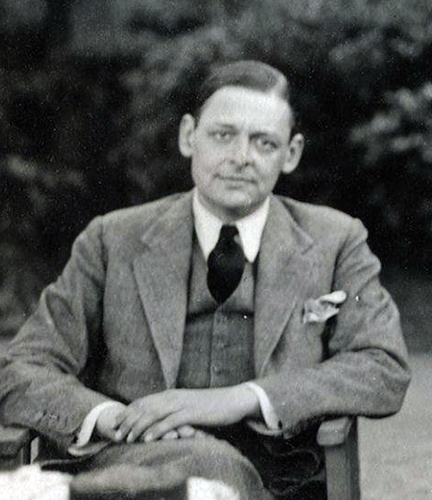
T. S. Eliot
80T. S. Eliot was an American-British poet, critic and playwright, a towering figure of literary modernism whose poem The Waste Land redefined 20th-century poetry and who won the Nobel Prize in Literature.
Why Also a poet · Comparable historical impact
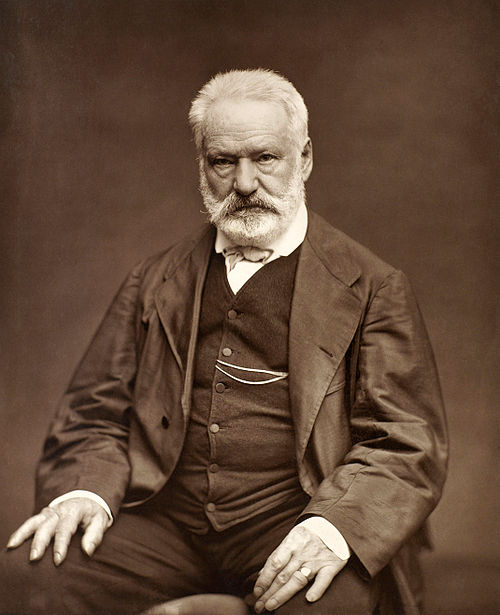
Victor Marie Hugo
89Victor Hugo was a French novelist, poet, and dramatist, the towering figure of French Romanticism, whose novels Les Misérables and The Hunchback of Notre-Dame are monuments of world literature.
Why Also a poet · Comparable historical impact

Virgil
86Virgil was a Roman poet of the Augustan age whose epic the Aeneid became the national poem of Rome and one of the most influential works in all of Western literature.
Why Also a poet · Comparable historical impact
Same Field or Discipline

Geoffrey Chaucer
81Geoffrey Chaucer was an English poet and civil servant of the 14th century, called the "Father of English literature", whose Canterbury Tales established English as a language worthy of great poetry.
Why Also a poet · Active in the same era

Hildegard of Bingen
84Hildegard of Bingen was a German Benedictine abbess and one of the most remarkable polymaths of the Middle Ages — a visionary, composer, writer, healer and natural philosopher.
Why Also a theologian · Active in the same era

Murasaki Shikibu
80Murasaki Shikibu was a Japanese noblewoman and writer of the Heian court whose Tale of Genji, written around 1010, is often called the world's first novel and a masterpiece of world literature.
Why Also a poet · Active in the same era

Thomas Aquinas
91Thomas Aquinas was a medieval Italian theologian and philosopher whose synthesis of Christian theology and Aristotelian philosophy became central to Catholic thought and the high point of scholasticism.
Why Also a theologian · Active in the same era

Dante Alighieri
93Dante Alighieri was an Italian poet of the late Middle Ages whose masterpiece, the Divine Comedy, is considered one of the greatest works of world literature and helped establish the Italian language.
Why Also a poet · Active in the same era