Poet · 43 BC – 17
Ovid
Key Takeaways
- Ovid wrote the Metamorphoses, retelling Greek and Roman myths in fifteen books.
- His witty love poetry, including the Ars Amatoria, made him hugely popular.
- He was mysteriously exiled by Augustus to a remote Black Sea town.
- His retellings became the main source of classical myth for later European art.
If you have ever seen a painting of a Greek myth, the odds are good that it came down to us through Ovid. His Metamorphoses became the great treasury of classical mythology for the Western imagination.
A world of transformation
Written in ancient Rome during the age of Augustus, the Metamorphoses gathers hundreds of myths — Daphne turning to laurel, Narcissus to a flower, Pygmalion’s statue to flesh — all linked by the theme of change. Witty, vivid and humane, it stood beside Virgil’s solemn epic as the other great poem of imperial Rome.
Exile and immortality
At the height of his fame, Augustus abruptly banished Ovid to a bleak town on the Black Sea, for reasons the poet would only call “a poem and a mistake.” He died in exile, but his retellings of myth went on to inspire painters, sculptors and writers for two thousand years.
Influence
Ovid's Metamorphoses became the great storehouse of classical myth for later ages, inspiring countless painters, sculptors and poets from the Renaissance onward.
Legacy
Few works have shaped Western art as much as the Metamorphoses, the source of myths painted and retold for two thousand years.
Major Works
- Metamorphoses
- Ars Amatoria (The Art of Love)
- Heroides
Connections
Frequently Asked Questions
Who was Ovid?
Ovid (43 BC–c. 17 AD) was a Roman poet best known for the Metamorphoses, a collection of mythological tales that profoundly influenced later Western literature and art.
What is the Metamorphoses?
The Metamorphoses is Ovid's epic poem in fifteen books, retelling Greek and Roman myths linked by the theme of transformation, from the creation of the world onward.
Citations & Sources
People Like Ovid

Virgil
86Virgil was a Roman poet of the Augustan age whose epic the Aeneid became the national poem of Rome and one of the most influential works in all of Western literature.
Why A fellow great poet of Augustan Rome whose epic Ovid both echoed and playfully rivalled.

Augustus
94Augustus was the first Roman emperor, the heir of Julius Caesar who ended a century of civil war, established the Roman Empire, and inaugurated the Pax Romana.
Why The emperor who, for reasons still debated, banished Ovid to the edge of the empire.

Homer
95Homer was the legendary ancient Greek poet to whom the great epics the Iliad and the Odyssey are attributed, foundational works of Western literature.
Why Like Homer, Ovid shaped the myths that defined classical literature.

Emily Dickinson
80Emily Dickinson was an American poet who lived in near-seclusion and published almost nothing in her lifetime, yet whose nearly 1,800 original, compressed poems made her, after her death, one of the most important poets in the English language.
Why Also a poet & writer · Comparable historical impact

Geoffrey Chaucer
81Geoffrey Chaucer was an English poet and civil servant of the 14th century, called the "Father of English literature", whose Canterbury Tales established English as a language worthy of great poetry.
Why Also a poet & writer · Comparable historical impact
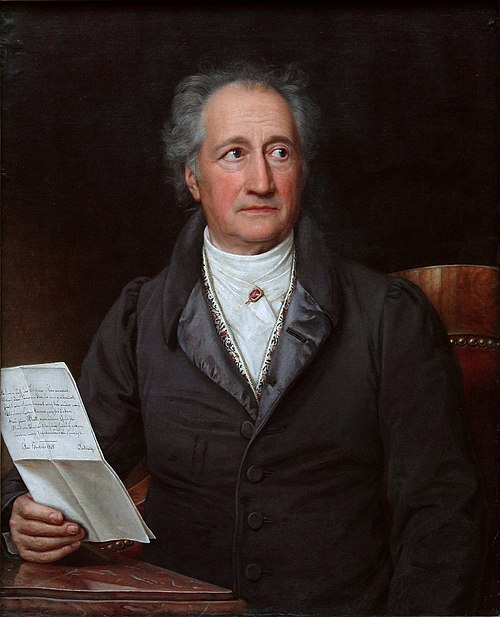
Johann Wolfgang von Goethe
92Johann Wolfgang von Goethe was a German writer, poet, and statesman, widely regarded as the greatest figure in German literature and one of the towering minds of European culture.
Why Also a writer & poet · Comparable historical impact