Writer · 1928 – 2014
Maya Angelou
If you're interested in Maya Angelou, these historical figures share a similar impact, discipline, philosophy, or era. Each recommendation explains why the connection exists.
Similar Impact & Significance
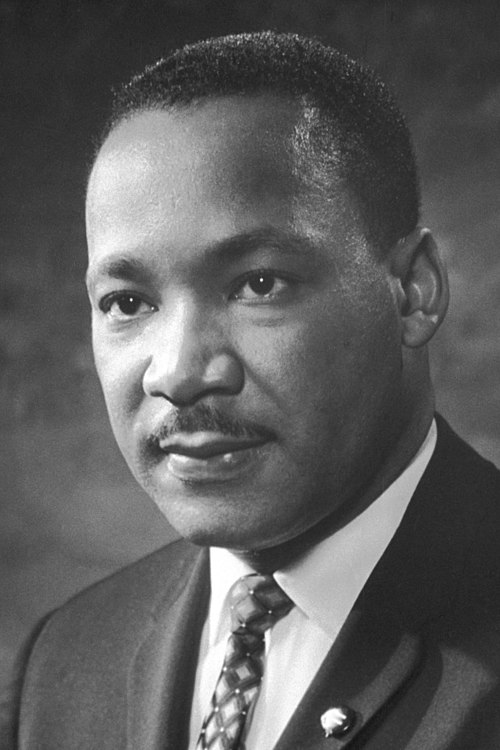
Martin Luther King Jr.
95Martin Luther King Jr. was an American Baptist minister and civil rights leader who championed nonviolent resistance to racial injustice and became the most prominent voice of the movement for equality in the United States.
Why A civil rights leader with whom Angelou worked in the freedom struggle.

Frederick Douglass
84Frederick Douglass was an American abolitionist, orator and writer who escaped slavery to become the most powerful voice of the antislavery movement and one of the foremost advocates for equality and human rights in the 19th century.
Why An earlier writer whose memoir of bondage and freedom prefigured Angelou's autobiography.

Toni Morrison
81Toni Morrison was an American novelist whose richly poetic explorations of Black American life — above all Beloved — won her the Pulitzer Prize and made her the first African American woman to receive the Nobel Prize in Literature.
Why A contemporary writer who also brought Black American experience to the centre of literature.
Same Field or Discipline

Edgar Allan Poe
81Edgar Allan Poe was an American writer and poet, a master of the macabre, who invented the detective story, helped shape the modern short story and science fiction, and gave the world haunting tales and poems such as "The Raven".
Why Also a writer & poet · Active in the same era

Herman Melville
80Herman Melville was an American novelist and poet whose Moby-Dick, neglected in his lifetime, is now regarded as one of the greatest novels ever written and a towering achievement of American literature.
Why Also a writer & poet · Active in the same era

Emily Dickinson
80Emily Dickinson was an American poet who lived in near-seclusion and published almost nothing in her lifetime, yet whose nearly 1,800 original, compressed poems made her, after her death, one of the most important poets in the English language.
Why Also a poet & writer · Active in the same era

Walt Whitman
81Walt Whitman was an American poet whose collection Leaves of Grass broke from traditional verse to celebrate democracy, the body and the self in sweeping free verse, making him a founding father of modern American poetry.
Why Also a poet & writer · Active in the same era

James Joyce
82James Joyce was an Irish novelist whose experimental masterpiece Ulysses is widely regarded as the greatest novel of the 20th century, and whose innovations in language and stream of consciousness transformed modern literature.
Why Also a writer & poet · Active in the same era

Jorge Luis Borges
80Jorge Luis Borges was an Argentine writer whose brief, dazzling stories of labyrinths, infinite libraries and mirrored worlds made him one of the most influential figures in 20th-century literature and a master of modern short fiction.
Why Also a writer & poet · Active in the same era

Lewis Carroll
80Lewis Carroll was the pen name of Charles Dodgson, an English writer and mathematician whose Alice's Adventures in Wonderland and Through the Looking-Glass revolutionized children's literature with their playful logic, nonsense and imagination.
Why Also a writer & poet · Active in the same era

Oscar Wilde
81Oscar Wilde was an Irish writer and wit, one of the most celebrated playwrights of late-Victorian London, whose sparkling comedies, the novel The Picture of Dorian Gray, and famous epigrams made him a legend — before a scandalous trial destroyed his career.
Why Also a writer & poet · Active in the same era

Rabindranath Tagore
81Rabindranath Tagore was a Bengali poet, writer, composer and polymath who reshaped Indian literature and music and, in 1913, became the first non-European to win the Nobel Prize in Literature.
Why Also a poet & writer · Active in the same era

Robert Louis Stevenson
79Robert Louis Stevenson was a Scottish writer whose adventure and Gothic tales — Treasure Island, Strange Case of Dr Jekyll and Mr Hyde, and Kidnapped — became enduring classics read around the world.
Why Also a writer & poet · Active in the same era

Rudyard Kipling
79Rudyard Kipling was a British writer and poet, author of The Jungle Book and the poem "If—", who became the first English-language winner of the Nobel Prize in Literature, though his association with British imperialism has made his legacy contested.
Why Also a writer & poet · Active in the same era
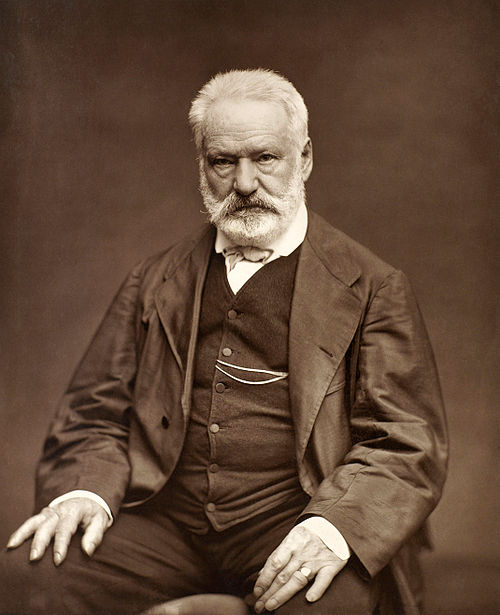
Victor Marie Hugo
89Victor Hugo was a French novelist, poet, and dramatist, the towering figure of French Romanticism, whose novels Les Misérables and The Hunchback of Notre-Dame are monuments of world literature.
Why Also a poet & writer · Active in the same era

William Butler Yeats
80William Butler Yeats was an Irish poet and dramatist, one of the greatest poets of the 20th century and a driving force of the Irish Literary Revival, who won the Nobel Prize in Literature and helped found Ireland's national theatre.
Why Also a poet & writer · Active in the same era

John Keats
79John Keats was an English Romantic poet who, despite dying at just 25, produced some of the most beautiful and enduring poetry in the language, including a series of great odes that secured his place among the immortals of English verse.
Why Also a poet & writer · Active in the same era

Lord Byron
80Lord Byron was an English Romantic poet, one of the most famous and scandalous figures of his age, whose works such as Don Juan and Childe Harold's Pilgrimage created the brooding "Byronic hero" and made him a celebrity across Europe.
Why Also a poet & writer · Active in the same era

Percy Bysshe Shelley
79Percy Bysshe Shelley was an English Romantic poet, among the greatest lyric poets in the language, whose visionary and politically radical verse — including Ozymandias and Prometheus Unbound — influenced generations of poets and reformers.
Why Also a poet & writer · Active in the same era

William Wordsworth
80William Wordsworth was an English poet who, with the Lyrical Ballads, helped launch the Romantic movement in English literature, celebrating nature, memory and ordinary life in language closer to common speech.
Why Also a poet & writer · Active in the same era

Ernest Hemingway
82Ernest Hemingway was an American novelist and short-story writer whose spare, understated prose style revolutionized 20th-century fiction, winning the Nobel Prize in Literature for works such as The Old Man and the Sea.
Why Also a writer · Active in the same era

F. Scott Fitzgerald
80F. Scott Fitzgerald was an American novelist and short-story writer, the great chronicler of the Jazz Age, whose novel The Great Gatsby is often called the quintessential American novel.
Why Also a writer · Active in the same era

Harriet Tubman
83Harriet Tubman was an American abolitionist who escaped slavery and then risked her life repeatedly to lead dozens of enslaved people to freedom via the Underground Railroad, becoming one of the great heroes of the fight against slavery.
Why Also a activist · Active in the same era

Helen Keller
80Helen Keller was an American author, disability rights advocate and activist who, though deaf and blind from infancy, learned to communicate, graduated from college, and wrote books that inspired the world and advanced the cause of people with disabilities.
Why Also a activist · Active in the same era