Novelist · 1819 – 1891
Herman Melville
Key Takeaways
- Melville wrote Moby-Dick, now considered a masterpiece of world literature.
- The novel was a commercial failure that nearly ended his career.
- His fame came decades after his death in a 20th-century revival.
- He drew on his own years at sea aboard whaling ships.
Herman Melville died largely forgotten, his greatest book a commercial failure. Today that book, Moby-Dick, is hailed as one of the supreme achievements of American literature — a reversal of fortune as dramatic as any in the history of letters.
The great white whale
Drawing on his own years aboard whaling ships, Melville turned a sea story into something vast. Moby-Dick follows Captain Ahab’s mad, doomed hunt for the white whale that took his leg, weaving adventure together with philosophy, symbolism and a meditation on obsession and the universe. Its ambition baffled readers of America in 1851.
Rediscovered
Melville dedicated the novel to his friend Nathaniel Hawthorne, but recognition never came in his lifetime. Only in the 20th century was this novelist of the modern era “rediscovered” and set, alongside Walt Whitman, among the founders of a great national literature.
Influence
Melville fused adventure, symbolism and philosophy into Moby-Dick, a novel whose depth was recognized only by later generations who made it central to American literature.
Legacy
Forgotten at his death, Melville was 'rediscovered' in the 20th century and now stands among the greatest of American writers.
Major Works
- Moby-Dick
- Billy Budd
- Bartleby, the Scrivener
Connections
Frequently Asked Questions
Who was Herman Melville?
Herman Melville (1819–1891) was an American novelist, author of Moby-Dick, now regarded as one of the greatest novels in the English language.
What is Moby-Dick about?
Moby-Dick follows Captain Ahab's obsessive hunt for the great white whale that maimed him, a sweeping tale of the sea that doubles as a meditation on obsession, fate and nature.
Citations & Sources
People Like Herman

Nathaniel Hawthorne
78Nathaniel Hawthorne was an American novelist and short-story writer whose dark, morally probing fiction — above all The Scarlet Letter — explored sin, guilt and hypocrisy in Puritan New England and helped found the American novel.
Why A close friend and fellow novelist to whom Melville dedicated Moby-Dick.

Walt Whitman
81Walt Whitman was an American poet whose collection Leaves of Grass broke from traditional verse to celebrate democracy, the body and the self in sweeping free verse, making him a founding father of modern American poetry.
Why A contemporary who, like Melville, forged a distinctly American literature.

Edgar Allan Poe
81Edgar Allan Poe was an American writer and poet, a master of the macabre, who invented the detective story, helped shape the modern short story and science fiction, and gave the world haunting tales and poems such as "The Raven".
Why An earlier American writer of dark, symbolic fiction.

James Joyce
82James Joyce was an Irish novelist whose experimental masterpiece Ulysses is widely regarded as the greatest novel of the 20th century, and whose innovations in language and stream of consciousness transformed modern literature.
Why Also a novelist & writer · Active in the same era
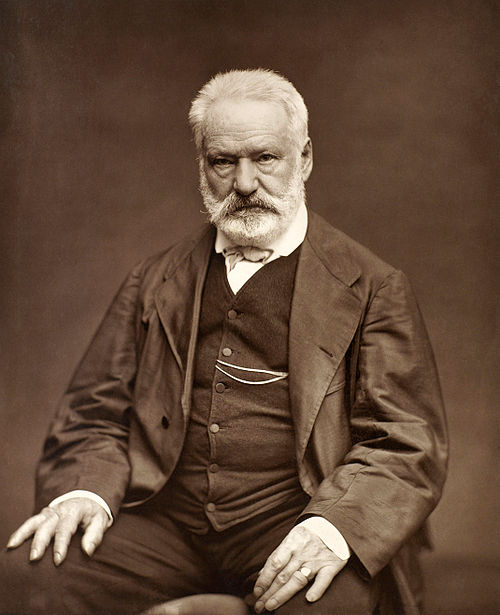
Victor Marie Hugo
89Victor Hugo was a French novelist, poet, and dramatist, the towering figure of French Romanticism, whose novels Les Misérables and The Hunchback of Notre-Dame are monuments of world literature.
Why Also a novelist & poet · Active in the same era

Ernest Hemingway
82Ernest Hemingway was an American novelist and short-story writer whose spare, understated prose style revolutionized 20th-century fiction, winning the Nobel Prize in Literature for works such as The Old Man and the Sea.
Why Also a novelist & writer · Active in the same era