Physicist · 1643 – 1727
Isaac Newton
If you're interested in Isaac Newton, these historical figures share a similar impact, discipline, philosophy, or era. Each recommendation explains why the connection exists.
Similar Impact & Significance

Albert Einstein
99Albert Einstein was a German-born theoretical physicist who developed the theory of relativity, one of the two pillars of modern physics, and won the 1921 Nobel Prize.
Why Einstein's relativity refined and extended Newton's mechanics and gravitation.

Avicenna
90Avicenna was a Persian polymath of the Islamic Golden Age, one of the greatest physicians and philosophers of the medieval world, whose Canon of Medicine was a standard text for six centuries.
Why Worked in astronomy · Comparable historical impact

Benjamin Franklin
90Benjamin Franklin was an American polymath — a founding father, scientist, inventor, writer and diplomat — whose work on electricity and statesmanship made him one of the most admired figures of the 18th century.
Why Worked in physics · Comparable historical impact
Same Field or Discipline

Galileo Galilei
95Galileo Galilei was an Italian astronomer, physicist and engineer, the "father of modern science", whose telescopic discoveries and championing of heliocentrism transformed our understanding of the cosmos.
Why Also a astronomer & physicist · Worked in astronomy & physics
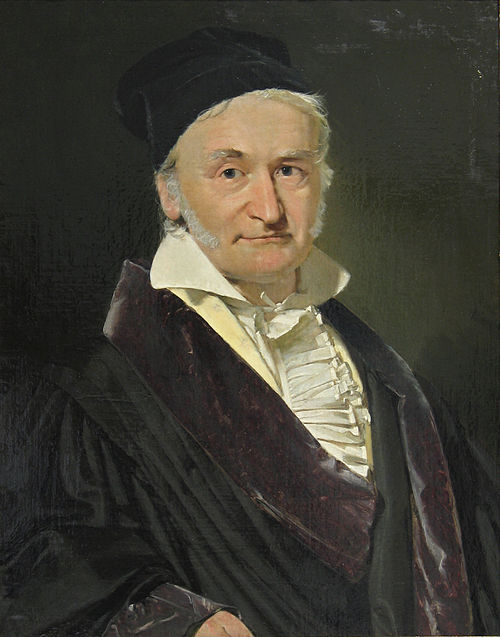
Carl Friedrich Gauss
95Carl Friedrich Gauss was a German mathematician and physicist whose profound contributions to number theory, statistics, geometry, astronomy and magnetism earned him the title "Prince of Mathematicians."
Why Also a mathematician & physicist · Worked in mathematics & physics

Leonhard Euler
93Leonhard Euler was a Swiss mathematician and physicist, the most prolific mathematician in history, whose work shaped modern analysis, number theory, graph theory and mathematical notation.
Why Also a mathematician & physicist · Worked in mathematics & physics

Nicolaus Copernicus
93Nicolaus Copernicus was a Renaissance astronomer who formulated the heliocentric model placing the Sun, not the Earth, at the center of the universe — a revolution in human thought.
Why Also a astronomer & mathematician · Worked in astronomy & mathematics

Archimedes
94Archimedes was an ancient Greek mathematician, physicist and inventor, widely regarded as the greatest mathematician of antiquity and a founder of mathematical physics and engineering.
Why Also a mathematician & physicist · Worked in mathematics & physics

James Clerk Maxwell
92James Clerk Maxwell was a Scottish physicist whose equations unified electricity, magnetism and light into a single electromagnetic theory, one of the greatest achievements in the history of physics.
Why Also a physicist & mathematician · Worked in physics & mathematics

Al-Khwarizmi
89Al-Khwarizmi was a Persian mathematician and scholar of the Islamic Golden Age, the "father of algebra", whose name gave us the word "algorithm".
Why Also a mathematician & astronomer · Worked in mathematics & astronomy

René Descartes
92René Descartes was a French philosopher, mathematician and scientist, the "father of modern philosophy", famous for "I think, therefore I am" and for founding analytic geometry.
Why Also a mathematician · Worked in mathematics & optics
Hypatia
84Hypatia was a mathematician, astronomer and Neoplatonist philosopher of late-antique Alexandria, the most prominent woman scholar of the ancient world, whose brutal murder came to symbolize the end of classical learning.
Why Also a mathematician & astronomer · Worked in mathematics & astronomy

Alan Turing
91Alan Turing was an English mathematician and computer scientist who founded theoretical computer science, helped break the German Enigma cipher in World War II, and pioneered the study of artificial intelligence.
Why Also a mathematician · Worked in mathematics

Euclid
91Euclid was an ancient Greek mathematician, the "father of geometry", whose treatise the Elements is the most influential mathematics textbook ever written.
Why Also a mathematician · Worked in mathematics
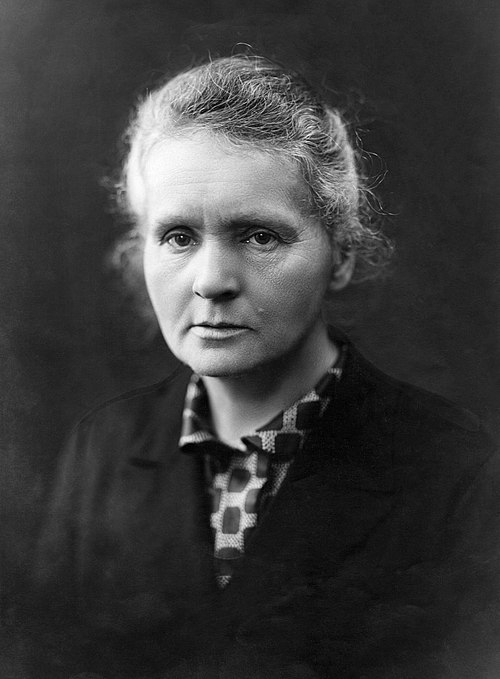
Marie Curie
92Marie Curie was a Polish-French physicist and chemist who pioneered research on radioactivity and became the first person to win Nobel Prizes in two different sciences.
Why Also a physicist · Worked in physics

Max Planck
89Max Planck was a German physicist who originated quantum theory by introducing the quantum of action, a discovery that launched modern physics and earned him the 1918 Nobel Prize.
Why Also a physicist · Worked in physics

Michael Faraday
93Michael Faraday was an English scientist whose discoveries in electromagnetism and electrochemistry, above all electromagnetic induction, laid the experimental foundation of the electrical age.
Why Also a physicist · Worked in physics

Niels Bohr
90Niels Bohr was a Danish physicist who created the first quantum model of the atom and became a leading architect of quantum mechanics through the Copenhagen interpretation.
Why Also a physicist · Worked in physics

Pythagoras
90Pythagoras was an ancient Greek mathematician and philosopher who founded the Pythagorean school and is remembered for the Pythagorean theorem and the idea that number underlies the cosmos.
Why Also a mathematician · Worked in mathematics

Nikola Tesla
90Nikola Tesla was a Serbian-American inventor and electrical engineer whose pioneering work on alternating current and electromagnetism helped electrify the modern world.
Why Also a physicist · Worked in physics

Ada Lovelace
84Ada Lovelace was an English mathematician widely regarded as the first computer programmer, who saw that Charles Babbage's Analytical Engine could go beyond calculation to manipulate symbols of any kind.
Why Also a mathematician · Worked in mathematics

Erwin Schrödinger
86Erwin Schrödinger was an Austrian physicist who formulated the wave equation governing quantum systems and devised the famous Schrödinger's cat thought experiment.
Why Also a physicist · Worked in physics

Stephen Hawking
87Stephen Hawking was a British theoretical physicist and cosmologist whose work on black holes and the origins of the universe, carried out despite a paralysing motor-neurone disease, made him the most famous scientist of his age.
Why Also a physicist · Worked in physics

Werner Heisenberg
87Werner Heisenberg was a German physicist who founded matrix mechanics and formulated the uncertainty principle, two of the cornerstones of quantum mechanics.
Why Also a physicist · Worked in physics